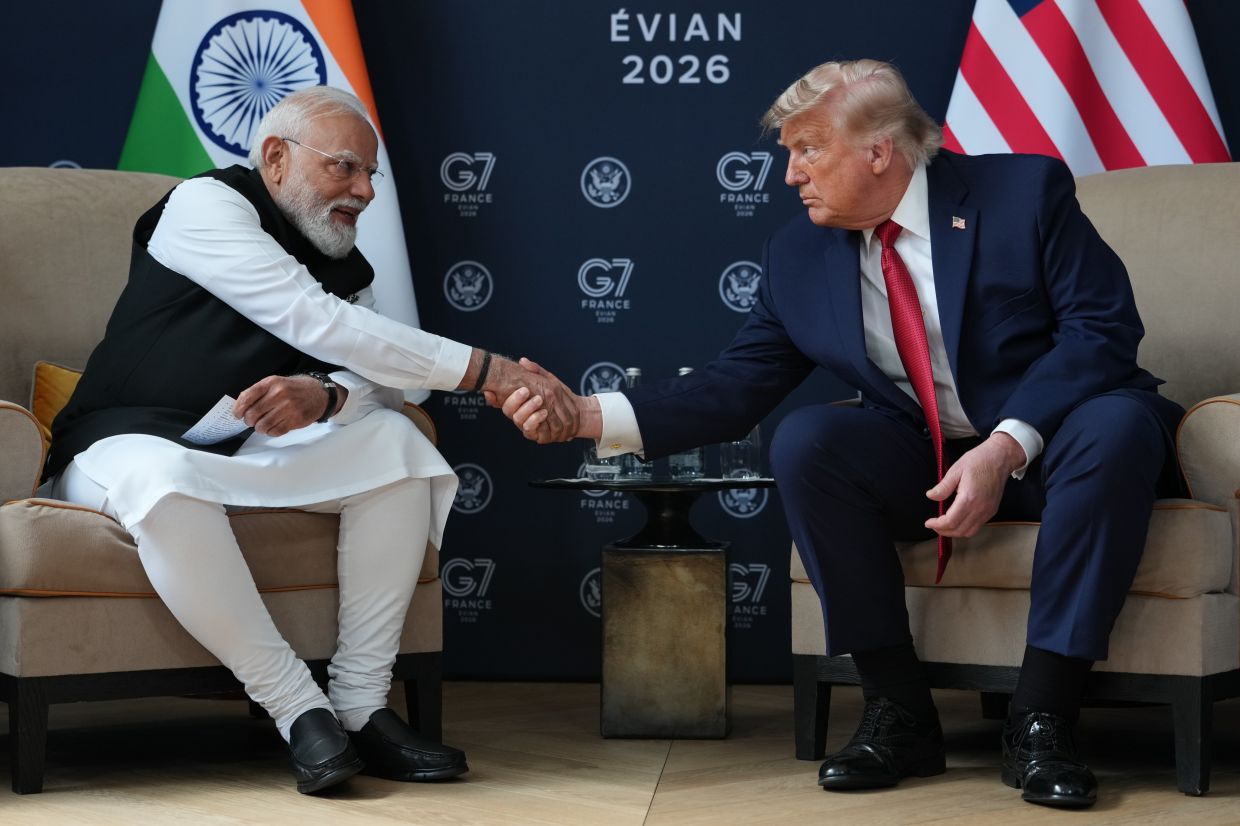
Tensions between Washington and New Delhi have surfaced publicly following the death of three Indian nationals in a controversial military incident, with US President Donald Trump notably sidestepping expressions of sympathy during his latest encounter with Prime Minister Narendra Modi. The two leaders met for their first bilateral discussions in more than a year, their first direct engagement since February 2025 when trade negotiations between the countries commenced. Yet what should have been an opportunity to smooth diplomatic relations instead highlighted deeper fractures emerging from recent military operations in the Persian Gulf.
The fatal incident occurred when US military forces launched missiles at the MT Settebello, a vessel flying the Palau flag and carrying Indian crew members, resulting in three deaths. This strike formed part of a broader American enforcement campaign targeting what US Central Command described as violations of a self-imposed blockade on Iranian ports situated within the strategically critical Strait of Hormuz. The Americans assert that these commercial vessels were engaged in illicit transportation of Iranian oil, breaching Washington's secondary sanctions regime. The strike was not an isolated action but rather one in a series of attacks on merchant ships carrying Indian seafarers, escalating a contentious policy implementation.
When confronted with questions about the fatalities, Trump characterised commercial maritime work as fundamentally perilous, framing the deaths as an unfortunate but inevitable cost of operating in challenging waters. His comments included acknowledgment of hearing about the incident but conspicuously omitted conventional expressions of condolence or regret. Instead, he pivoted toward emphasising bilateral cooperation, suggesting that both nations remain committed to working collaboratively on the matter. This rhetorical approach appeared designed to minimise the significance of the deaths while emphasising continuity in the bilateral relationship, a strategy that proved inadequate to address growing domestic dissatisfaction within India.
Indian Foreign Secretary S. Jaishankar responded through official channels by lodging what was characterised as a "strong protest" during direct communication with American counterparts. However, the State Department's official readout of the conversation revealed Washington's hardened stance on enforcing its Iran blockade. The American statement emphasised that violations would not be tolerated and that the illicit transport of Iranian petroleum products remained a priority concern, effectively doubling down on the policy that precipitated the deaths of Indian mariners. This rigid positioning by Washington signalled that future similar incidents might occur if commercial operations continued under American scrutiny.
The incident triggered considerable public backlash across India, transcending typical diplomatic channels to manifest in street-level protests and social media criticism. Auto rickshaw drivers in Delhi were documented removing promotional posters bearing Trump's image from their vehicles, dismantling materials that had been distributed by the US embassy as part of an outreach initiative celebrating American independence. These images of poster destruction symbolised broader popular resentment toward perceived American insensitivity toward Indian lives. The viral circulation of these videos reflected widespread sentiment that Washington had demonstrated insufficient regard for Indian nationals.
Political opposition within India seized upon the incident to critique the Modi government's handling of the relationship with Washington. Rahul Gandhi, leading opposition figure, directly attacked the prime minister on social media platforms, characterising him as "compromised" and accusing the administration of subservience to American demands. Gandhi's posts suggested that an independent nation would categorically refuse to accept such treatment, implying that Modi's government had accepted American behaviour that would be intolerable to a truly sovereign state. This criticism proved particularly damaging because it questioned not merely a single policy decision but the fundamental independence of Indian foreign policy decision-making.
Despite these tensions, Trump sought to project confidence in the strength of US-India relations during the press conference, emphasising the personal rapport he maintains with Modi. He stated that he and the prime minister could not be closer, and that their personal relationship formed the foundation for broader bilateral collaboration. Trump further indicated that Modi would visit Washington in the future, suggesting continuity rather than fundamental rupture. He also characterised Modi approvingly as a "tough trader," a phrase intended as compliment in Trump's lexicon, indicating that negotiations between the two countries would be conducted as equals pursuing respective national interests.
Trade negotiations between the two nations have become increasingly significant within the broader strategic relationship. The bilateral discussions that commenced in Washington during February 2025 marked India as one of the first countries to enter formal trade negotiations with the Trump administration, reflecting America's strategic interest in the Indian market and geopolitical positioning. Currently, negotiations continue regarding an interim trade agreement, with US Trade Representative participation driving discussions. These economic dimensions complicate the diplomatic calculus, as India cannot easily walk away from potential trading benefits despite grievances regarding American military actions.
Secretary of State Marco Rubio subsequently visited India, where he characterised the nation as among America's "most important strategic partners" in the Indo-Pacific region. Rubio's characterisation sought to reinforce the notion that the relationship transcends individual incidents and remains rooted in strategic convergence. The emphasis on partnership reflected American recognition that India holds crucial significance within broader containment strategies directed toward China and regional influence expansion. This reinforcement of strategic importance appeared designed to provide political cover for the Modi administration domestically while signalling American willingness to compartmentalise the maritime incident from broader relationship architecture.
The handling of this bilateral encounter reveals the complex calculus confronting Indian policymakers attempting to navigate great power competition. India must simultaneously maintain engagement with Washington for strategic and economic benefits while managing domestic political pressure from populations justifiably angered by deaths of fellow nationals. The Trump administration's apparent unwillingness to acknowledge accountability for the deaths, combined with continued enforcement of the Iranian blockade policy, suggests that Washington views enforcing its sanctions regime as taking precedence over managing diplomatic relationships with important partners. For Malaysia and Southeast Asian nations watching these dynamics, the incident underscores how even strategically significant countries struggle to protect their citizens when major powers prioritise other objectives, raising questions about the vulnerability of smaller nations operating within contested maritime spaces.
%22%2F%3E%3C%2Fpattern%3E%3C%2Fdefs%3E%3Crect%20width%3D%22100%25%22%20height%3D%22100%25%22%20fill%3D%22url(%23ph3h0whg)%22%2F%3E%3Crect%20width%3D%22100%25%22%20height%3D%22100%25%22%20fill%3D%22url(%23ph3h0whp)%22%2F%3E%3Ctext%20x%3D%2250%25%22%20y%3D%2250%25%22%20text-anchor%3D%22middle%22%20dominant-baseline%3D%22central%22%20fill%3D%22rgba(255%2C255%2C255%2C0.95)%22%20font-family%3D%22Georgia%2C%20'Times%20New%20Roman'%2C%20serif%22%20font-weight%3D%22700%22%20font-size%3D%22170%22%20letter-spacing%3D%22-0.02em%22%3EMalaysia%3C%2Ftext%3E%3C%2Fsvg%3E)
%22%2F%3E%3C%2Fpattern%3E%3C%2Fdefs%3E%3Crect%20width%3D%22100%25%22%20height%3D%22100%25%22%20fill%3D%22url(%23ph51nvig)%22%2F%3E%3Crect%20width%3D%22100%25%22%20height%3D%22100%25%22%20fill%3D%22url(%23ph51nvip)%22%2F%3E%3Ctext%20x%3D%2250%25%22%20y%3D%2250%25%22%20text-anchor%3D%22middle%22%20dominant-baseline%3D%22central%22%20fill%3D%22rgba(255%2C255%2C255%2C0.95)%22%20font-family%3D%22Georgia%2C%20'Times%20New%20Roman'%2C%20serif%22%20font-weight%3D%22700%22%20font-size%3D%22170%22%20letter-spacing%3D%22-0.02em%22%3EJudicial%3C%2Ftext%3E%3C%2Fsvg%3E)
%22%2F%3E%3C%2Fpattern%3E%3C%2Fdefs%3E%3Crect%20width%3D%22100%25%22%20height%3D%22100%25%22%20fill%3D%22url(%23ph5i78qg)%22%2F%3E%3Crect%20width%3D%22100%25%22%20height%3D%22100%25%22%20fill%3D%22url(%23ph5i78qp)%22%2F%3E%3Ctext%20x%3D%2250%25%22%20y%3D%2250%25%22%20text-anchor%3D%22middle%22%20dominant-baseline%3D%22central%22%20fill%3D%22rgba(255%2C255%2C255%2C0.95)%22%20font-family%3D%22Georgia%2C%20'Times%20New%20Roman'%2C%20serif%22%20font-weight%3D%22700%22%20font-size%3D%22136%22%20letter-spacing%3D%22-0.02em%22%3EGovernment%3C%2Ftext%3E%3C%2Fsvg%3E)