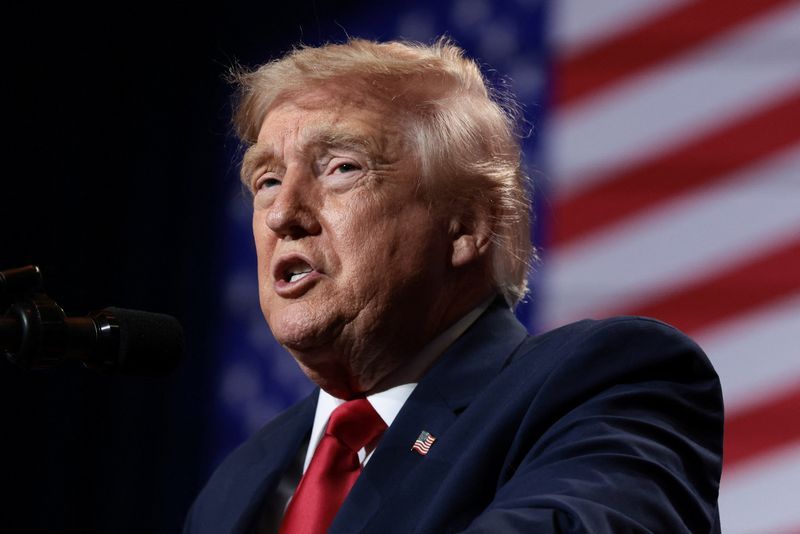
President Donald Trump has signed a national security presidential memorandum authorizing a coordinated cyber offensive against transnational criminal organizations that threaten American interests from overseas. The directive marks a significant expansion of the government's approach to combating foreign-based criminal networks by formally integrating private sector capabilities into law enforcement and national security operations. According to the White House, the framework aims to harness technological expertise and innovation from the private sector while maintaining strict federal oversight and control of all cyber activities.
The administration characterizes transnational criminal organizations as sophisticated threats engaged in ransomware campaigns, financial fraud schemes, and other cyber-enabled crimes targeting Americans and American institutions. Rather than confining response capabilities to government agencies alone, the memo establishes a structured partnership model through which vetted private companies can work alongside federal authorities. This approach reflects a broader recognition within policy circles that the pace and complexity of cyber threats increasingly exceed traditional government-only responses, necessitating commercial sector participation.
The operational framework will be administered through the Department of Homeland Security's National Coordination Center, operating under the Homeland Security Task Force structure. The Department of Justice shares oversight responsibilities, creating a dual-agency governance model intended to ensure accountability while enabling rapid decision-making. This arrangement positions DHS as the primary operational coordinator while DOJ maintains legal and prosecutorial oversight, though the White House has not yet released detailed protocols explaining how disputes between the agencies would be resolved or how operational decisions would be escalated.
Participating private companies must submit to a vetting process and maintain minimum financial bonds or escrow accounts of at least $1 million. These requirements ostensibly function as both a commitment guarantee and a liability cushion, though questions remain about whether such sums adequately address potential damages from escalated cyber conflicts or collateral harm. The financial requirements may prove prohibitive for smaller cybersecurity firms, potentially concentrating participation among larger defense contractors and established technology corporations with existing government relationships.
Once approved and operating under federal direction, participating companies will be authorized to conduct two categories of cyber operations. Surveillance operations involve monitoring foreign criminal infrastructure and networks to gather intelligence on threat actors and their capabilities. Effects operations represent the more aggressive component, encompassing manipulation, disruption, denial, degradation, or destruction of information systems, networks, and physical infrastructure controlled by technology systems. This latter category is deliberately broad, potentially encompassing everything from temporary service interruptions to permanent destruction of adversary systems.
The memo explicitly emphasizes that all cyber operations occur "under the direction, control, and authority of the U.S. Government," suggesting that private companies function as contractors rather than autonomous actors. However, the historical record demonstrates that such distinctions often blur in practice. Previous attempts to integrate private contractors into sensitive cyber operations have generated concerns about accountability gaps, unintended consequences, and the difficulty of maintaining real-time federal supervision over complex technical activities executed across international networks.
For Southeast Asian nations including Malaysia, this development carries regional implications. Transnational criminal organizations operating across the region often establish infrastructure in multiple countries, creating operational interdependencies that transcend bilateral relations. If American private sector companies begin conducting cyber operations against criminal networks in Southeast Asian jurisdictions without explicit coordination or notification, they could inadvertently disrupt critical infrastructure, destroy evidence relevant to local law enforcement investigations, or trigger diplomatic friction. The memo does not explicitly address whether affected foreign governments will be notified in advance of cyber operations affecting infrastructure or networks within their territory.
The initiative resurrects questions that previously surrounded private military contractors and intelligence partnerships. The outsourcing of specialized cyber capabilities to private firms introduces profit incentives that may not align with governmental interests. Companies compensated for "cyber effects" operations might face subtle pressures to demonstrate impact and justify continued contracts through increasingly aggressive activities. The $1 million bonding requirement, while substantial, may prove inadequate if operations cause widespread collateral damage or unintended consequences that extend beyond intended targets.
Coordination challenges loom as another practical concern. Multiple private contractors operating simultaneously against interconnected criminal networks could create conflicts, duplicated efforts, or contradictory operational objectives. The memo establishes DHS and DOJ oversight but remains silent on inter-agency coordination mechanisms, inter-company communication protocols, or procedures for preventing friendly-fire incidents when multiple contractors operate in overlapping threat domains. These procedural gaps mirror deficiencies identified in past attempts to coordinate private sector national security activities.
The broader policy context reveals an administration convinced that traditional law enforcement and intelligence agencies move too slowly and lack sufficient technical expertise to combat sophisticated cyber-enabled crime. This argument contains validity—criminal networks do innovate rapidly and exploit gaps in governmental response capacity. However, the solution of broadly empowering private companies operating in gray zones between law enforcement and military activity introduces risks that extend beyond the immediate target set. Establishing precedent for private cyber operations against foreign adversaries, even non-state criminal organizations, potentially normalizes private sector participation in what historically remained exclusively governmental domains.
International law questions remain unresolved. Cyber operations conducted from US territory targeting foreign infrastructure arguably constitute actions by a foreign state, even when executed by private contractors, potentially triggering reciprocal responses under international law frameworks. Whether such operations against criminal enterprises operating from hostile jurisdictions constitute lawful self-defense or cross legal thresholds into armed conflict remains ambiguous, particularly given the borderless nature of cyber operations and the difficulty of definitively attributing actions to specific geographic locations or entities.
The White House has not released comprehensive operational guidelines, target selection criteria, rules of engagement for effects operations, or mechanisms for foreign governments to lodge complaints about operations affecting their infrastructure. These omissions suggest the framework remains under development, with policies likely to emerge through implementation rather than public specification. For Malaysian and regional cybersecurity professionals, this development underscores the necessity of monitoring how American cyber operations evolve and establishing clear communication channels with US authorities regarding infrastructure protection and incident coordination.
Ultimately, this memorandum represents a significant escalation in how the United States will pursue transnational criminal networks, replacing traditional law enforcement cooperation with kinetic-style cyber operations. Whether this approach proves more effective than previous methods remains uncertain, but the precedent established will likely influence how other nations perceive their own authorities regarding cyber operations against transnational threats.

