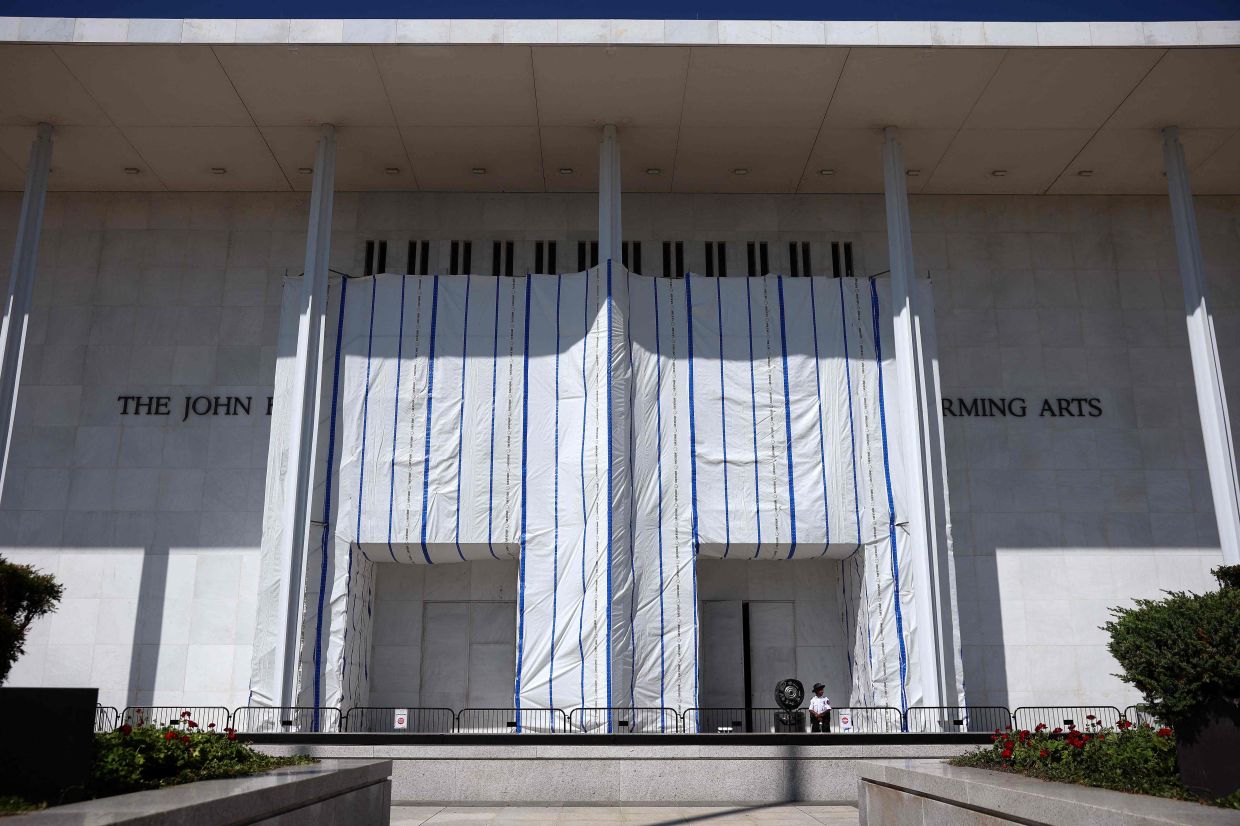
The Trump administration has escalated an increasingly bitter dispute over Washington's Kennedy Center by threatening demolition of the performing arts institution if courts block its plans to oversee a restoration project and attach the president's name to the building. The extraordinary warning emerged through a Justice Department filing filed on Tuesday in opposition to Democratic efforts to halt the proposed two-year renovation and prevent prominent signage bearing Trump's name from being added to one of America's most recognizable cultural venues.
Although the filing carefully avoids stating that a demolition plan currently exists, it argues that without the Trump administration's involvement in restoration and fundraising activities, the structure would continue deteriorating and eventually become so hazardous that it would need to be torn down entirely. Justice Department attorney Brantley Mayers wrote that without such efforts, "the center will deteriorate further into an unsafe, decrepit structure that will be required to be taken down." The government's legal team went further by suggesting the site could subsequently accommodate a large outdoor amphitheater offering views of the Potomac River, while acknowledging such a development would "fail to adequately honor" President John F. Kennedy, whose memory the original building was designed to preserve.
The demolition threat represents a significant intensification in what has become a prominent cultural and political clash involving one of the United States' most iconic performing arts institutions. The Justice Department's submission characterized the Kennedy Center as "structurally unsound, fundamentally unsafe, and embarrassing to the nation's capital," while portraying Trump's administration as uniquely positioned to rescue the facility from decline. This framing represents a sharp departure from earlier, more measured descriptions of the required work by Kennedy Center officials, who have previously outlined the planned renovation as addressing electrical systems, stage equipment, and waterproofing issues without materially changing the building's exterior appearance or reducing it to its structural skeleton.
At the heart of the dispute lies a fundamental disagreement over naming rights and recognition. The Trump-appointed Kennedy Center board recently voted to inscribe "Restored and Renovated by President Donald J. Trump" beneath the institution's name and to designate the surrounding plaza as the "President Donald J. Trump Plaza." The administration's legal filing asserts that such recognition is essential for maintaining donor support and that Trump's team has successfully secured approximately US$258 million (roughly RM1 billion) in congressional funding for restoration work while cultivating a fresh donor base that requires acknowledgment of the president's involvement.
The legal challenge was initiated by Congresswoman Joyce Beatty, who serves as an ex officio member of the Kennedy Center board. Beatty has contested the board's authority to rename the institution, contending that Congress alone possesses the power to rename the center, which was established as a "living memorial" to President Kennedy. Her constitutional argument challenges what she views as an overreach of executive power in commandeering a memorial dedicated to another president.
Federal courts have already intervened in the naming controversy. A federal judge previously ruled that the board could not unilaterally rename the Kennedy Center and ordered the removal of earlier signage attempting to credit Trump. The Trump administration has filed an appeal against that ruling, setting up a continuing legal battle that now extends beyond the courthouse into broader questions about the government's powers over memorial institutions and naming conventions.
The characterization of the Kennedy Center's structural condition in the Justice Department filing appears notably more severe than previous assessments from the institution itself. Kennedy Center leadership had previously described the necessary work in considerably more restrained language, identifying specific infrastructure improvements including electrical system upgrades, stage equipment repairs, and enhanced leak prevention measures. Their earlier statements made clear that these repairs would maintain the building's essential character rather than requiring fundamental reconstruction.
The timing and nature of the demolition warning reflects broader tensions between the Trump administration and Democratic opponents who have actively sought to challenge various aspects of his restoration initiative. The upcoming Thursday hearing on both the closure proposal and the latest effort to recognize Trump on the building represents a crucial juncture in the dispute, where courts will need to weigh competing claims about architectural necessity, memorial appropriateness, and executive authority.
For Malaysian observers following American political disputes, the Kennedy Center controversy offers insights into how monument naming and preservation have become increasingly politicized in the United States. The dispute also demonstrates the intersection of architecture, heritage preservation, and partisan conflict that characterizes contemporary American governance. The threat of demolition, whether carried out or merely rhetorical, underscores how political actors may invoke drastic measures to achieve their objectives when facing legal obstacles.
The Kennedy Center case raises important questions about institutional autonomy and the appropriate role of government in controlling memorial spaces. The dispute ultimately reflects deeper divisions about how nations memorialize their leaders and how later administrations should relate to the legacies of their predecessors. The outcome will potentially establish precedents affecting how future administrations approach oversight of cultural institutions and the scope of their authority to attach their names to government-controlled facilities.

