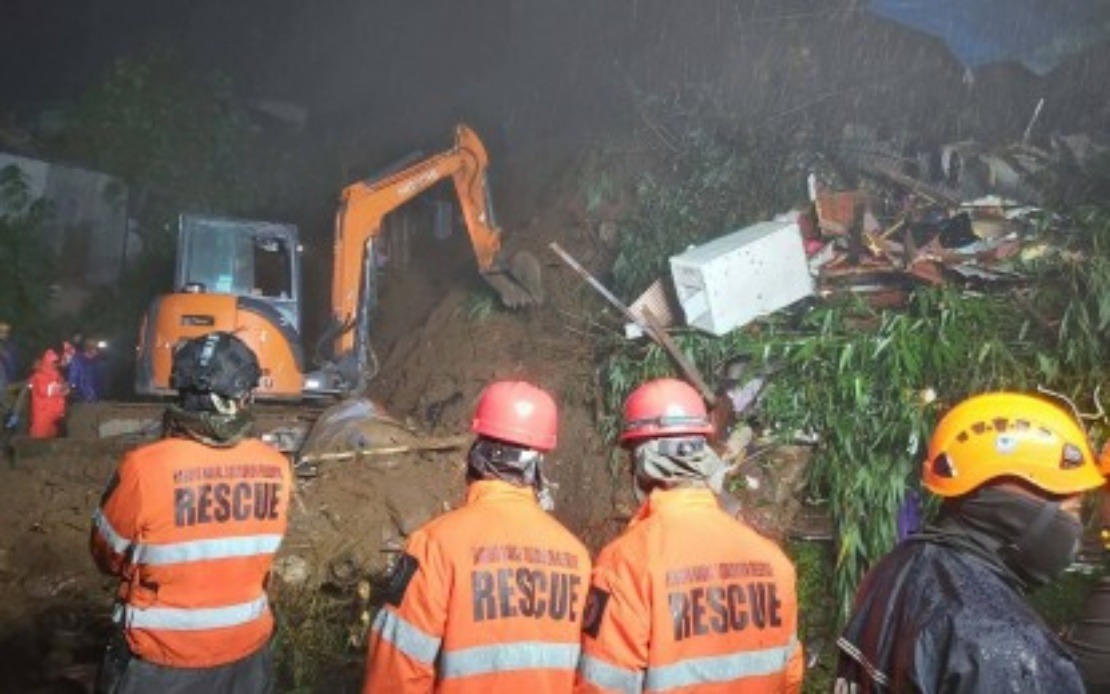
The Philippines is reeling from a succession of severe weather systems that have wrought significant loss of life and disrupted millions of households across the nation. The Office of Civil Defence confirmed on Tuesday that 19 deaths have occurred in connection with Tropical Depressions Luis and Maymay alongside the intensified southwest monsoon, whilst approximately 2.2 million individuals across numerous regions remain affected by the cascading disasters. This accumulation of weather disturbances over a compressed timeframe has stretched emergency response capabilities and highlighted the vulnerability of communities to consecutive tropical weather events, a pattern becoming increasingly familiar in Southeast Asia.
The geographic distribution of fatalities reveals a troubling concentration in the nation's northern regions, particularly in areas with challenging terrain and limited infrastructure. Benguet, a mountainous province in the Cordillera, has borne the heaviest toll with 12 confirmed deaths, whilst Rizal province to the east of Manila recorded four fatalities and Batangas in the southern Tagalog region accounted for three deaths. This clustering in Benguet underscores how elevated terrain can amplify the hazards associated with heavy rainfall, increasing the likelihood of landslides and flash floods that claim lives with little warning. The concentration of casualties in this region suggests that warning systems and evacuation procedures may be less effective in remoter, less densely populated highland communities.
Beyond fatalities, the human toll extends across multiple dimensions of suffering. Fifteen individuals sustained injuries from the weather events, with the vast majority—twelve cases—again occurring in Benguet, whilst isolated injuries were documented in Ilocos Sur, Rizal and Cavite provinces. Additionally, four individuals remain unaccounted for, three in Benguet and one in Batangas, with search and rescue operations ongoing in areas where landslides and flooding have rendered terrain treacherous and access difficult. These figures, whilst seemingly modest compared to fatalities, often mask the scale of trauma and disruption experienced by affected families, particularly when rescue efforts extend over weeks or months.
The displacement crisis dwarfs the casualty figures, with authorities documenting that 646,676 families comprising 2,270,862 people have experienced material or livelihood impact across ten regions stretching from the northern Ilocos Region through the central Philippines to Mimaropa in the east and the Zamboanga Peninsula in the south. This geographic spread indicates that the weather systems exerted influence across a vast swathe of the archipelago, affecting both densely populated areas surrounding Metro Manila and more sparsely populated regions. The scope of displacement underscores how contemporary tropical weather systems no longer respect provincial boundaries and can simultaneously disrupt communities thousands of kilometres apart.
The humanitarian response has required rapid mobilization of shelter infrastructure across affected zones. Emergency management authorities have established approximately 919 evacuation centres providing refuge for 26,174 families or roughly 95,000 individuals at the time of the official count. This ratio indicates that whilst approximately four per cent of affected families have been accommodated in formal centres, the remaining majority are either sheltering with relatives, occupying makeshift facilities, or attempting to remain in their own homes despite damage. This disparity in shelter access often reflects the logistical challenges of establishing coordinated centres in rural areas and the cultural preference of many Filipinos to remain within their communities even during emergencies.
Property destruction has been documented across residential and public infrastructure, with 639 houses sustaining damage and 45 structures completely destroyed by the combined force of the weather systems. Whilst these figures may seem limited relative to the population affected, they represent entire communities losing their homes and livelihoods simultaneously. Moreover, structural damage is concentrated in the poorest regions where housing construction standards are most vulnerable to extreme weather and financial capacity to rebuild is most constrained. For many affected families, particularly in rural Benguet and surrounding provinces, losing a home represents a generational disaster from which recovery extends far beyond the immediate crisis period.
Infrastructure damage across roads, bridges, water systems and other public utilities has been preliminarily assessed at PHP1.46 million, equivalent to approximately RM97,000 in Malaysian ringgit. Whilst this figure may appear modest in absolute terms, it reflects the scale of damage to critical public systems upon which entire regions depend for connectivity and essential services. The Philippines' geographic fragmentation as an archipelago renders infrastructure reconstruction particularly costly, as damaged bridges and roads in mountainous regions of Luzon are difficult and expensive to repair. This infrastructure damage perpetuates the displacement crisis, as isolated communities struggle to access markets, healthcare and educational facilities even after floodwaters recede.
Agricultural devastation presents an even graver medium-term threat to regional food security and rural livelihoods. Preliminary damage assessments attribute PHP135.33 million in agricultural losses to the weather disturbances, a figure that dwarfs infrastructure damage estimates. These losses encompass destroyed crops, drowned livestock, damaged irrigation infrastructure and destroyed farm equipment across multiple provinces during the growing season. For predominantly agricultural regions like Benguet, renowned for vegetable production supplying Metro Manila, such destruction disrupts national food supplies and triggers economic ripples extending far beyond affected communities. The agricultural damage will constrain local incomes for months or years, depending on crop cycles and farmers' capacity to replant.
For Malaysian observers and regional analysts, this Philippine disaster sequence illustrates patterns increasingly evident throughout Southeast Asia. Consecutive tropical weather systems occurring within short timeframes overwhelm national and local emergency response capacities, stretch shelter and aid distribution networks to breaking points, and concentrate impacts on poorer, more vulnerable communities in remote regions. The geographical concentration of deaths in highland Benguet reflects how topography interacts with weather systems to create particular hazards, a reality applicable to Malaysia's own East Coast and Sabah-Sarawak highlands during monsoon season. The massive displacement of 2.2 million people—exceeding the population of Malaysia's Pahang state—demonstrates how contemporary tropical weather systems can displace populations at scales typically associated with conflict rather than natural disasters.
The economic implications evident in the Philippines—infrastructure damage compounded by agricultural devastation occurring simultaneously—highlight how tropical weather crises penetrate deep into national economies beyond the immediate disaster zone. Food price inflation follows agricultural destruction, supply chain disruptions persist long after emergency response concludes, and reconstruction diverts government resources from development priorities. For Malaysia, with substantial agricultural production in flood-prone lowland areas and increasingly unpredictable monsoon patterns, the Philippine experience offers instructive lessons regarding the necessity of investment in early warning systems, evacuation infrastructure, and agricultural resilience in regions vulnerable to consecutive weather events.
The long-term recovery trajectory will depend heavily on the availability of reconstruction funding and the coordination between national and local authorities in ensuring that recovery prioritizes the most vulnerable populations. Experience from previous Philippine disasters suggests that reconstruction often lags official response phases by months or years, leaving displaced families in temporary situations for extended periods. The scale of this displacement—2.2 million people—and the diversity of affected regions will test the Philippines' reconstruction capacity and potentially require sustained international assistance, providing opportunities for regional cooperation and knowledge-sharing among Southeast Asian nations facing similar climate-related challenges.

