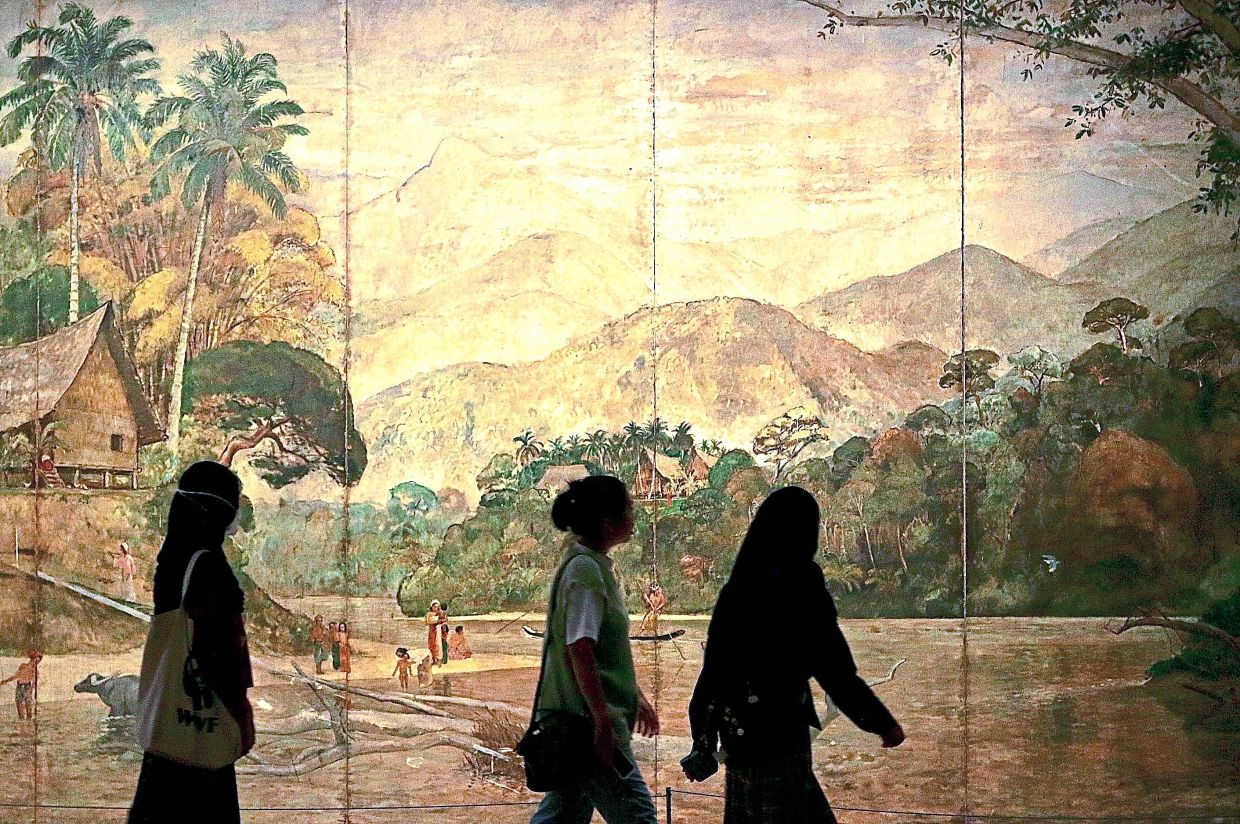
The National Art Gallery of Malaysia faces an ongoing battle against the country's tropical environment, where humidity and relentless sunlight pose a relentless threat to the longevity and integrity of artworks housed within its walls. Unlike museums in temperate climates, Malaysian conservation specialists must contend with environmental factors that can silently degrade paintings, textiles and sculptures over time, requiring both sophisticated protective measures and a fundamental rethinking of how preservation work is conducted in the region.
Tan Hui Koon, senior chief curator of the Collection and Conservation section at the gallery, emphasises that the material vulnerability of artworks in Malaysia's climate demands active intervention rather than passive display. She notes that just as human skin requires protection from ultraviolet radiation, artworks similarly need defensive barriers. Modern conservation practice at the gallery relies heavily on specialised tinted and museum-grade glass that filters harmful UV rays, a critical investment given the gallery's equatorial location where sunlight intensity remains consistently high throughout the year.
The physical composition of many artworks creates particular vulnerability in tropical conditions. Organic materials—including textiles, canvas and wooden frames—function like sponges in humid environments, absorbing atmospheric moisture and then releasing it as conditions fluctuate. This perpetual cycle of absorption and evaporation causes materials to expand and contract repeatedly, a process that gradually weakens structural connections, cracks paint layers and ultimately compromises an artwork's ability to survive intact for future generations. The damage accumulates invisibly and becomes irreversible once material loss has occurred.
Tan articulates a philosophical shift in conservation thinking that prioritises prevention over cure. Rather than waiting for deterioration to become visible and then attempting restoration, modern practice focuses on controlling environmental conditions, establishing proper handling protocols and implementing storage systems designed specifically for tropical climates. This preventive approach acknowledges a fundamental truth: once an artwork loses material substance—whether through moisture damage, chemical degradation or physical deterioration—no restoration technique can restore it to absolute originality. The goal becomes stabilisation and preservation of what remains.
The urgency of these challenges will take centre stage during the seventh Asia-Pacific Tropical Climate Conservation Art Research Network conference, scheduled for December 7-9 and hosted jointly in Kuala Lumpur and Perak's Ipoh. This biennial gathering brings together leading conservation specialists from Malaysia, Thailand, Singapore, Australia and the Philippines to examine how Western paintings and other artworks respond specifically to tropical environmental conditions. The conference represents one of the few dedicated forums examining the intersection of art preservation and regional climate realities in Southeast Asia and beyond.
Beyond the main conference sessions in Kuala Lumpur, participants will undertake field visits to heritage sites in Lenggong through a collaborative programme involving the Islamic Arts Museum Malaysia, the Department of National Heritage and People of Remarkable Talents. These excursions provide practical experience in conservation challenges within actual heritage environments rather than controlled laboratory settings, grounding theoretical knowledge in the complex realities of protecting Malaysia's cultural assets.
A significant innovation in this year's conference is its emphasis on local and indigenous knowledge systems alongside Western conservation science. Rather than importing wholesale the approaches developed in European and North American museums, the network now prioritises developing methodologies adapted to the geographical, climatic and cultural contexts of individual countries. This includes studying traditional disaster response methods and conservation practices that have evolved organically within regional communities, recognising that accumulated local wisdom often contains insights unavailable in standard international literature.
The conference agenda encompasses climate change impacts on collections, disaster management protocols, emerging technologies including artificial intelligence applications in conservation, advanced materials research and the ethical dimensions of preservation work. A cross-cutting theme addresses resource-sharing mechanisms among institutions, recognising that individual galleries and museums often lack the expertise or equipment to address sophisticated conservation challenges alone. Regional networks can distribute knowledge and facilitate access to specialised facilities.
Tan emphasises the conference's role in developing Malaysia's next generation of conservation professionals. Through structured knowledge transfer, mentorship and exposure to international best practice, the network ensures that emerging conservators gain both technical skills and the theoretical framework to innovate within their own contexts. Conservation itself is fundamentally interdisciplinary, requiring expertise spanning art history, chemistry, physics, materials science and engineering—fields that rarely communicate in conventional academic settings.
Looking backward, the conference provides opportunity to evaluate conservation practice in Malaysia over sixteen years since the network's establishment in 2008. This longitudinal perspective demonstrates how regional thinking has evolved, where capacity has strengthened and which challenges remain persistent. The proceedings will offer Malaysian experts a platform to showcase their innovations and expertise to international peers, positioning the country's conservation sector as a centre of excellence for tropical climate research and practice.
Moreover, the network strengthens Malaysia's position within global heritage preservation discourse. By hosting this regional conference and contributing original research on tropical conservation challenges, the country elevates its artistic heritage onto an international stage while simultaneously developing the institutional capacity and human expertise necessary for long-term stewardship of its cultural treasures. The intersection of climate science, traditional knowledge and contemporary conservation technology offers Malaysia an opportunity to lead rather than follow in addressing one of cultural preservation's most pressing regional concerns.

