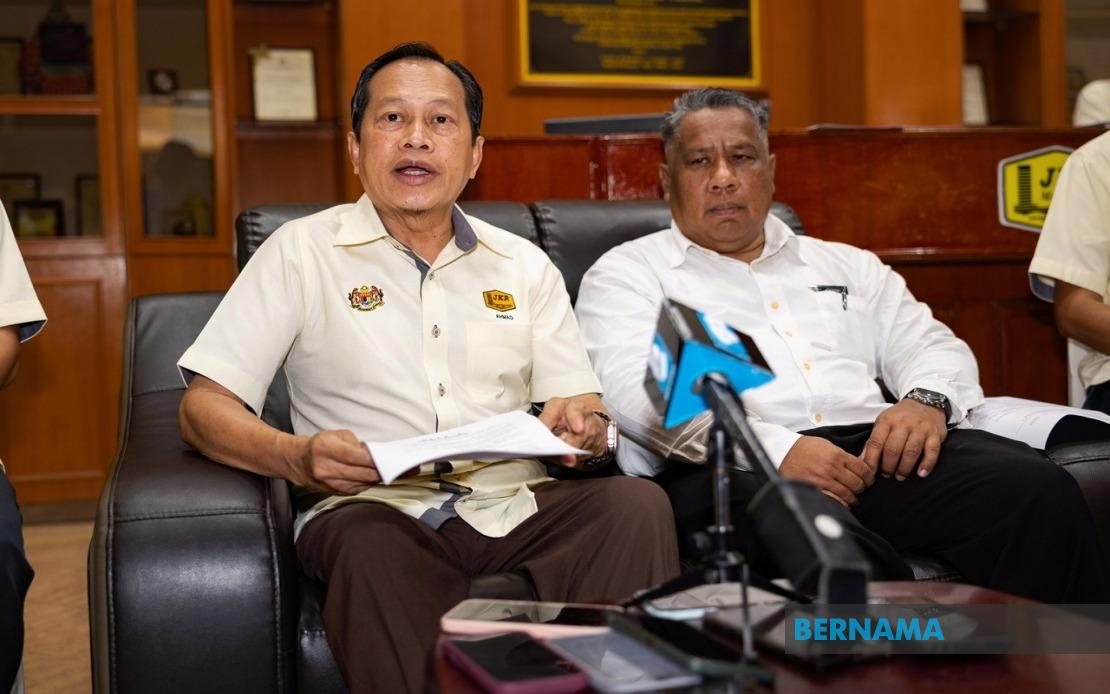
Responsibility for managing trees along federal roads rests firmly with local authorities rather than the Public Works Department, according to Deputy Works Minister Datuk Seri Dr Ahmad Maslan, though both agencies have signalled willingness to work together to enhance road safety across the country. The minister's clarification, made during a working visit to Lumut, addresses growing concerns about tree-related hazards on federal routes following a tragic incident in Bentong last week that claimed four lives when a mature tree collapsed onto a vehicle on the FT68 Old Road to Kuala Lumpur.
The legal framework governing this arrangement is established under Section 101(b) of the Local Government Act 1976, which vests local authorities with powers to plant, prune, and remove trees throughout their administrative jurisdictions—a designation that explicitly includes trees standing within federal road reserves where such reserves fall under their authority. This statutory division reflects Malaysia's broader local government structure, where municipal and district councils hold responsibility for routine environmental management within their territories, even when those areas technically form part of national road infrastructure.
Ahmad Maslan's remarks appear designed to address what some observers might characterise as jurisdictional ambiguity in tree management protocols. The minister emphasised that JKR's remit extends to maintaining standard road furniture and signage rather than arboricultural management, a distinction that has acquired particular salience following public calls for enhanced safety inspections. His statement that the department is not attempting to evade responsibility suggests sensitivity to criticism that federal authorities might be deflecting accountability for preventable accidents.
A significant constraint affecting JKR's operational capacity stems from existing maintenance concession agreements, which Ahmad Maslan disclosed lack provisions for tree removal except in circumstances where a tree has already fallen. This restrictive framework means that proactive management—such as removing visibly diseased or structurally compromised specimens before failure occurs—falls outside the scope of contracted maintenance work. The practical implication is that prevention of tree-related incidents depends entirely upon local authorities initiating removal before dangerous conditions develop, placing the burden of foresight and expert assessment squarely on municipal systems that may themselves lack specialised arboricultural capacity.
The policy position reflects a court ruling that apparently settled previous disputes regarding control of tree planting along federal road reserves, though the minister stopped short of detailing the judgment's specific provisions. This reference to judicial precedent suggests that earlier disagreements between JKR and local authorities over tree management responsibilities have been formally adjudicated, lending legal weight to the current demarcation of duties. Whether local authorities possess the technical expertise, funding, and monitoring systems to discharge these obligations effectively remains an open question, particularly given the decentralised nature of Malaysia's municipal administration.
Bentong Member of Parliament Young Syefura Othman had previously called upon JKR and concession companies to strengthen partnerships with certified arboricultural experts for periodic technical assessments of mature trees and unstable slopes throughout federal road networks. This advocacy implicitly acknowledged the limitations of current management systems and suggested that existing institutional arrangements may be inadequate to prevent similar tragedies. The request reflects a pragmatic recognition that road safety cannot depend entirely upon formal jurisdictional responsibilities if those responsible parties lack necessary resources or expertise.
During his Manjung district visit, Ahmad Maslan received comprehensive briefings on local infrastructure operations and ongoing development initiatives, signalling the ministry's commitment to grassroots engagement with regional JKR structures. The deputy minister stressed the criticality of continuous monitoring and inter-agency coordination spanning the national Works Ministry, state-level JKR operations, and district engineering offices. This emphasis on hierarchical oversight and information flow suggests awareness that fragmented responsibility across multiple administrative tiers risks creating gaps where hazardous conditions escape detection.
The ministry's stated commitment to strengthening coordination mechanisms at all institutional levels indicates recognition that current arrangements, while legally clear, may require operational reinforcement. Ahmad Maslan's remarks about ensuring public infrastructure remains safe and comfortable for users acknowledge the fundamental obligation government bears toward citizen welfare. However, the practical efficacy of this commitment depends upon whether local authorities can effectively mobilise the technical, financial, and human resources necessary for rigorous tree management without additional support from JKR or central authorities.
For Malaysian citizens and commuters, the delegation of tree management to local authorities introduces an implicit reliance upon municipal competence and diligence. The degree to which different local councils prioritise arboricultural safety, invest in professional assessment capacity, and act promptly to address identified risks will substantially determine whether road networks remain safe. Given the decentralised nature of this responsibility, safety outcomes may vary considerably across different jurisdictions, potentially creating geographic disparities in accident risk.
The refusal of JKR and concession operators to remove trees proactively unless they have already fallen represents a significant constraint on preventive safety measures. This reactive rather than proactive approach stands in tension with modern risk management principles emphasising hazard elimination before failure occurs. For roads traversed by thousands of drivers daily, particularly during monsoon seasons when wind speeds increase, the inability to remove visibly compromised trees pending local authority action creates persistent danger.
Moving forward, the resolution of this policy challenge likely requires greater cooperation between national and local authorities in developing shared standards for tree assessment, establishing clear protocols for inter-agency communication about identified hazards, and ensuring adequate resourcing for local councils to discharge their statutory obligations. While Ahmad Maslan's clarification establishes legal responsibility, translating formal authority into operational safety requires practical mechanisms ensuring that expertise, funding, and responsive action align across institutional boundaries. The Bentong tragedy underscores the stakes involved in achieving this alignment effectively.

