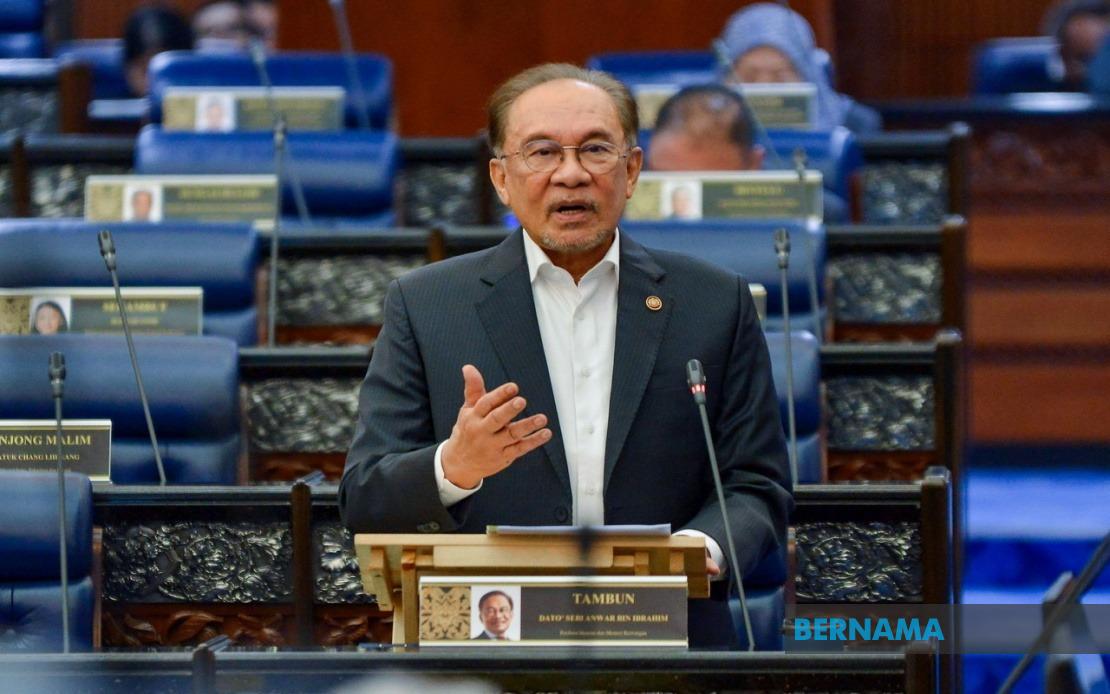
Prime Minister Datuk Seri Anwar Ibrahim has tasked the Transport Ministry with evaluating how ports along Malaysia's northern border with Thailand, as well as in Penang, can be better utilised to enhance infrastructure development and strengthen logistics networks serving the cross-border region. The directive emerged from discussions between Anwar and Thai Prime Minister Anutin Charnvirakul during the latter's recent official visit to Malaysia, where transport and port connectivity featured prominently on the bilateral agenda.
During Ministerial Question Time at the Dewan Rakyat, Anwar elaborated on the scope of transport-related conversations with his Thai counterpart, indicating that port operations formed part of a broader strategic dialogue about moving goods across the shared frontier. Beyond the immediate concern of port facilities, the discussions encompassed complementary modes of transport, including rail networks and their role in facilitating regional commerce. The Thai Premier notably raised the importance of maritime transport during their talks, signalling Bangkok's interest in developing efficient shipping routes that could benefit both nations' economies.
The government's focus extends to emerging port facilities that could serve as catalysts for economic growth along the Malaysia-Thailand border corridor. Specific locations cited include Sanglang and the Perlis Inland Port, both of which are positioned to play crucial roles in maximising economic spillovers from infrastructure development in this strategically important region. By leveraging these facilities more effectively, Malaysian officials believe they can create additional commercial opportunities and streamline the movement of cargo between the two countries.
The emphasis on border area development reflects broader regional integration efforts aimed at strengthening ASEAN connectivity. Malaysia and Thailand have long recognised the potential of their shared boundary not as a barrier but as an opportunity for joint prosperity. Enhanced port operations, combined with improved rail infrastructure and tourism initiatives, could transform the border zone into a dynamic economic hub. This multi-modal approach acknowledges that sustainable logistics networks require investment across multiple transport systems, not merely at individual facilities.
Perlis and Penang, as focal points of this initiative, stand to benefit considerably from improved port infrastructure and cross-border logistics arrangements. Penang, already an established maritime and manufacturing centre, could leverage new port capabilities to strengthen its position as a regional trade gateway. Meanwhile, Perlis, as Malaysia's northernmost state with direct access to Thailand, has particular strategic importance for bilateral commerce. The Perlis Inland Port represents a modern facility designed to handle containerised cargo and reduce reliance on traditional coastal ports for northern Malaysian trade.
Rail transport, mentioned alongside port development, underscores the government's recognition that comprehensive border infrastructure requires integrated solutions. The recent inauguration of new transport routes appears to have energised discussions about what additional connections might be established. Railway networks linking Malaysian and Thai commercial centres would complement port capabilities, enabling seamless cargo movement from production centres to export terminals. This integration aligns with Southeast Asian efforts to develop corridor-based trade frameworks that increase competitiveness against other global supply chains.
The Transport Ministry's mandate to examine these port-related opportunities reflects Malaysia's strategic interest in deepening economic ties with Thailand and the broader region. Officials recognise that Thailand's economies and manufacturing base, combined with Malaysia's established port infrastructure, create natural synergies. By optimising how border facilities operate, both nations can reduce transaction costs for businesses and enhance their attractiveness as components of regional supply networks. This commercial logic has animated bilateral discussions and now drives domestic policy implementation.
Tourism considerations, mentioned alongside transport and logistics, reveal the holistic approach government officials are adopting toward border development. Enhanced infrastructure can facilitate not only cargo movement but also leisure and business travellers. Better port facilities and transport connections create conditions for tourism industries to flourish, generating employment and tax revenue in border communities. This diversified economic strategy suggests policymakers view border regions not merely as transit points but as potential destinations for investment and visitation.
The directive to the Transport Ministry carries implications for Malaysian private sector engagement with cross-border commerce. Port operators, logistics companies, and shippers require clarity on government intentions and investment frameworks to make strategic decisions about capacity expansion and service offerings. Clear policy signals regarding port usage and border corridor development can unlock private investment in facilities and services, multiplying the impact of government initiatives. Anwar's public comments during parliamentary proceedings thus serve to communicate government commitment to stakeholders in maritime and logistics industries.
Implementing this transport agenda requires coordination across multiple government agencies beyond the Transport Ministry. Customs authorities, port authorities, and state governments must align their policies to create an environment where cross-border commerce flourishes. The Malaysian and Thai governments will also need to harmonise regulations and streamline procedures to realise the full potential of improved port and transport facilities. Such coordination challenges, while substantial, are not insurmountable given both nations' commitment to deeper regional integration through ASEAN frameworks.

