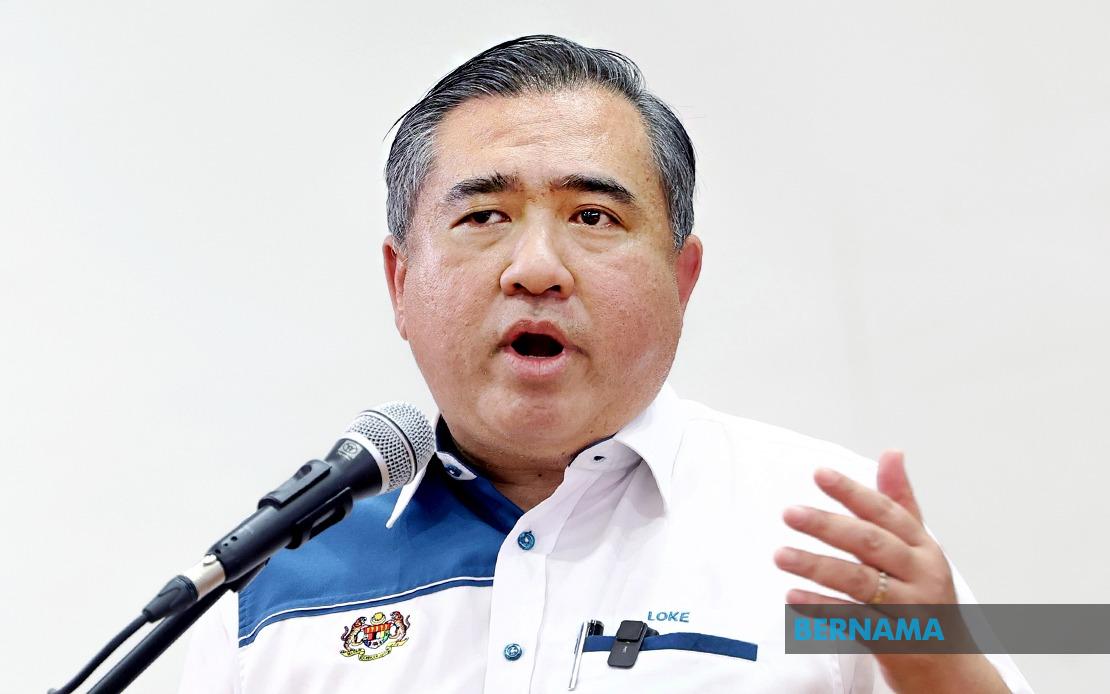
Transport Minister Anthony Loke has directed the Road Transport Department (JPJ) to book motorcyclists found riding without helmets during the Johor state election campaign, taking action based on evidence circulated in viral videos on social media. The enforcement directive applies uniformly across the political spectrum, with Loke explicitly stating that campaign workers from his own party, Pakatan Harapan (PH), would face the same consequences as any other offenders.
Loke's announcement, made in a statement on July 10, reflects a long-standing position on road safety that transcends partisan considerations. He recalled raising identical concerns nearly six years earlier during the Slim by-election campaign, when he highlighted that while motorcyclists are perfectly entitled to participate in political campaigning, they must adhere to mandatory helmet regulations and set a positive example for the public. The minister stressed that helmet-wearing is not a discretionary matter tied to campaign participation but an absolute legal requirement that protects riders from serious injury or death.
The incident that prompted the enforcement action involved campaign workers from PH and the Democratic Action Party (DAP) who were captured on video riding motorcycles without protective headgear during Johor's polling campaign. Rather than dismiss the matter as trivial or campaign-related, Loke treated it as a serious breach of national road safety standards. This approach underscores a commitment to impartial law enforcement that does not bend rules for political convenience or party loyalty.
Loke, who serves as DAP secretary-general alongside his transport portfolio, has positioned himself as willing to hold his own party accountable. He stated unequivocally that he would not compromise on road safety principles even when violations involve his campaign colleagues. This public commitment to principle over political tribalism marks a notable stance in Malaysia's often partisan political environment, where accusations of selective enforcement have historically plagued government agencies.
The significance of this directive extends beyond a single election campaign. Road safety compliance among political operatives carries symbolic weight in Malaysia, where public figures and campaign workers are often viewed as role models by ordinary citizens. When campaign participants visibly flout helmet regulations, they send a message that such laws are negotiable or context-dependent. By enforcing the rules consistently, the Transport Ministry aims to reinforce the notion that road safety regulations apply universally.
From a broader governance perspective, Loke's stance reflects international best practices in road safety management. Many developed nations treat traffic law enforcement as politically neutral, recognizing that inconsistent application undermines public safety and erodes trust in legal systems. Malaysia's road fatality statistics have long concerned policymakers, with helmet-wearing identified as a critical factor in reducing severe injuries among two-wheeled vehicle operators. Ensuring that all segments of society, including political campaigners, comply with these requirements contributes to sustained cultural change around road safety.
The timing of this enforcement action during an active state election campaign carries additional implications. Political campaigns in Malaysia typically generate heightened traffic and mobility, as candidates and workers traverse constituencies in motorcades and on individual vehicles. Maintaining safety standards during these periods becomes particularly important given the increased road activity and potential for accidents. By insisting on helmet compliance now, the ministry addresses a concentrated period of heightened risk.
The viral video evidence that prompted the enforcement action highlights how social media has become an accountability mechanism in Malaysian politics. Citizens recording and sharing footage of apparent traffic violations by campaigners ensure that such breaches do not escape notice. This democratization of oversight creates pressure on authorities to respond proportionately and fairly. Loke's directive demonstrates responsiveness to public concern while maintaining fairness across political lines.
For motorcyclists and road users more broadly, the enforcement action carries practical consequences. The Road Transport Department will issue summonses based on documented evidence from campaign-period videos, meaning violators face potential fines and demerit points. These legal consequences serve both punitive and deterrent functions, encouraging compliance among those engaged in political activities and signaling to the broader public that road safety laws carry real enforcement weight.
The minister's explicit mention that these principles apply regardless of political affiliation signals an attempt to counter perceptions of selective enforcement that have plagued Malaysian law enforcement agencies. By publicly committing to equal treatment and even suggesting that his own party members would face consequences, Loke establishes a standard against which his ministry can be measured. This transparency creates accountability and invites scrutiny of whether the enforcement actually occurs impartially.
Looking forward, this directive may establish a precedent for road safety enforcement during future campaigns across Malaysia. If consistently applied, it could elevate safety standards in political activities and normalize helmet compliance as a non-negotiable requirement regardless of circumstance. However, the true test lies in implementation—whether the JPJ actually issues summonses to documented violators and whether enforcement extends equally to all political parties.
The Transport Ministry's position also intersects with broader discussions about political culture in Malaysia. Political campaigns that prioritize personal safety and legal compliance over convenience or image demonstrate maturity in democratic participation. By framing road safety as non-negotiable even during campaign periods, Loke contributes to a larger cultural shift toward responsible political engagement.
Ultimately, Loke's directive represents an intersection of public safety governance and political accountability. By insisting that campaign activities must comply with road safety regulations and by committing to enforce these requirements fairly across party lines, the Transport Ministry addresses both immediate safety concerns and longer-term issues of equitable law enforcement in Malaysia's democratic processes.

