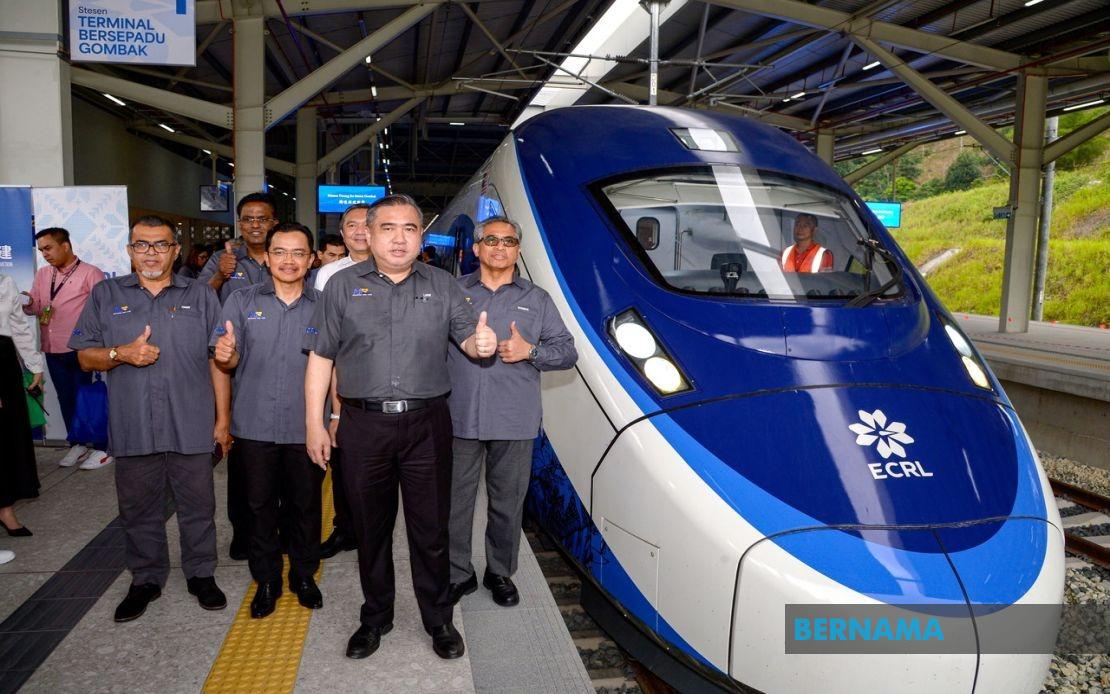
Malaysia's Transport Minister Anthony Loke Siew Fook has signalled an ambitious acceleration of the East Coast Rail Link Phase 1 timeline, targeting commencement of service between Kota Bharu and Gombak as early as December rather than the previously scheduled January 2027. Speaking at an event in Gombak on August 14, Loke emphasised that the four-month advancement hinges critically on the successful progression of ongoing technical validation work, particularly System Integration Testing and Fault-Free Run procedures, with no relaxation of safety standards.
The push to expedite operations reflects growing momentum around this flagship transport infrastructure project, which has become emblematic of Malaysia's commitment to modernising its rail network and enhancing connectivity between the east and west coasts. The project represents a significant investment in regional transportation, and bringing it online months ahead of schedule would deliver tangible benefits to commuters and freight operations whilst boosting public confidence in major infrastructure delivery. However, the accelerated timeline presents genuine logistical challenges that demand careful orchestration among multiple stakeholders including Malaysia Rail Link Sdn Bhd, contractor China Communications Construction Company Ltd, and the Land Public Transport Agency.
The testing and commissioning phases represent the crucial gatekeeping mechanism before any revenue service can begin. System Integration Testing, which commenced this month, systematically validates the interaction between complex subsystems including electrical infrastructure, signalling apparatus, and operational software. This preliminary stage must be completed and approved before proceeding to Fault-Free Run trials, currently scheduled for September. The first train set and E-Loco locomotive must each traverse 8,000 kilometres under controlled supervision from APAD to verify that operational safety and reliability align with established technical standards and regulatory requirements.
Loke acknowledged during his remarks that standard practice dictates two to three months for these certification processes, yet the ministry is exploring mechanisms to compress this timeline through enhanced coordination with APAD. The minister framed this effort not as corner-cutting but as intelligent process optimisation, noting that extensive testing has already occurred during manufacturing in China. This pre-delivery validation work theoretically provides greater confidence in system reliability and could justify streamlined certification procedures. Nonetheless, Loke's emphasis on maintaining safety integrity—stating "we are more afraid than you if there is a risk"—underscores the political and practical stakes involved.
The acceleration strategy reflects confidence based on the train's pre-shipment testing record and the overall maturity of the project. Phase 1 construction has achieved 95.08 per cent completion as of July, indicating that physical infrastructure is substantially ready. The Comprehensive Inspection Train and the launch of the station design concept announcement suggest that project leadership believes tangible progress justifies optimistic timelines. For Malaysian stakeholders and regional observers, successfully delivering four months ahead of schedule would demonstrate project management competence and provide momentum for Phase 2 operations.
Phase 2, extending from Gombak to Port Klang, represents the commercial completion of the full east-west connector and remains on track for December 2027 completion with January 2028 operational commencement. This two-phase approach means the Kota Bharu-Gombak segment, running through Kelantan and Selangor, will serve as the initial revenue-generating corridor. The successful early launch of Phase 1 could generate operational and financial data that improves Phase 2 execution, creating positive cascading effects throughout the broader project.
From a Malaysian perspective, the implications extend beyond infrastructure delivery metrics. The ECRL forms part of broader regional connectivity initiatives, particularly concerning engagement with China and integration into Southeast Asian transport networks. A successful acceleration would strengthen Malaysia's positioning in regional infrastructure development conversations and demonstrate technical capacity to manage complex multinational rail projects. Additionally, bringing forward the operational date reduces the carrying costs of project financing and accelerates the revenue-generation timeline, improving the project's financial profile.
The involvement of senior government figures at the Gombak launch event—including Chief Secretary Tan Sri Shamsul Azri Abu Bakar, Chinese Ambassador Ouyang Yujing, and CCCC president Zhang Bingnan—reflects the project's significance within both domestic and bilateral contexts. This high-level engagement signals political commitment to accelerated delivery whilst maintaining diplomatic relations with China, the primary contractor and financial partner. The public commitment to December operations places measurable accountability on project leadership.
However, the ambitious timeline carries execution risks that warrant careful monitoring. Compressing certification periods, even with pre-testing completed abroad, leaves limited margin for addressing unexpected issues identified during Malaysian trials. Should Fault-Free Run testing reveal technical anomalies or safety concerns, the December target could face slippage, potentially damaging public credibility. The railway sector's operational history demonstrates that overrunning timelines on major projects attracts sustained political and media scrutiny.
For commuters and regional economies, the December target holds tangible promise. The Kota Bharu-Gombak link would dramatically reduce travel times between Kelantan and Selangor, strengthening economic integration and enabling more seamless business and personal movement. Freight operators could access new routing possibilities, potentially improving logistics efficiency across the peninsula. These benefits justify aggressive scheduling where safety can genuinely be maintained.
The ministry's strategy to involve APAD more intensively in expediting certification procedures represents pragmatic institutional coordination. Rather than unilaterally compressing timelines, engaging the regulatory authority upfront creates collaborative momentum and ensures that acceleration efforts maintain compliance credibility. This approach contrasts with projects where regulators and operators work at cross-purposes, often resulting in extended timelines and public frustration.
Looking ahead, the December target will serve as the first major test of whether Malaysia's transport infrastructure project management can deliver against ambitious timelines without compromising safety or quality. Success would validate the acceleration strategy for Phase 2 and provide template models for future megaprojects. Conversely, any December slippage would require candid explanation regarding technical challenges encountered. The next critical juncture arrives in September when Fault-Free Run commences, providing early indicators of whether the compressed timeline remains achievable. Transport stakeholders and commuters across the peninsula will be closely monitoring whether this latest acceleration commitment becomes reality or joins Malaysia's longer history of infrastructure timelines requiring recalibration.

