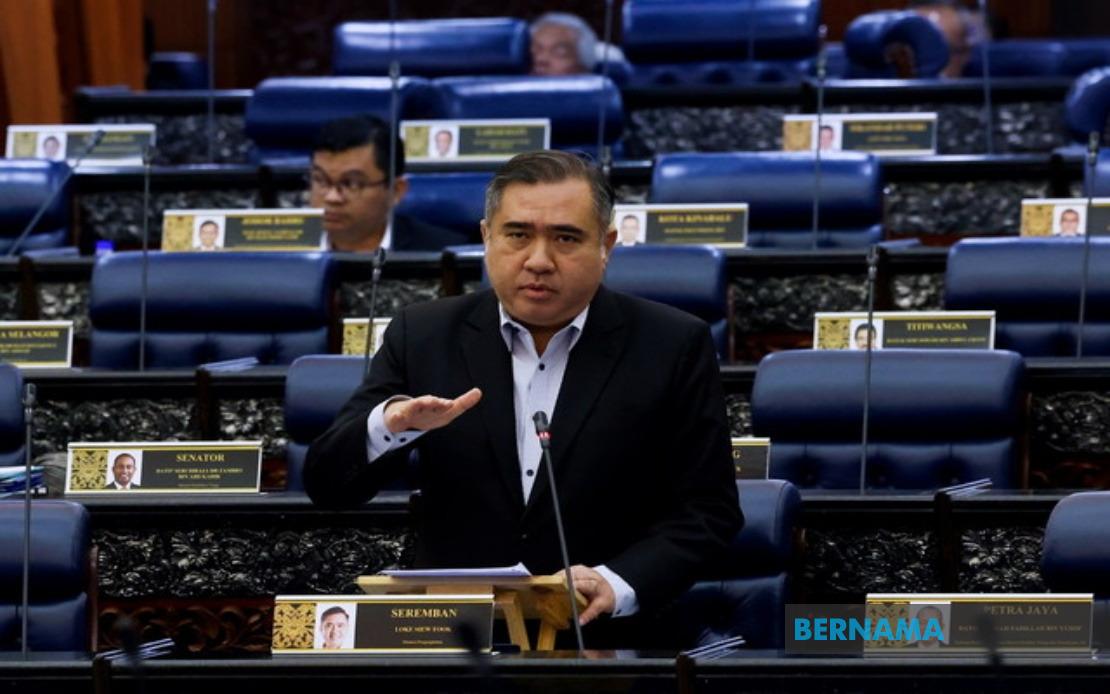
The Transport Ministry has unveiled a significant overhaul of Malaysia's approach to road safety, proposing sweeping amendments to the Road Transport Act 1987 that would establish a formal compensation framework for those harmed in traffic collisions. Speaking in the Dewan Rakyat, Transport Minister Anthony Loke outlined how courts would gain authority to mandate payments to injured victims or surviving family members when drivers are convicted of serious offences, a shift that signals the government's determination to hold dangerous motorists accountable beyond traditional fines and jail terms.
The proposed compensation mechanism represents a meaningful departure from existing practice, as it recognises the profound financial and emotional toll road accidents inflict on families. Rather than applying uniform penalties, the new framework would require courts to examine the unique circumstances of each case, weighing factors such as the severity of injuries sustained, the extent of economic losses incurred, and whether the offender possesses sufficient means to fulfill payment obligations. This individualized approach acknowledges that a teenager losing a parent differs fundamentally from cases involving temporary disability, and financial capability cannot be ignored if compensation is to be realistic and enforceable.
Particular emphasis has been placed on curbing the phenomenon of illegal street racing, which has emerged as a flashpoint for young drivers and a growing public safety concern across the nation. The government tabled the Road Transport (Amendment) Bill 2026, which passed parliamentary approval and introduced a new Section 42A that specifically criminalizes illegal racing as a distinct offence. This legislative precision matters because it creates legal tools that operate independently of accidents, allowing authorities to intervene before tragedy strikes rather than waiting for collisions that claim lives.
The penalty structure for illegal racing now distinguishes between first-time and repeat offenders, reflecting a graduated deterrence approach. A first conviction carries a financial penalty ranging from RM2,000 to RM10,000, with an alternative of up to two years' imprisonment or a combination of both. Those caught a second time face substantially harsher consequences: fines between RM5,000 and RM20,000, coupled with potential imprisonment extending to five years, or concurrent penalties. For a demographic often perceived as resistant to authority, such escalating consequences aim to impart genuine risk awareness.
The transformation of enforcement capabilities cannot be overstated. Previously, the legal system could only pursue charges following an actual accident, meaning authorities were reactive rather than proactive in addressing the behaviour itself. Under the amended legislation, individuals participating in organized illegal racing can now face prosecution immediately upon detection, regardless of whether a crash has occurred. This preventive dimension potentially disrupts organized racing networks before they become implicated in fatalities, addressing the root activity rather than merely responding to its worst outcomes.
Enforcement efforts have already intensified nationwide, with recent operations demonstrating the ministry's commitment to the new framework. A major operation conducted in Johor resulted in sixteen arrests and the seizure of 260 motorcycles from individuals involved in illegal racing activities. These enforcement sweeps serve dual purposes: they remove vehicles used for racing from circulation and send a signal that the government is prepared to deploy resources in pursuit of road safety compliance. Such visible enforcement can shape public perception of risk, particularly among younger motorists who may regard racing as consequence-free.
The specificity of recent enforcement actions reflects the gravity with which authorities now treat racing-related incidents. When five lives were lost in a collision on June 1 at Km27 of Jalan Renggam-Simpang Renggam in Johor, the Attorney-General's Chambers directed that investigations proceed under Section 302 of the Penal Code, a provision addressing culpable homicide not amounting to murder. This escalation demonstrates that fatal racing incidents are no longer treated as mere traffic violations but as serious criminal matters warranting the most severe prosecutorial response available.
Minister Loke's statements emphasised that road safety transcends any single ministry or enforcement body, requiring coordinated action spanning government agencies, local community organizations, and the public itself. He noted that Malaysia's annual road fatality toll exceeds 6,000 deaths, a statistic that underscores why this issue demands sustained, cross-sectoral commitment. The emotional and economic burden of such casualties extends far beyond those directly involved, affecting families, workplaces, and healthcare systems across the nation.
Beyond legislative frameworks and enforcement operations, Loke highlighted that genuine progress on road safety hinges upon shifting driver behaviour and elevating public consciousness regarding the dangers of reckless driving. Laws and penalties establish boundaries, but lasting change requires communities to internalize the consequences of dangerous choices. Public awareness campaigns, school-based education, and peer-driven initiatives all contribute to creating cultural norms where speeding and racing carry social stigma alongside legal jeopardy.
The minister's call for non-politicization of road safety matters carries particular significance in Malaysia's polarized political environment. By framing road safety as a unifying national agenda rather than partisan territory, the ministry is attempting to transcend the political tribalism that often stalls policy implementation. When traffic safety becomes a point of political contestation, enforcement becomes inconsistent and public messaging becomes confused, ultimately undermining the deterrent effect of new laws.
For Malaysian commuters and families, these amendments signal that the state is beginning to recognize road accidents not merely as inevitable consequences of motorization but as preventable tragedies warranting comprehensive legal and social intervention. The compensation mechanism offers modest financial redress for the bereaved, while the enhanced racing penalties aim to eliminate a visible source of high-speed collisions. Implementation success, however, will depend on consistent judicial application of compensation orders, sustained enforcement operations, and whether public attitudes toward dangerous driving shift measurably in response to the tougher legal regime now in place.

