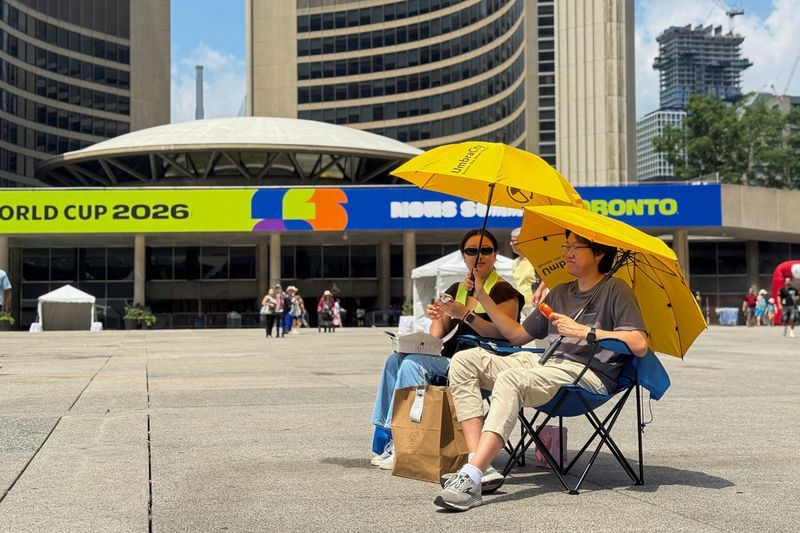
Football supporters gathering in Toronto on Thursday to watch Portugal take on Croatia in the World Cup round of 32 encounter are facing a serious health challenge as the Canadian city battles an oppressive heatwave that officials warn could pose significant risks to public health. Environment Canada has issued a heat warning for the region, with conditions expected to be particularly punishing due to the combination of high temperatures and considerable humidity levels.
The City of Toronto's medical officer of health, Michelle Murti, has issued explicit guidance for fans planning to attend the match or gather at public viewing venues throughout the city. Rather than relying on physical thirst as an indicator, residents should maintain consistent fluid intake throughout the day, Murti advised in remarks to media on Tuesday. She also cautioned against excessive alcohol consumption, noting that alcoholic beverages can accelerate dehydration and compound the dangers posed by extreme heat exposure.
The meteorological conditions are expected to be particularly severe, with actual air temperatures climbing beyond 35 degrees Celsius, yet the combination with humidity could make conditions feel substantially hotter to those outdoors. According to Murti's assessment, the perceived temperature could reach approximately 40 degrees Celsius on match day, creating a potentially hazardous environment for the thousands of supporters expected to gather across the city. Beyond the direct threat of heat-related illness, weather officials are also monitoring the possibility of severe thunderstorms developing, which could disrupt outdoor fan celebrations and force organisers to cancel some planned viewing activities.
Toronto Stadium, which serves as the smallest venue hosting World Cup matches throughout the tournament, will play its final game of the competition on Thursday evening. The facility has been a focal point for fan engagement throughout the tournament, with the city organising multiple public watching zones and fan celebrations to capitalise on the historic opportunity of hosting World Cup football. The convergence of the final local match and the severe weather warning has created a complex logistical challenge for city authorities attempting to balance fan engagement with public safety concerns.
The heat crisis affects not merely football fans but reflects broader climate patterns currently afflicting Canada from coast to coast. Residents across the country have endured a succession of severe weather events in recent weeks, ranging from damaging floods to the current heat extremes, all arriving ahead of the Canada Day national holiday celebration on Wednesday. The compounding weather challenges have tested emergency response systems and forced citizens to adopt extraordinary precautions during what would normally be a celebratory period.
In response to the dangerous conditions, Toronto has implemented practical measures to help residents and visitors cope with the extreme temperatures. Misting stations have been strategically positioned throughout the city, including at the iconic Nathan Phillips Square, providing welcome relief for those venturing outdoors. These installations represent an acknowledgment by municipal authorities that the heat poses immediate and tangible threats requiring active intervention rather than merely advisory guidance.
Visitors to the public gathering spaces have expressed concern about both their own vulnerability to the heat and empathy for the players who will be competing in such demanding conditions. Megan Rennie, a Toronto resident present at Nathan Phillips Square on Tuesday, acknowledged the discomfort of watching football in such heat and suggested she might be forced to abandon her attendance plans if conditions became unbearable. Her concerns reflect the genuine safety dilemma facing thousands of fans who must weigh their enthusiasm for the match against legitimate health worries.
The experience of Laura Albarez, visiting from Colombia, illustrates how even those accustomed to tropical climates can find Canadian heat dangerous when combined with high humidity. She indicated plans to retreat to the relative safety of her hotel rather than remain exposed to the outdoor conditions, emphasising her reliance on accessible drinking water as a survival strategy should she attempt further outdoor activities. Such responses highlight how extreme weather transcends cultural and geographic expectations, affecting both locals and international visitors alike.
For Malaysian and Southeast Asian observers, the Toronto heatwave presents a notable contrast to the humid tropical conditions more familiar to the region. While Malaysia and neighbouring countries experience consistently high temperatures and humidity, the sudden intensity of such conditions in temperate zones often exceeds what populations there have adapted to manage. The public health response in Toronto, emphasising hydration and alcohol moderation, offers useful lessons for how cities in Southeast Asia might enhance their own heat management protocols during increasingly frequent extreme weather events.
The situation underscores how major sporting events can amplify existing vulnerabilities in urban infrastructure and public health systems. As climate change drives more frequent and intense heat events globally, cities hosting large gatherings must develop more sophisticated strategies for managing crowd safety under extreme conditions. Toronto's experience this week may serve as a cautionary example for other municipalities—in Malaysia, Canada, and beyond—preparing to host major international events in an era of increasingly unpredictable and severe weather patterns.

