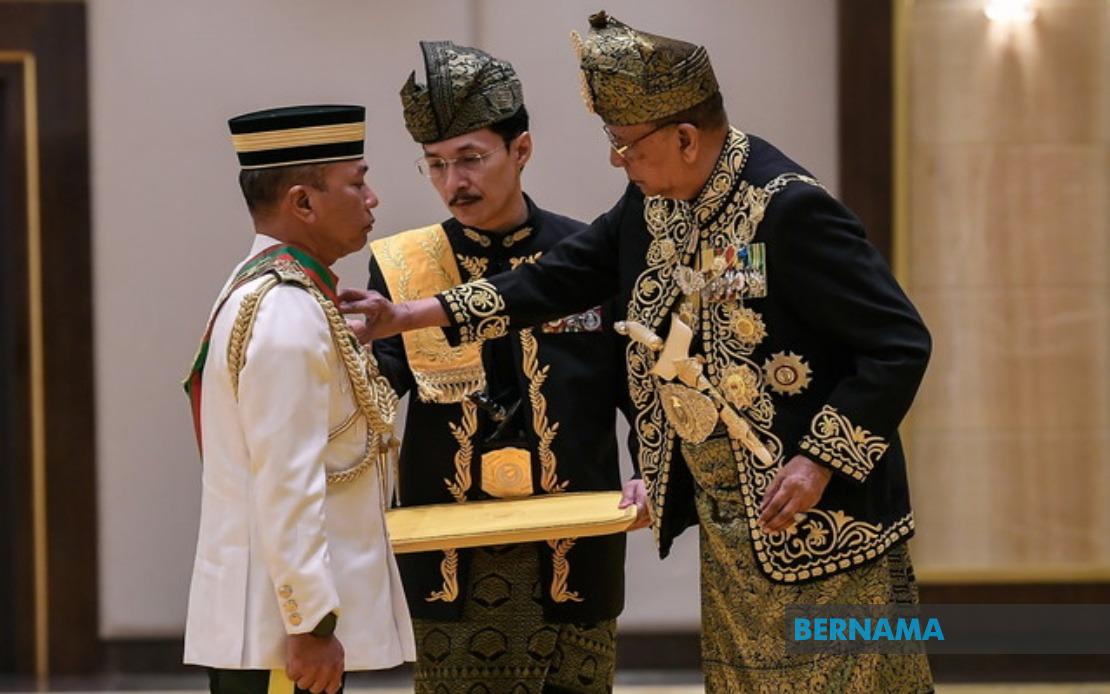
Chief of Defence Forces General Tan Sri Malek Razak Sulaiman and Inspector-General of Police Tan Sri Mohd Khalid Ismail topped the honours roll at a ceremonial presentation held in Alor Setar on July 5, when Sultan Sallehuddin Sultan Badlishah, the ruler of Kedah, celebrated his 84th birthday. The occasion at Istana Anak Bukit demonstrated the traditional Malaysian practice of conferring state honours to recognise service and leadership across military, civilian, and professional sectors. Both senior security officials received the Darjah Dato' Seri Setia Pahlawan Yang Amat Dihormati, the most prestigious award on the day's slate, reflecting their pivotal roles in maintaining national defence and law enforcement.
The honours system in Malaysian states serves as a formal recognition mechanism for contributions to governance, public service, and community development. For the two top recipients, their elevation underscores the importance Malaysia places on its security apparatus at a time when regional stability concerns persist across Southeast Asia. General Tan Sri Malek Razak's recognition comes as Malaysia continues modernising its armed forces and engaging in regional defence partnerships, while Tan Sri Mohd Khalid Ismail's honour reflects the police force's expanding role in combating transnational crime and cybersecurity threats.
Beyond the two headline recipients, Sultan Sallehuddin conferred the Orang Besar Enam Belas title on Datuk Syed Khairol Anuar Syed Abidin and the Orang Besar Tiga Puluh Dua title on Datuk Mohamad Che Nai, both prestigious positions within Kedah's traditional administrative hierarchy. These appointments reflect the state's commitment to maintaining historical protocols and integrating recognised figures into the formal governance structure. The conferment of such titles carries both ceremonial weight and practical significance, as holders often serve in advisory capacities and represent Kedah at official functions.
The Darjah Dato' Setia Diraja Kedah was awarded to four individuals, while Kedah's police chief Datuk Adzli Abu Shah received the Darjah Dato' Setia Pahlawan, acknowledging his leadership of the state's law enforcement operations. At the state level, policing effectiveness directly impacts public safety and business confidence—critical factors for Kedah's economic development and attractiveness to investors. Datuk Adzli's recognition signals the sultan's appreciation for contemporary security challenges and the enhanced role state police play in tackling organised crime, drug trafficking, and public order maintenance.
Two recipients earned the Darjah Setia Sultan Sallehuddin Kedah, including Major (Retired) Mansor Zakaria, a state executive council member, and Afnan Hamimi Taib Azamudden, chief of PAS Youth. The inclusion of a senior opposition party youth leader in the honours list demonstrates Malaysia's constitutional monarchy's non-partisan character, where recognition transcends political affiliation. This practice reinforces the institution's role as a unifying national symbol, particularly important in a federal system where state sultans maintain significant ceremonial and constitutional authority.
Nine recipients obtained the Darjah Setia Diraja Kedah, a tier honouring diverse contributions spanning public health, infrastructure, and economic development. Syeikh Mohamad Subhi Abdullah, director of the Kedah State Islamic Religious Affairs Department, represents the state's substantial investment in religious administration—a notable component of Malaysian governance reflecting Islam's constitutional position. Dr Adam Mohd Zakaria and Dr Manisekar K. Subramaniam from Sultanah Bahiyah Hospital received recognition for advancing specialised medical services in the state, highlighting healthcare's prominence in development priorities.
Among the nine recipients at this honour level were officials from the Muda Agricultural Development Authority and Langkawi Development Authority, reflecting Kedah's economic anchors in agriculture and tourism. Zulkifli Romli, MADA's general manager, oversees an authority integral to Kedah's rice production and rural development—sectors that employ significant rural populations and sustain agricultural communities throughout the state. Similarly, Maznim Ismail's recognition as LADA's deputy chief acknowledges Langkawi's transformation into a major tourism destination, contributing substantially to Kedah's revenue and employment.
The infrastructure sector received prominence with honours for the state's Public Works Department director Ir Mohd Fisal Ismail, underscoring construction and maintenance of essential utilities as state priorities. Real Estate and Housing Developers Association Kedah/Perlis chairman Yeoh Su Guan's recognition reflects growing attention to housing development and property sector regulation in Malaysia's secondary states, where rapid urbanisation creates demand for coordinated residential expansion. Bismi Empire's president Jaffri Ahmad's inclusion suggests recognition for business leadership and private sector contributions to state development.
Beyond elite awards, the broader honours roll distributed across multiple merit tiers demonstrates a comprehensive recognition system. Sultan Sallehuddin consented to conferring the Ahli Mahkota Kedah to 31 recipients and the Ahli Setia Pahlawan to five recipients, honouring contributions at various professional levels. The Bintang Perkhidmatan Cemerlang Kedah went to 31 recipients, while the Bintang Kebaktian Masyarakat—recognising community service—was awarded to 43 individuals, indicating substantial grassroots involvement in civic engagement.
Additional honours cascaded across multiple categories: the Ahli Cemerlang Semangat Jerai Kedah to five recipients, the Pingat Perkhidmatan Cemerlang Kedah to 55 recipients, and the Pingat Jasa Kebaktian to 40 recipients, each representing intermediate recognition levels. The Pingat Perkhidmatan Lama, awarded to 15 recipients, honours long-service dedication—a traditional acknowledgment of career commitment across civil service, military, and professional organisations. In aggregate, these awards reached several hundred individuals, reflecting the extensive network of contributors sustaining Kedah's administration and public institutions.
The honours ceremony exemplified Malaysia's federal system, where state sultans exercise constitutional prerogatives in recognising excellence and service within their domains. Such ceremonies reinforce hierarchical traditions while accommodating modern meritocratic principles—awarding both established officials and grassroots contributors. For Malaysian observers, the honours list provides insight into state priorities, from security and healthcare to agriculture, tourism, and community development. The prominence accorded to top defence and police leadership reflects contemporary Southeast Asian security concerns, while the broad recognition of civil servants, professionals, and community volunteers underscores Malaysia's emphasis on inclusive governance and nationwide participation in nation-building efforts.

