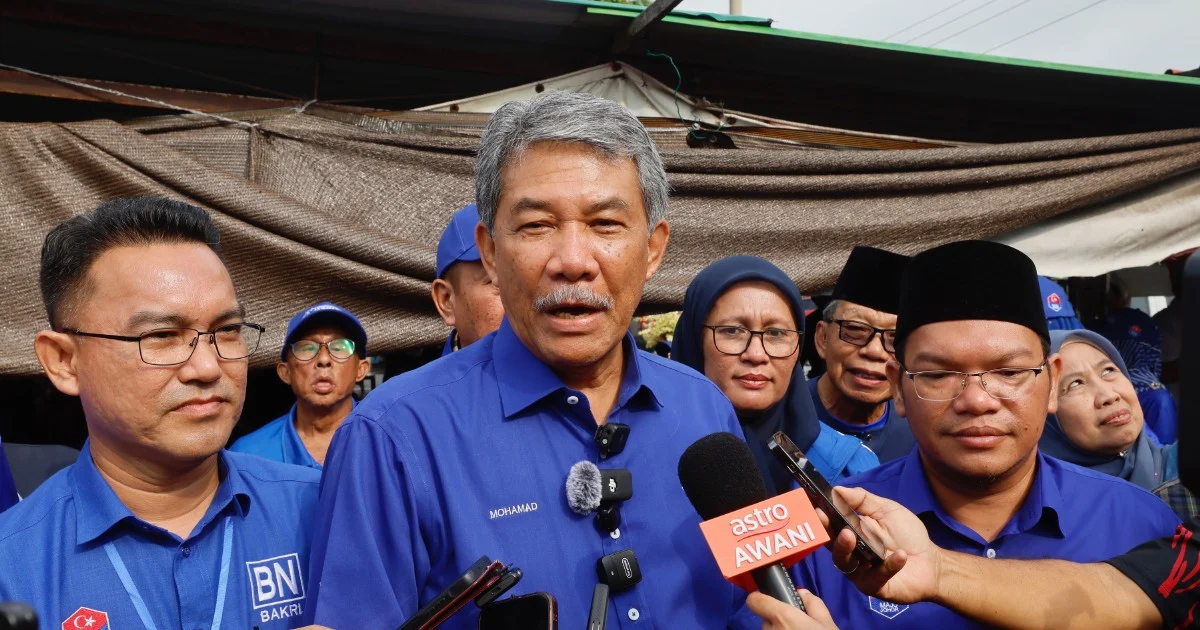
Barisan Nasional deputy chairman Datuk Seri Mohamad Hasan has escalated political tensions by issuing a direct challenge to DAP leader Nga Kor Ming, calling for his immediate resignation in the wake of controversial statements surrounding the Johor state election. Speaking in Muar, the senior coalition figure delivered a pointed response that underscores deepening rifts within Malaysia's ruling coalition structures and raises questions about the stability of inter-party arrangements ahead of upcoming electoral contests.
The confrontation reflects a broader pattern of friction between BN and DAP over their governing partnership, particularly as state-level elections draw closer and competing political interests begin to surface. While both parties have maintained their commitment to the Pakatan Harapan coalition at federal level, underlying tensions have periodically erupted into public disputes over policy directions, electoral strategy, and the distribution of political credit. Mohamad Hasan's uncompromising stance suggests that patience within BN circles may be wearing thin.
Nga Kor Ming's remarks, which touched on electoral dynamics in Johor, have evidently struck a nerve with senior BN leadership. Rather than engaging in the measured back-and-forth typical of coalition politics, Mohamad Hasan chose to go on the offensive, framing the situation as one requiring decisive action. The ultimatum carries particular weight given his position as deputy chairman of the nation's largest Malay-Muslim political party, signalling that the issue has attracted attention at the highest echelons of party leadership.
The Johor election context adds complexity to this dispute. As one of Malaysia's most politically significant states, developments there carry implications for the broader political landscape and test the cohesion of federal coalition partners. Any perceived overreach by one coalition member in state-level politics can trigger defensive reactions from others, especially when electoral outcomes appear uncertain or when one party fears marginalisation in power-sharing arrangements.
For Malaysian political observers, this exchange highlights a persistent challenge facing multi-party coalitions: maintaining unity on national agendas while managing the divergent interests of constituent parties at state and local levels. DAP's expansion into traditionally Malay-Muslim constituencies and BN's evolving electoral positioning have created new fault lines. Public rebukes such as Mohamad Hasan's comment risk inflaming these tensions further.
The ultimatum also reflects broader demographic and ideological differences between the parties. BN, historically anchored by UMNO and Malay-centric political narratives, has sometimes struggled to articulate clear positions on issues where DAP's multiracial, urban-focused platform may gain traction. When disagreements surface publicly, they expose these fundamental divides to voter scrutiny at moments when coalition unity appears most valuable.
Nga Kor Ming's role as DAP leader adds another dimension. DAP, despite its federal coalition alignment, maintains a distinct identity as an opposition-minded party critical of established power structures. This positioning occasionally creates friction with BN partners who view DAP's rhetoric or positioning as undermining coalition credibility or courting opposition support. The Johor remarks, whatever their specific content, appear to have been interpreted by BN as crossing a line of acceptable intra-coalition disagreement.
Mohamad Hasan's public challenge raises questions about whether informal mechanisms for resolving coalition disputes have broken down or whether this confrontation represents a deliberate escalation intended to reestablish BN's dominance within the coalition hierarchy. Either scenario has implications for coalition stability and for voters who depend on these arrangements for stable governance. If personal animosity between senior leaders intensifies, substantive policy collaboration becomes more difficult regardless of formal alliance commitments.
The timing of this confrontation matters significantly. Political parties typically manage internal disputes quietly when possible, especially ahead of elections when divisions can depress voter turnout or encourage strategic voting against coalition interests. That Mohamad Hasan chose public confrontation suggests either that private discussions had failed or that BN calculated political benefit from being seen as standing firm against what it perceived as unreasonable behaviour.
For DAP, the ultimatum presents a dilemma. Backing down risks appearing weak to the party's base and to voters who value its independent stance. Escalating the conflict, conversely, could destabilise the coalition and trigger more serious consequences for DAP's participation in federal and state governance arrangements. The party must calibrate its response carefully, balancing coalition loyalty with internal party expectations.
The broader Southeast Asian context also warrants consideration. Coalition politics in the region frequently experience similar tensions between national-level unity and state-level competition. Malaysia's experience offers both cautionary lessons and potential models for how diverse political parties can or cannot coexist within shared governmental structures. The sustainability of multiethnic, multireligious coalitions remains a crucial test for regional democratic development.
Moving forward, this public exchange signals that coalition partners should expect less deference and more direct confrontation over disputed matters. Whether Mohamad Hasan's ultimatum was intended literally or as performative positioning for internal party audiences, it has raised the stakes for managing inter-coalition relations. Senior party leaders from both BN and DAP will likely face pressure to clarify their commitment to continued partnership and to establish clearer ground rules for public disagreement. The alternative—continued escalation of such confrontations—could undermine public confidence in the coalition's ability to govern effectively.

