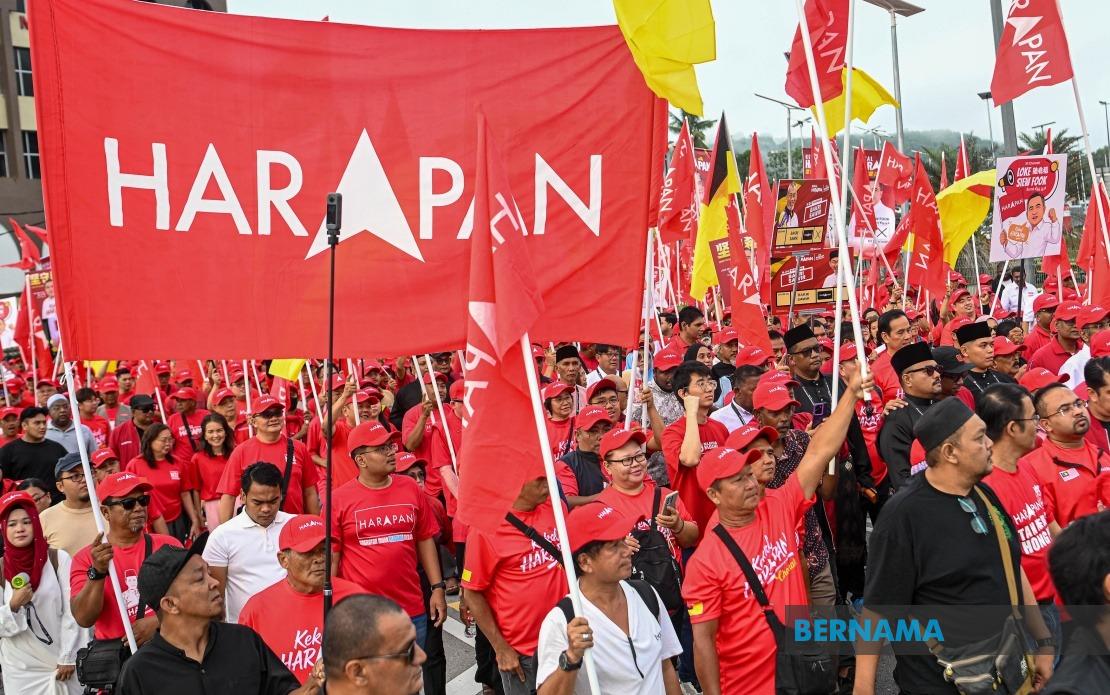
Three key state constituencies in Negeri Sembilan are poised for competitive multi-candidate contests as nominations closed on the morning of July 18 for the 16th state election. The Pertang, Klawang and Sungai Lui seats will all witness three-way battles between candidates from Barisan Nasional, Pakatan Harapan and Bersatu, setting up potentially unpredictable contests in what observers regard as marginal territories within the state's political landscape.
The Jelebu Parliamentary returning officer, Abdul Rahim A Aziz, formally confirmed the nomination results at Dewan Besar Kuala Klawang following conclusion of the filing process. The announcement underscores how Negeri Sembilan remains a politically fragmented state where no single coalition commands overwhelming dominance, creating space for multiple contenders to mount credible campaigns across several constituencies.
In Pertang, the incumbent Datuk Seri Jalaluddin Alias representing Barisan Nasional will defend his seat against two challengers: Mohd Umry Abdul Khois fielded by Pakatan Harapan and Mohd Faizal Fadli Mohd Idrus from Bersatu. Jalaluddin's previous victory margin was substantial—he secured 5,634 votes in the last election, defeating Amirudin Hasan of Perikatan Nasional by a comfortable 2,844-vote majority. However, the fragmentation of opposition votes among competing coalitions in this fresh contest introduces fresh uncertainty, particularly given that Bersatu's participation this time represents a different political configuration than the previous Perikatan Nasional challenge.
The Sungai Lui seat has drawn particular attention from political analysts due to an intriguing personal dimension: the three candidates are former schoolmates whose reconnection in electoral combat adds a human interest angle to the institutional rivalry between coalitions. Datuk Mohd Razi Mohd Ali carries the Barisan Nasional banner, while Zainal Fikri Abd Kadir represents Pakatan Harapan and Mazrulhisham Abd Mansor campaigns for Bersatu. Their shared educational background amid a divisive political contest exemplifies how Malaysia's electoral competitions often pit long-acquainted figures against one another, reflecting the country's complex social fabric.
Klawang presents a different narrative, as incumbent Datuk Bakri Sawir of Pakatan Harapan faces challengers Muhammad Adib Musa from Bersatu and Danni Rais representing Perikatan Nasional. Bakri's incumbency status provides organisational advantage, yet the presence of two well-distributed opposition candidates threatens to dilute any sitting-member advantage through vote-splitting dynamics that have become characteristic of contemporary Malaysian state elections.
For Malaysian political observers, the Negeri Sembilan contest exemplifies broader trends reshaping state-level competition across the country. The emergence of three-way races in multiple constituencies indicates that the traditional two-coalition framework governing national politics has not fully crystallised at the state level, where localised considerations, personality-driven campaigns and community-specific issues retain considerable influence. This fragmentation extends decision-making power to smaller parties and independent candidates in ways that two-party systems do not typically permit.
The timing of the election—with early voting scheduled for July 28 and polling day on August 1—provides a compressed campaign period during which candidates must mobilise supporters and communicate platforms amid the constraints of working hour limitations and infrastructure availability. Early voting provisions acknowledge the practical reality that many urban and semi-urban voters require flexibility, particularly in constituencies with significant commuter populations or multi-generational families where elderly or physically limited voters benefit from alternative polling arrangements.
Regionally, the Negeri Sembilan election warrants attention from observers across Southeast Asia monitoring Malaysia's democratic evolution. The state has historically served as a bellwether for national political trends, and results will offer insights into voter preferences regarding coalition realignment, particularly whether Bersatu's repositioning gains electoral traction or whether traditional Barisan Nasional-Pakatan Harapan polarisation reasserts dominance. The three-cornered contests will provide clear indicators of whether third-force politics can sustain meaningful electoral presence or whether Malaysian voters ultimately consolidate behind the two major coalitions.
Economically conscious observers note that Negeri Sembilan's political complexion influences state-level development priorities, infrastructure investment and business-friendly policy frameworks that affect regional commerce. The constituencies in question encompass diverse socioeconomic profiles—from Klawang's historical tin-mining heritage and contemporary manufacturing base to rural Sungai Lui and semi-urban Pertang—meaning electoral outcomes will shape policy emphasis regarding agricultural support, industrial diversification and urban development spending.
The multi-candidate races also reflect shifting dynamics within party structures themselves. Barisan Nasional's ability to retain incumbents while facing Pakatan Harapan and Bersatu challengers indicates these coalitions retain competitive capacity despite occasional internal fragmentation at national level. The contests will reveal whether parties successfully mobilised grassroots supporters and whether messaging resonated with priority voter concerns including cost-of-living pressures, employment opportunities and service delivery quality.
As Negeri Sembilan voters prepare for August 1, the three-cornered contests in Pertang, Klawang and Sungai Lui will provide important data regarding contemporary Malaysian electoral preferences and coalition viability beyond federal politics, potentially influencing calculations for future national elections while reflecting immediate state-level governance priorities.

