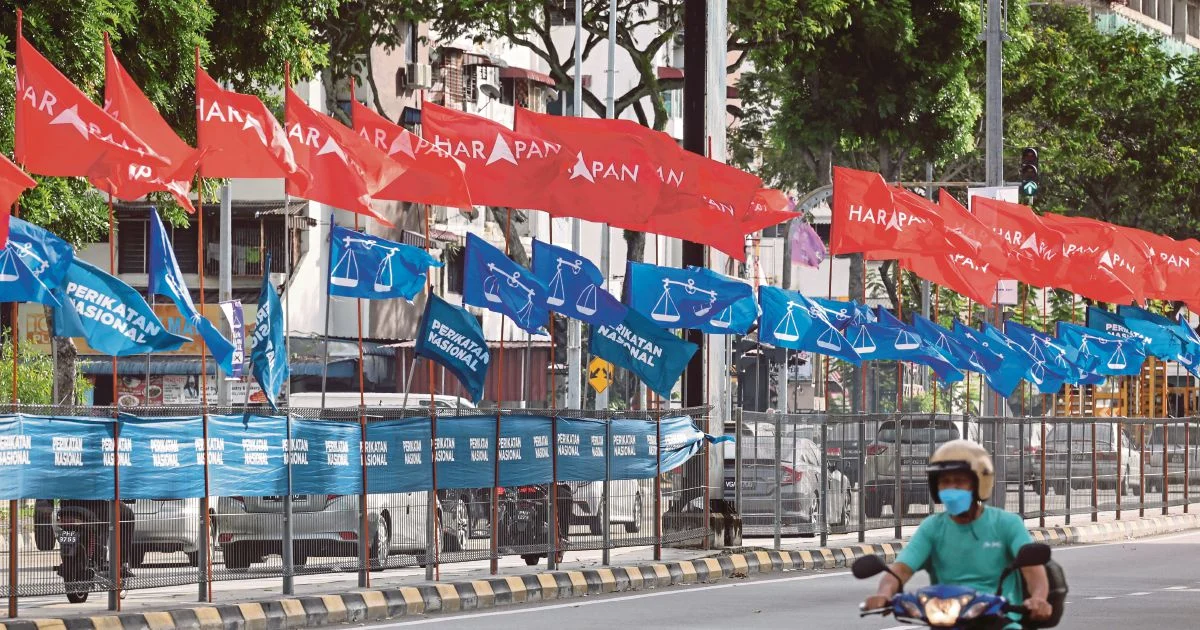
The Johor state election next month is set to become a three-way battleground, with Barisan Nasional, Pakatan Harapan and Perikatan Nasional all competing for voters in nearly 60 per cent of the 56 available seats. This widespread triangular contest represents a significant shift in Malaysian electoral dynamics, where voters in these constituencies will face a genuinely complex choice across the political spectrum rather than a traditional two-horse race.
The presence of three major coalitions across 33 seats fundamentally changes the calculus for all competing parties. In a three-cornered fight, the candidate who secures the most votes wins, even with a relatively modest plurality. This structure typically favours the incumbent or strongest-organised force, but it also creates unpredictable outcomes where traditional voting patterns can be disrupted. Johor, historically a Barisan Nasional stronghold, now faces unprecedented political complexity that could reshape the state's political landscape.
Barisan Nasional's dominance in Johor has been a defining feature of Malaysian politics for decades, with the coalition maintaining consistent control of the state government through multiple electoral cycles. However, the emergence of serious competition from both Pakatan Harapan and Perikatan Nasional signals that voter dissatisfaction or shifting allegiances could threaten this traditional hegemony. The presence of multiple challengers forces BN to defend its ground more aggressively while managing resources across numerous constituencies simultaneously.
Pakatan Harapan's competitive position in 33 seats reflects the coalition's recovery following its 2022 election disappointment and internal reorganisation. The coalition's presence in such a substantial portion of Johor constituencies demonstrates its capacity to mount a credible challenge in Malaysia's second-largest state. For Harapan, the key question is whether the coalition's relatively consistent support base can be mobilised effectively, particularly given the fragmentation caused by three-way contests.
Perikatan Nasional's participation across this many seats underscores the political space opened by recent Malaysian politics and the challenge this newer coalition poses to established players. Since its formation, PN has sought to position itself as an alternative to both BN and Harapan, and the Johor election offers a crucial test of this positioning. The coalition's performance in these 33 constituencies will significantly influence its trajectory heading into federal elections and other state contests.
For voters in these 33 constituencies, the three-way nature of the contest introduces genuine complexity into electoral decision-making. Supporters must weigh their preferences more carefully, as splitting votes or voting tactically becomes more difficult when a third competitive option exists. This dynamic may influence voter turnout and participation patterns compared to previous elections when choices seemed more straightforward.
The distribution of these 33 contested seats across different regions of Johor will determine the strategic importance of each. Urban constituencies may see different competitive dynamics compared to rural areas, with education levels, demographic composition and economic concerns potentially influencing which coalition performs strongest. The geographic spread of three-cornered contests also affects campaign resource allocation and strategic messaging from each coalition.
Analysts will be watching closely whether the remaining 23 seats see either straight two-way fights or one-sided contests where candidates from one or two coalitions emerge unchallenged. The overall composition of contested versus uncontested seats provides insight into which coalitions possess the strongest on-the-ground machinery and voter confidence. It also indicates where each coalition perceives its chances as strongest and where it is willing to cede ground.
The implications for national politics are substantial. Johor's outcome will provide early signals about voter sentiment heading into the next federal election, given the state's size and economic importance. The result will also influence coalition dynamics within both Harapan and PN, as internal discussions about seat allocations and cooperation frameworks often depend on demonstrated electoral viability. Strong performances could strengthen negotiating positions within coalitions ahead of future electoral contests.
For Southeast Asian observers, Johor's election demonstrates the fluidity of Malaysian politics despite surface stability. The presence of genuine three-way competition across most constituencies reflects the complexity of modern Malaysian political choice, where voters increasingly have alternatives to the historical BN-opposition binary. This development carries implications for understanding Malaysian political behaviour and coalition dynamics more broadly.
The road to the Johor election now enters its intensive phase, with each coalition investing significantly in campaign machinery, candidate selection and messaging strategy. The 33 constituencies where all three major coalitions are represented will likely receive disproportionate attention and resources, potentially determining the overall outcome. How each coalition manages this complex electoral environment will offer important lessons about contemporary Malaysian politics.

