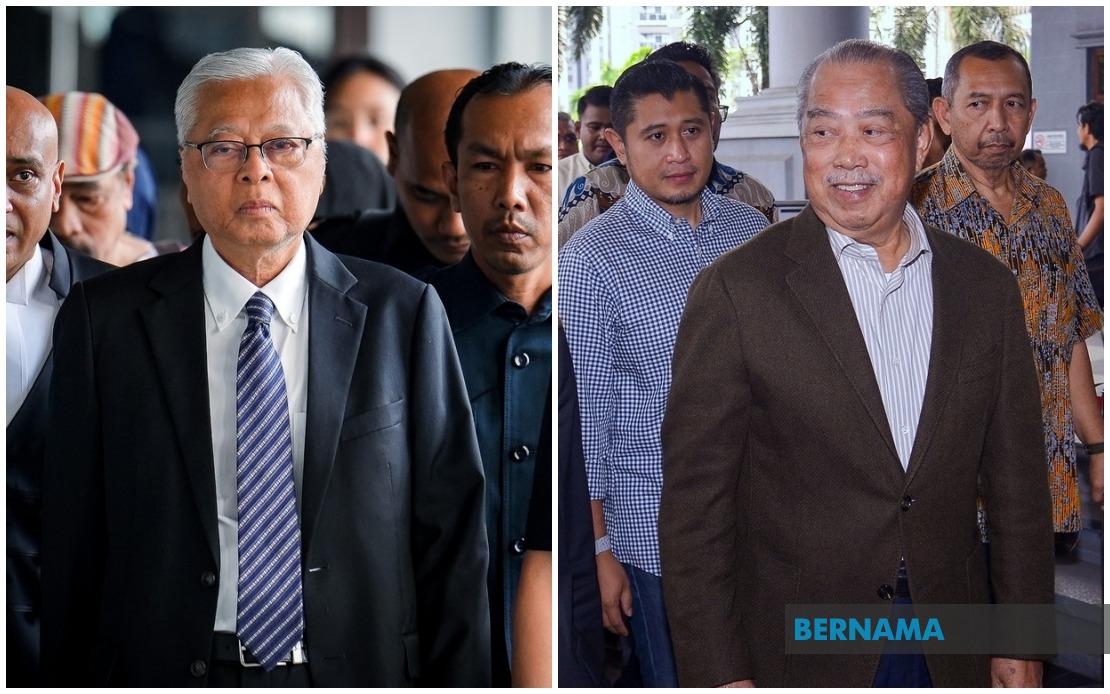
The simultaneous appearance of three former prime ministers at the Kuala Lumpur Court Complex on August 27 created an unprecedented convergence that captured national attention and tested the nation's judicial and security infrastructure in ways few could have anticipated. Datuk Seri Najib Tun Razak, Tan Sri Muhyiddin Yassin, and Datuk Seri Ismail Sabri Yaakob each attended separate court proceedings, their combined presence at the Palace of Justice marking a singular moment unlikely to recur in Malaysia's modern political and legal annals.
The gathering drew immediate recognition from seasoned observers of Malaysia's courts. V. Anbalagan, a veteran court reporter at Free Malaysia Today with decades of experience covering high-profile cases, emphasized the historical weight of the occasion. He stressed that this convergence transcended mere logistical coincidence, representing instead a defining moment in Malaysian judicial proceedings and press coverage. According to Anbalagan, such an event—three former heads of government present simultaneously within a single court complex—may never materialize again, setting a record unlikely to be surpassed given the rarity of such circumstances aligning in any nation.
For journalists embedded in Malaysia's court-reporting community, the significance extended beyond novelty value. Siti Zanariah Nor Zin, a Bernama TV news officer with sixteen years of journalism experience, reflected on encountering something genuinely unprecedented within her professional lifetime. She highlighted how the staggered arrivals of the three former leaders and their legal representatives afforded the assembled media crucial breathing room to coordinate coverage and dispatch timely updates to newsrooms. This careful sequencing allowed journalists to maintain comprehensive reporting without the chaos that might otherwise have engulfed a compressed timeline.
The logistics of managing extensive media interest required meticulous coordination between multiple agencies. Police personnel from Sentul district police headquarters, court security personnel, and officers from the Palace of Justice collaborated to maintain order throughout the sprawling court grounds and internal corridors. Officials involved in the planning process indicated that preparations commenced the previous afternoon, demonstrating the complexity of orchestrating security arrangements when former heads of state navigate the judicial system simultaneously. Between three and six categories of security passes were distributed among different groups, including members of the public, accredited journalists attending open court proceedings, and personnel requiring access to video-link courtrooms.
Security officer Nik Zainab Jusoh confirmed that a comprehensive briefing held the day before ensured all personnel maintained heightened alertness without compromising the calm atmosphere required for court proceedings. The upper floors, particularly areas adjacent to individual courtrooms, received particular monitoring attention, whilst ground-level operations proceeded in orderly fashion. This measured approach reflected official confidence that careful planning could contain the operational challenges inherent in the convergence.
Amirul Aiman Osman, representing Utusan Malaysia, conveyed the intensity of the working conditions journalists experienced. He arrived before seven in the morning and witnessed crowded conditions as television crews, photographers, and reporters staked positions across the court complex. Despite the hectic environment and dense concentration of media personnel, tight security protocols prevented any untoward incidents, though the coverage logistics stretched professional capacities considerably. The sheer number of journalists seeking positioning and access created competitive pressures typical of high-stakes political reporting.
Najib attended proceedings relating to a USD5.64 billion civil suit initiated by 1Malaysia Development Berhad (1MDB) and its subsidiary against him and several co-defendants before Judicial Commissioner Mohamad Redzuan Idrus. This case represents one strand of ongoing legal entanglement surrounding the former premier and Malaysia's most scrutinized sovereign wealth fund. Simultaneously, Muhyiddin faced proceedings involving seven charges encompassing allegations of abuse of power and money laundering connected to the Jana Wibawa programme, with Judge Noor Ruwena Md Nurdin presiding. Meanwhile, Ismail Sabri confronted charges of failing to declare assets before Judge Suzana Hussin, including RM14.7 million in cash, substantial quantities of various foreign currencies, and quantities of gold bars.
For Malaysian observers and international commentators tracking the nation's political trajectory, the convergence underscored the complex aftermath of competitive governance and shifting political coalitions. The presence of three consecutive prime ministers within one judicial precinct simultaneously reflected wider processes of political reckoning and institutional accountability that have characterized Malaysian public life in recent years. Each former leader faced distinct legal charges rooted in separate incidents and regulatory frameworks, yet their concurrent appearance symbolized a broader pattern of heightened judicial scrutiny affecting Malaysia's political establishment.
Ismail Sabri concluded his appearance relatively early, departing the court complex at 11:43 am after posting RM300,000 bail with one surety, marking one of the day's clearer procedural developments. His exit provided some relief to court management and security personnel navigating the compressed timeframe and elevated security demands.
For Malaysian journalism, the August 27 convergence established a benchmark against which future political-judicial intersections would likely be measured. The experience demonstrated both the capacity of Malaysian institutions to manage extraordinary circumstances and the particular challenges posed when former national leaders simultaneously navigate the court system. Media professionals involved recognized that they had witnessed and documented something genuinely singular—a day unlikely to repeat within any foreseeable timeframe, yet one that crystallized contemporary Malaysia's complex relationship between political power, legal accountability, and institutional governance.
The broader implications extend beyond mere procedural management. The simultaneous court appearances of three former prime ministers reflect Malaysia's evolving commitment to legal processes affecting even the nation's highest former office-holders. Whether this represents institutional maturation or political consequence remains subject to interpretation, yet the willingness of courts to proceed with distinct cases involving multiple former leaders simultaneously suggests a judiciary proceeding according to established procedures regardless of the political sensitivities involved. Such consistency, demonstrated through meticulous security coordination and professional journalistic coverage, reinforces institutional credibility during periods of political complexity.

