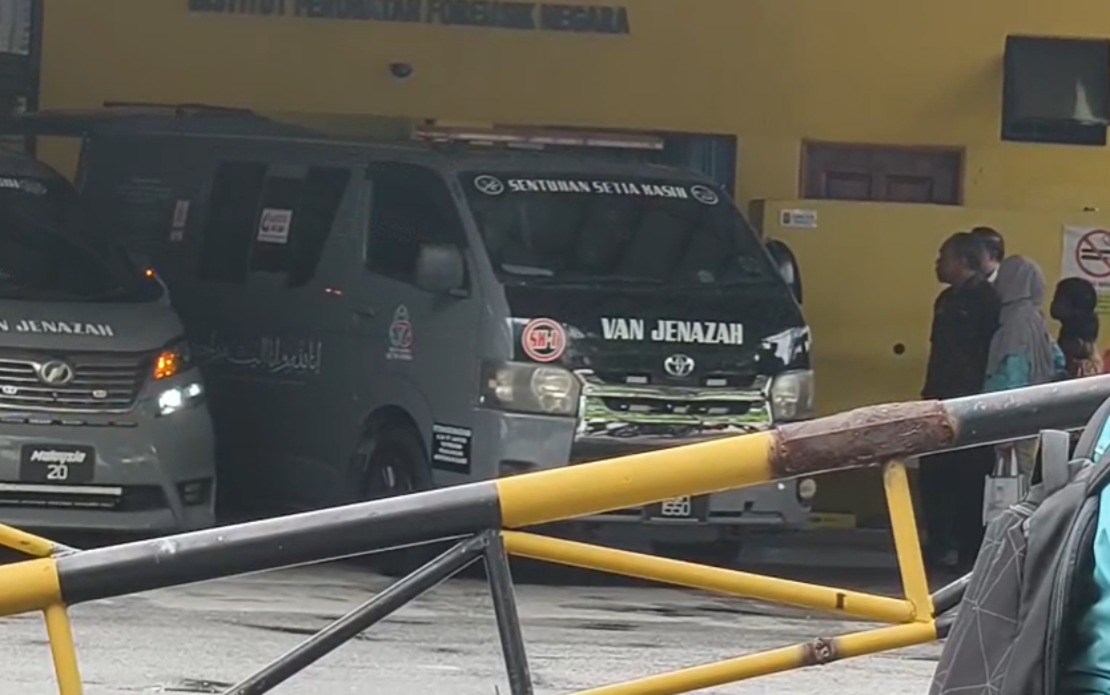
The bodies of three family members who died in a collision involving a Malaysian Immigration Department lorry in central Kuala Lumpur early Monday have been released for burial following completion of post-mortem examinations. The National Institute of Forensic Medicine at Kuala Lumpur Hospital released the remains at approximately 5.45 pm, allowing next-of-kin to proceed with funeral arrangements. The three victims—Shaik Mohd Firdaus Shaikh Yahya, 53, and his daughters Siti Nor Sazlin, 25, and Siti Darwisyah Auni, 12—will be laid to rest in Perak following religious rites in the federal capital.
According to available reports, the remains will first be transported to Jamiul Ehsan Mosque on Jalan Pahang for the customary Islamic bathing, shrouding, and funeral prayers. Following these ceremonies, the bodies will be conveyed to Kampung Air Hitam Labu Muslim Cemetery in Kampar, Perak, for final burial. This arrangement reflects efforts to balance immediate ritual observances in Kuala Lumpur with the family's wishes to be laid to rest in their home state, a common practice among Malaysian Muslim families.
The fatal accident occurred around 1 am on Jalan Sultan Ismail when an unoccupied Malaysian Immigration Department Black Maria lorry collided with a Proton Saga sedan at the Maju Junction intersection. The immigration vehicle, operating with its beacon lights and siren activated, was reportedly en route to Chow Kit to conduct enforcement operations targeting undocumented migrants. Investigators believe the lorry proceeded through the intersection against a red traffic signal before striking the Proton Saga, which had the green light and was travelling through the intersection in the normal direction of traffic.
The force of the initial impact caused the heavy immigration lorry to lose directional control, causing it to skid across the intersection. In its uncontrolled trajectory, the vehicle struck four pedestrians who were in the vicinity of the intersection. The lorry also collided with an Inokom Matrix multi-purpose vehicle, compounding the incident into a multi-vehicle accident. The sequence of events underscores the severe consequences that can result from traffic violations, particularly when large commercial or government vehicles are involved.
One additional victim from the incident was hospitalised with serious injuries. The extent of these injuries and the individual's identity have not been disclosed in available reports, though medical personnel would have assessed their condition separately from those fatally wounded. The presence of serious injuries among survivors highlights the violent nature of the collision and raises questions about emergency response protocols in such incidents.
Police have initiated investigations into the accident under Section 41(1) of the Road Transport Act 1987, the statutory provision governing motor vehicle accidents involving death or serious injury. This investigation will examine multiple aspects of the incident, including whether the immigration lorry's operator exercised appropriate caution and adhered to traffic regulations, despite the activated warning lights and siren. The investigation will also scrutinise whether the operational status of the vehicle—conducting an enforcement mission—influenced driving decisions or priorities.
The incident raises broader questions about road safety protocols for government vehicles engaged in official operations. While enforcement agencies require operational mobility to carry out duties such as immigration raids, this must be balanced against public safety obligations. The activation of warning equipment, while intended to alert other road users, does not confer automatic right-of-way if a traffic signal indicates red, and operators remain responsible for ensuring safe passage through intersections.
This tragedy occurs within the context of persistent road safety challenges in Malaysia's urban centres. Jalan Sultan Ismail, a major thoroughfare in central Kuala Lumpur, experiences heavy traffic volumes, particularly during early morning hours when visibility may be reduced and driver fatigue elevated. The concentration of multiple vehicles and pedestrians in busy intersections creates inherent risk, one compounded when any participant fails to observe traffic signals or exercises inadequate caution.
For the bereaved family, the loss of three members in a single incident represents a catastrophic personal tragedy. The death of a father alongside two daughters suggests the profound disruption to the family unit and surviving relatives' lives. Within Malaysian society, such losses carry particular weight given cultural and religious frameworks governing family relationships and intergenerational obligations. The community response and funeral observances will provide important ritual and social support during this period of acute grief.
The incident also has implications for immigration enforcement operations and workplace safety within the Malaysian Immigration Department. Agencies conducting raids or field operations must weigh operational urgency against the safety of their personnel and the public. This accident will likely prompt reviews of protocols governing vehicle operations during enforcement missions, including whether current practices adequately prioritise the safety of all road users while fulfilling operational mandates.
As investigations proceed, the findings may inform future policy discussions about traffic management in high-risk intersections, particularly those traversed by emergency and enforcement vehicles. Road safety advocates often point to the need for enhanced traffic calming measures, improved signage, and clearer protocols governing right-of-way in complex intersection scenarios. The resolution of this case and any recommendations emerging from the investigation could contribute valuable insights to broader road safety initiatives across Malaysia's urban transport network.

