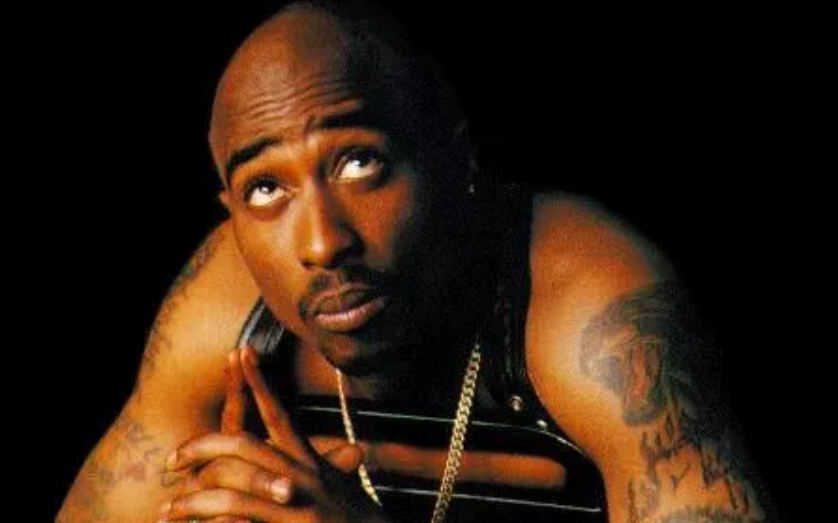
Three decades after one of hip-hop's most luminous figures was gunned down on a Las Vegas street, the criminal justice system has finally brought a case to trial. Duane "Keffe D" Davis, 63, appeared in court on Monday to face charges that he orchestrated the September 7, 1996 murder of Tupac Shakur, the legendary West Coast rapper who was shot in a drive-by shooting while attending a Mike Tyson boxing match. The proceedings represent a watershed moment in American popular culture, as prosecutors attempt to unravel a murder that has captivated criminologists, music historians, and millions of fans worldwide for three decades.
The trial is expected to conclude within a month, though legal experts acknowledge that victory in the courtroom may not provide the full narrative clarity that the public desperately craves. Prosecutors contend that Davis, once a leading figure in the South Side Compton Crips gang, not only ordered the killing but also supplied the firearm used in the fatal shooting. If convicted, Davis faces life imprisonment without the possibility of parole. The case hinges on circumstantial evidence and Davis's own contradictory statements, making it a legal test of whether memory, decades-old confessions, and indirect evidence can satisfy the burden of proof beyond reasonable doubt.
The Shakur killing occupies a unique position in American criminal history, serving as a symbol of unsolved violence that has frustrated investigators and fascinated the public in equal measure. Shakur, known professionally as 2Pac, was only 25 years old at the time of his death, yet had already established himself as a transformative cultural figure whose music and public persona transcended hip-hop to influence broader conversations about race, class, and urban life in America. The rapper's death occurred during an era when East Coast and West Coast hip-hop rivalry had escalated into genuine violence, creating a backdrop of territorial and commercial tensions that would shape the investigation's trajectory for decades.
The bitter feud between record labels Death Row Records, led by Marion "Suge" Knight, and Bad Boy Records, helmed by Sean "Diddy" Combs, provided the operational context for Shakur's murder. Death Row Records enjoyed protection from Mob Piru, a Los Angeles-based gang aligned with the larger Bloods alliance, while Bad Boy Records had secured bodyguard services from the rival South Side Compton Crips. This arrangement meant that major hip-hop industry players had embedded themselves within gang structures, blurring the boundaries between commercial competition and street violence. The fatal incident occurred following an altercation at the MGM Grand casino, where Knight and Shakur allegedly assaulted Davis's nephew, Orlando "Baby Lane" Anderson, a Crips member, reportedly in retaliation for a previous altercation involving a Death Row Records employee.
For investigators, the case remained dormant for years, stymied by the traditional obstacles that plague gang-related homicides: witnesses either unwilling to cooperate with authorities or deceased, and a culture of silence that discourages cooperation with law enforcement. The investigation's revival came unexpectedly through a 2019 memoir published by Davis, in which he provided incriminating details about the murder night. In this account, Davis acknowledged sitting in the front seat of a white Cadillac and passing a pistol to occupants in the rear seat, though he stopped short of naming the actual shooter. The memoir's publication represented an extraordinary development in cold case investigation, wherein a suspect effectively confessed to peripheral involvement while maintaining plausible deniability regarding the actual triggerman.
Davis had previously made similar statements to journalists and law enforcement, but those earlier admissions carried less legal weight. When Davis's memoir surfaced, prosecutors moved quickly, leading to his arrest in September 2023. The arrest prompted a dramatic reversal in Davis's public posture. By March 2025, during an interview with ABC News conducted from prison, Davis had completely disavowed his own narrative, claiming he was in Los Angeles rather than Las Vegas on the night of the killing. He further asserted that he had never actually read his own memoir and that his co-author had fabricated or embellished substantial portions to boost sales. Davis characterised his contribution as merely providing biographical anecdotes that the author transformed into a sensationalised account.
This reversal complicates the prosecution's evidentiary strategy considerably. Defense attorneys successfully argued against introducing Davis's previous statements to police made in 2008, when he was considered a witness rather than a suspect, though the memoir itself appears to have survived judicial scrutiny. The fundamental challenge confronting prosecutors involves establishing Davis's presence in Las Vegas on the night in question and proving that he possessed the authority and capability to orchestrate the killing. Given that all other individuals present in the Cadillac have since deceased, corroborating witnesses are unavailable. The prosecution must therefore construct its case from circumstantial evidence, Davis's own words, and testimony from individuals with varying credibility and potential motives.
The trial's commencement has reignited interest not only among hip-hop enthusiasts but also among legal scholars studying how cold cases can be prosecuted decades after the underlying events. For Malaysia and Southeast Asia's substantial hip-hop communities, the trial serves as a window into how international music industries intersect with organized crime and how such entanglements can result in lasting consequences. The case demonstrates vulnerabilities in law enforcement systems when investigating high-profile figures and the challenges authorities face when pursuing justice in cases involving marginalised communities and gang violence. Southeast Asian observers may draw parallels to domestic music industry violence and the broader question of how governments balance commercial interests against public safety.
Maurice Shakur, the deceased rapper's stepbrother, has pursued his own civil wrongful death action in court, arguing that multiple individuals involved in the killing have escaped accountability for three decades. This parallel legal action suggests that even if criminal proceedings result in conviction or acquittal, the broader question of comprehensive justice—encompassing multiple perpetrators and their motivations—may remain unresolved. The stepbrother's complaint references documentary evidence suggesting additional individuals' involvement, implying that Davis may represent one component of a larger conspiracy that has eluded complete prosecution. The trial therefore functions not as a conclusive resolution but as a partial reckoning with a complex tragedy that fundamentally altered hip-hop culture and American popular music.

