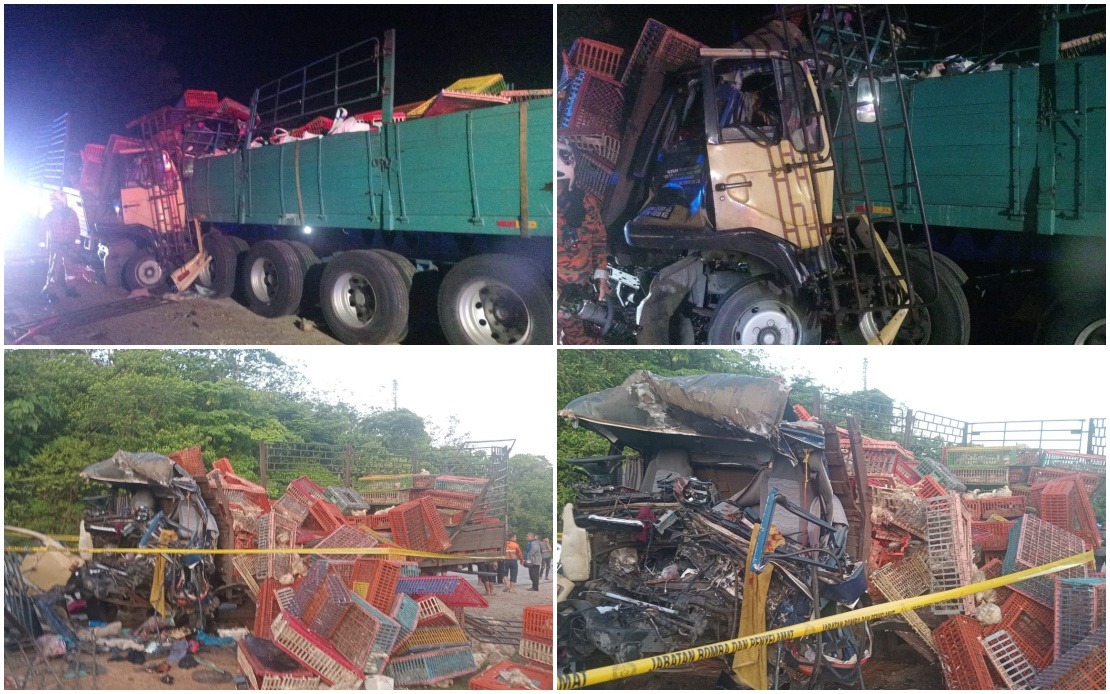
Three people perished in a traffic accident on the East-West Highway in Tanah Merah, Kelantan, when a five-tonne lorry transporting chicken struck a trailer that had been left stationary by the roadside. The incident occurred in the pre-dawn hours, with emergency services receiving the distress call at 4.26 am and arriving at the location fifteen minutes later to discover a catastrophic collision.
The three fatalities included Norazeman Abdul Aziz, 42, who was operating the lorry at the time of impact. Two passengers aboard the vehicle—Mohammad Zakwan Mohd Nor, 16, and Mohd Haikal Hanifah, 29—also lost their lives. All three victims were found trapped within the wreckage of the lorry, requiring firefighters to conduct an extrication operation before Medical Ministry officials confirmed their deaths at the scene.
The Kelantan Fire and Rescue Department mobilised personnel from both the Kemahang and Tanah Merah fire stations in response to the emergency call placed via the NG999 hotline. A departmental spokesman explained that firefighters reached the crash site at 4.41 am and immediately assessed the situation, discovering the collision between the chicken lorry and the parked trailer. The rescue team worked methodically to remove all three trapped occupants from the damaged vehicle.
The rescue operation drew twelve firefighters from the two stations and utilised two fire engines in total. The intensity of the response reflected the severity of the collision, which had rendered the lorry's cabin uninhabitable and left all three occupants requiring extraction assistance. This scale of deployment underscores how such early morning accidents often demand substantial emergency resources, particularly when multiple fatalities are involved.
Following the confirmation of death by Health Ministry personnel at the scene, the bodies were transferred to police custody for standard investigative procedures. The authorities have not yet released details regarding the preliminary cause of the accident, though the involvement of a parked trailer raises questions about roadside safety protocols and vehicle visibility during hours of darkness. The collision pattern suggests the moving lorry failed to avoid or stop before striking the stationary trailer, pointing toward potential factors such as driver fatigue, visibility issues, or mechanical failure.
This fatal accident highlights the persistent road safety challenges faced by commercial transport operators on Malaysia's longer expressway routes. The East-West Highway, which connects communities across Peninsular Malaysia, witnesses substantial agricultural and commercial traffic daily. Chicken transport vehicles are particularly common on this corridor, serving the significant poultry industry that supplies markets throughout the region. The early morning timing of this tragedy aligns with typical schedules for perishable goods transport, when drivers navigate highways during low-visibility conditions after extended night driving.
The presence of a young passenger—Mohammad Zakwan Mohd Nor was only 16 years old—raises additional concerns about vehicle occupancy practices and passenger safety in commercial transport contexts. While regulations exist governing passenger transport in commercial vehicles, enforcement and compliance remain inconsistent across the industry. The inclusion of a teenage passenger in a chicken transport lorry suggests informal arrangements that may not reflect best practices for vehicle safety and passenger protection.
Parked vehicles left on expressway shoulders remain a recurring hazard in Malaysian road accidents. While emergency parking is sometimes unavoidable, the conspicuousness and visibility of stationary vehicles becomes critically compromised during darkness and poor weather conditions. The absence of adequate warning systems or reflective markers can render parked trailers virtually invisible to oncoming traffic, particularly commercial vehicles travelling at speed. This incident may prompt renewed examination of roadside parking protocols and the mandatory use of hazard warning equipment on Malaysia's expressway network.
The tragedy underscores the vulnerability of transport workers and passengers who operate on tight schedules to deliver perishable commodities across Malaysia's network of trunk roads. Driver fatigue remains a suspected factor in many such accidents, particularly among agricultural transport operators who frequently undertake long-distance deliveries during unconventional hours to ensure product freshness. Industry observers have consistently called for stronger enforcement of rest-period regulations and improved monitoring of working hour compliance among commercial drivers.
Kelantan, as a state with substantial agricultural activity and food production, relies heavily on commercial transport networks to move goods to markets throughout Malaysia. This accident, while localised in occurrence, reflects systemic challenges affecting the broader supply chain and transport infrastructure. The loss of three lives on the East-West Highway serves as a sobering reminder of the human cost associated with road safety lapses and the need for sustained attention to driver welfare, vehicle maintenance standards, and expressway safety infrastructure across the region.
Authorities have indicated that investigations into the precise circumstances of the collision will continue. The police investigation will likely examine factors including vehicle mechanical condition, driver fatigue indicators, visibility conditions at the time of impact, and the roadworthiness of the parked trailer. Such investigations often yield valuable lessons for transport operators and highway safety authorities seeking to prevent similar tragedies. Community safety organisations have called for heightened awareness among commercial drivers regarding the particular hazards posed by parked vehicles on expressway shoulders, especially during nighttime operations.

