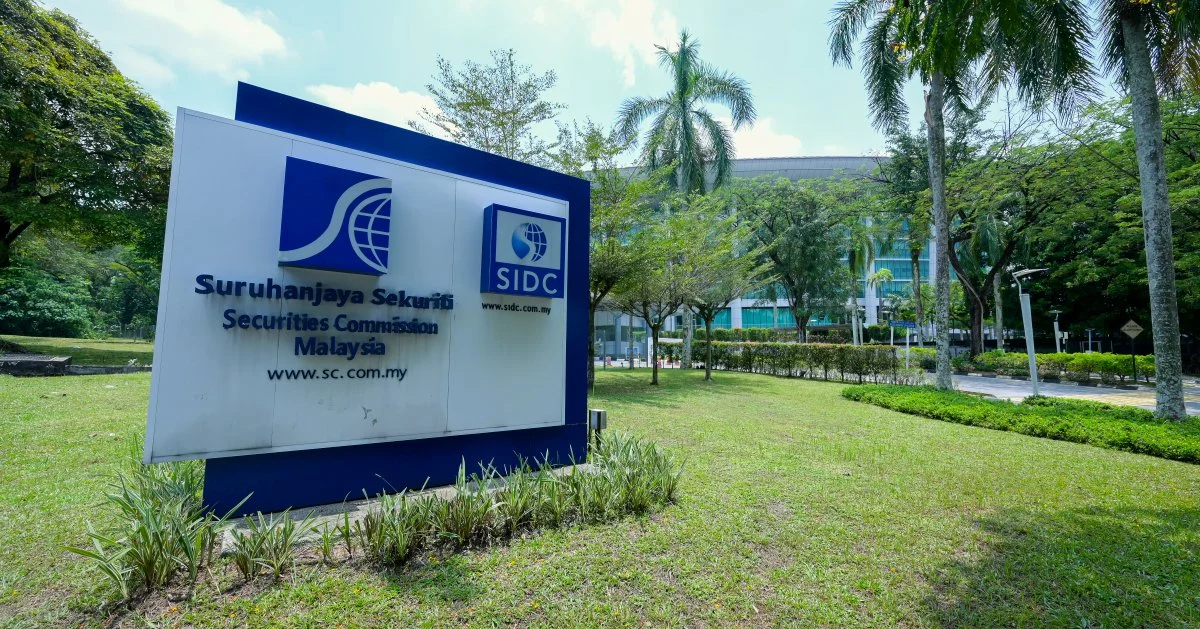
The Securities Commission has pursued criminal charges against three brothers in a coordinated enforcement action that underscores Malaysia's commitment to policing the boundaries between legitimate financial services and unauthorised investment operations. The brothers appeared before three separate Sessions Courts in Kuala Lumpur, each facing allegations centred on conducting securities or derivatives business without the proper regulatory licensing required by Malaysian law.
This prosecution represents a significant phase in the SC's ongoing battle against unlicensed capital market operators, a persistent challenge in Southeast Asia where retail investors remain vulnerable to sophisticated schemes masquerading as legitimate investment vehicles. Unlicensed market activities typically involve individuals or entities offering investment opportunities, managing funds, or facilitating securities transactions without explicit authorisation from the SC—violations that carry substantial criminal penalties under Malaysia's securities legislation.
The enforcement action highlights the regulatory apparatus's determination to maintain market integrity and protect ordinary Malaysians from fraudulent or unregistered investment schemes. When individuals or organisations circumvent licensing requirements, they operate beyond SC oversight, meaning investors have no access to regulatory recourse, complaint mechanisms, or the protections embedded within Malaysia's formal securities framework. The absence of standardised conduct rules, capital requirements, and audit obligations creates environments where mismanagement, embezzlement, or deliberate deception flourish unchecked.
Capital market licensing in Malaysia operates under stringent criteria administered by the SC. Licensed entities must demonstrate operational capacity, maintain adequate capitalisation, implement robust compliance systems, and employ qualified personnel. These requirements exist precisely to filter out individuals or organisations lacking the competence, financial stability, or ethical standards necessary to manage public monies responsibly. When individuals like these brothers operate outside this framework, they automatically circumvent these protective layers.
The separate charging of the three brothers across multiple court proceedings suggests the SC identified distinct violations within their operations—perhaps different phases of activity, separate client groups, or distinct market instruments involved in their unlicensed conduct. This approach also potentially allows prosecutors to address circumstances where each brother held specific operational roles within what may have constituted a coordinated scheme designed to mask the scope and nature of their unauthorised activities.
Retail investors across Malaysia and the broader region have increasingly encountered sophisticated unlicensed operators, particularly through digital platforms and social media channels where marketing costs remain minimal and geographic boundaries become virtually irrelevant. These operators frequently target less financially literate segments of the population, promise unrealistic returns, and employ high-pressure sales tactics to secure upfront capital. Enforcement actions like this one serve both as genuine deterrents and as public demonstrations of regulatory teeth, signalling that Malaysia takes unlicensed financial activity seriously.
The SC has progressively enhanced its detection capabilities through data analytics, technology monitoring, and public reporting mechanisms that allow potential investors to verify whether claimed advisers and firms hold legitimate licensing. The investor alert system publicly identifies operators engaged in unauthorised activities, effectively blacklisting suspicious entities and providing a resource that savvy investors increasingly consult before deploying capital. Nevertheless, enforcement remains resource-intensive and necessarily reactive, typically occurring only after victims have already suffered losses.
For Malaysia's retail investment community, such prosecutions carry multiple implications. They reinforce the fundamental rule that all entities offering investment advice, managing funds, or facilitating market transactions must display valid SC licensing credentials. Investors who encounter operators claiming to offer superior returns, demanding cash-only payments, or discouraging verification through official channels should recognise these as warning signals. The regulatory framework exists specifically to protect such individuals, and legitimate financial institutions have invested substantially in compliance infrastructure.
The broader regional context matters considerably here. Southeast Asia's rapid growth has created enormous demand for investment management services and wealth advisory capabilities. This expansion has naturally attracted both legitimate operators scaling across borders and unlicensed individuals seeking to exploit regulatory arbitrage and jurisdictional gaps. When Malaysia pursues aggressive enforcement, it simultaneously protects its own citizens and contributes to regional market standards that gradually make unauthorised activity economically unviable across the whole Southeast Asian landscape.
The three brothers' case also reflects Malaysia's commitment to prosecuting not merely investors who seek to participate in such schemes, but the operators and facilitators who create the infrastructure enabling such activity. This upstream enforcement approach recognises that while individual prosecution may impose minor costs on specific offenders, the deterrent effect of visible criminal convictions against scheme operators carries exponentially greater protective value for potential future victims across the investment community.
Moving forward, the SC's prosecution strategy continues evolving toward increasingly coordinated international enforcement with regional regulators and law enforcement agencies across ASEAN. Unlicensed operators no longer confine activities within Malaysia's borders but leverage the region's interconnected digital infrastructure to solicit investors across multiple jurisdictions simultaneously. The SC's institutional partnerships with counterparts in Singapore, Thailand, and other regional regulators enable intelligence sharing, asset tracing, and coordinated prosecutions that make sustained unlicensed operation progressively riskier for would-be offenders. These brothers' prosecution thus participates in a broader institutional landscape gradually making Malaysia's capital markets safer through both deterrence and genuine criminal accountability.

