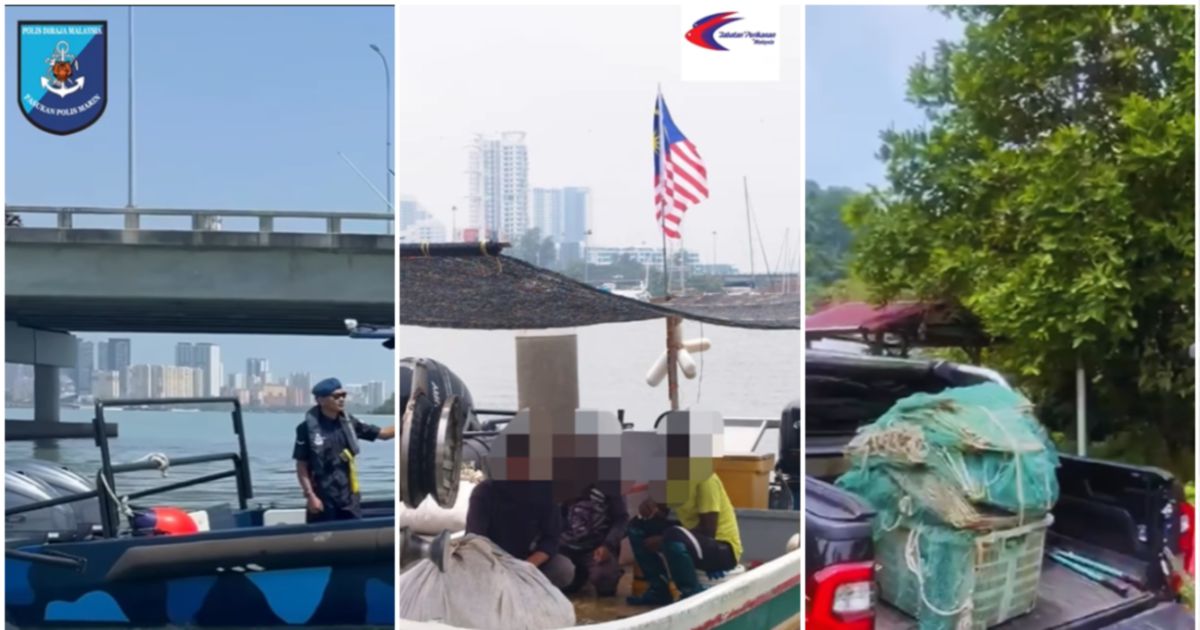
Three men have been arrested following a coordinated enforcement operation conducted in waters off Penang, with authorities simultaneously impounding fishing equipment and a vessel collectively valued at RM75,360. The joint operation, executed yesterday, represents part of ongoing efforts by multiple agencies to maintain maritime security and regulate fishing activities across state waters.
The scale of seized assets suggests a substantial operation, with both the equipment haul and the vessel's value indicating involvement beyond casual or small-scale fishing activities. The RM75,360 total underscores the significant economic dimensions of maritime enforcement, particularly relevant as fishing remains a considerable industry across Malaysia's coastal regions. Penang, as one of the country's busiest ports and fishing hubs, faces persistent challenges in monitoring and controlling unauthorized fishing practices within its jurisdiction.
Enforcement operations of this nature typically target violations including illegal fishing methods, use of prohibited equipment, or unauthorized access to restricted fishing zones. The involvement of multiple agencies suggests coordination between bodies such as the Malaysian Maritime Enforcement Agency, local fisheries departments, and police units specializing in maritime crime. Such joint operations have become increasingly common as authorities recognize that effectively combating maritime violations requires integrated approaches across organizational boundaries.
The detention of three individuals signals that enforcement extends beyond vessel and equipment seizures to holding responsible parties accountable under applicable maritime and fisheries legislation. The arrested men will likely face charges relating to unauthorized fishing activities, possession of illegal equipment, or other breaches of maritime regulations. Successful prosecutions serve as deterrents, signaling to the wider fishing community that violations carry meaningful consequences.
Penang's position as a major maritime state makes it particularly susceptible to fishing-related violations. The state's extensive coastline and proximity to major international shipping routes create complex regulatory environments where law enforcement must balance legitimate commercial and artisanal fishing activities against illegal operations. Recent years have seen intensifying international scrutiny of fishing practices throughout Southeast Asia, with environmental and sustainability concerns driving stricter enforcement protocols.
The seizure of both equipment and the vessel represents a significant financial impact on those involved and serves as visible enforcement of regulations governing maritime resource use. When authorities retain or destroy confiscated assets, the decision typically depends on factors including whether items can be legally repurposed, sold with proceeds directed to government coffers, or whether public interest is better served through destruction. These decisions carry implications for local economies and communities reliant on fishing-related industries.
Malaysia's maritime enforcement landscape has evolved considerably in recent years, with agencies investing in improved surveillance technology, patrol capabilities, and inter-agency coordination mechanisms. The Penang operation exemplifies this modernization, as successful interception and apprehension require sophisticated intelligence gathering, strategic positioning of enforcement vessels, and real-time communication between coordinating agencies. Such operations depend heavily on tip-offs from the public and intelligence developed through ongoing monitoring of suspicious maritime activities.
The broader context of fishing enforcement in Malaysian waters extends beyond immediate law enforcement concerns into environmental sustainability and regional cooperation frameworks. Illegal and unreported fishing undermines conservation efforts, depletes fish stocks, and disadvantages legitimate fishers operating within regulatory constraints. International agreements increasingly obligate Malaysia to demonstrate robust enforcement across its maritime zones, with implications for the country's standing in regional fisheries management organizations.
For legitimate fishing operators in Penang and across Malaysia, enforcement actions provide both reassurance and practical support. When authorities successfully disrupt illegal operations, they reduce unfair competition that undercuts sustainable fishing practices and fair pricing. The operation yesterday sends a message to compliant fishing enterprises that their adherence to regulations is recognized and protected through active enforcement against those operating outside legal boundaries.
The investigation into the arrested men will likely examine the scope and duration of their operations, market networks for illegally caught fish, and potential connections to organized maritime crime networks. Such investigations frequently reveal links between fishing violations and broader illicit maritime activities, including trafficking and smuggling. Understanding these connections allows enforcement agencies to develop more comprehensive strategies addressing multiple maritime security challenges simultaneously.
Moving forward, the Penang case underscores ongoing resource requirements for maritime enforcement throughout Malaysian waters. As fishing communities grow and technologies enabling fishing expand, regulatory agencies face mounting pressure to scale enforcement capabilities accordingly. Budget allocations, training programs, and equipment investments remain critical factors determining whether enforcement intensity can be sustained and expanded to address emerging threats.
The arrests and seizures also reflect shifting public expectations regarding maritime governance. Malaysians increasingly demand professional, transparent enforcement of maritime regulations, with visible accountability for violations. Public communication about enforcement successes, like yesterday's operation, helps build confidence in institutional capabilities while reminding the broader maritime community of regulatory boundaries and consequences for violations.
As investigations proceed into the three detainees and the circumstances surrounding their activities, the economic value of confiscated assets serves as a tangible indicator of enforcement impact. However, true success ultimately depends on whether operations deter future violations and encourage greater compliance with maritime regulations among fishing communities throughout Penang and beyond.

