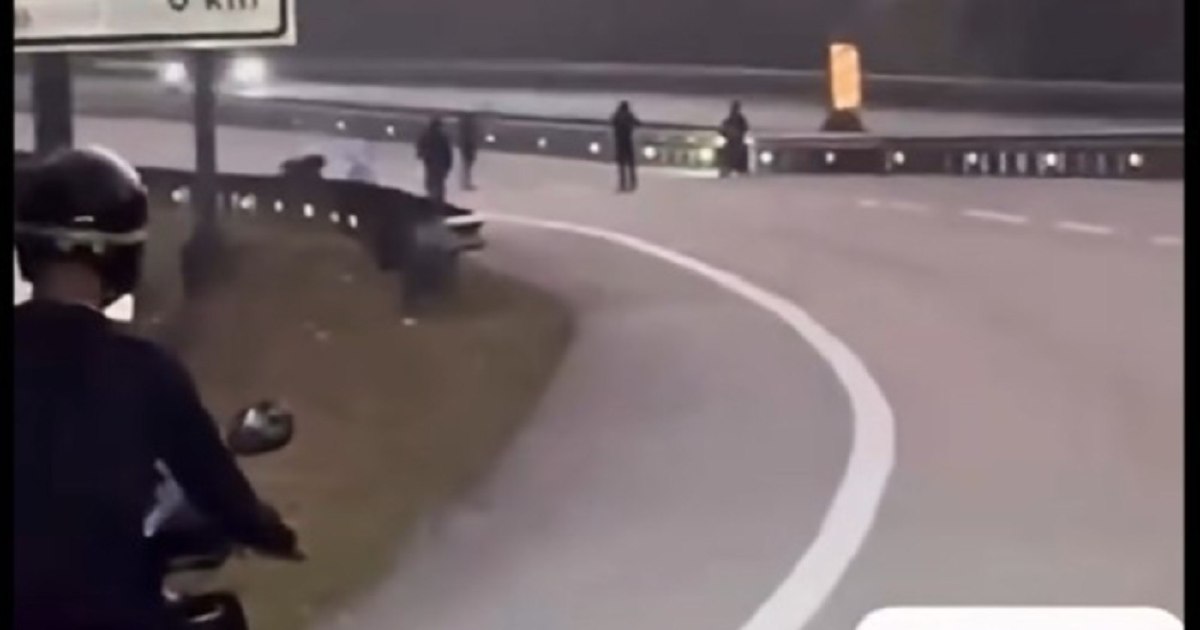
Police in Johor have expanded their dragnet to Kuala Lumpur, securing three additional arrests stemming from a high-profile case involving illegal street racing on the Second Link highway. The newly detained suspects are believed to be connected to a viral video that sparked public outrage after appearing to show participants allegedly closing off the major transport corridor to conduct an unsanctioned motorcycle race.
The Second Link, which connects Peninsular Malaysia with Singapore, serves as a crucial commercial and transportation artery for the region. Any disruption to traffic flow on this vital corridor raises significant concerns not only for commuters but also for cross-border trade and regional connectivity. The incident captured in the circulating footage represents a flagrant disregard for public safety and the integrity of critical infrastructure that hundreds of thousands of vehicles transit daily.
The evolving arrest operation signals intensifying law enforcement efforts to dismantle the network potentially involved in organising illegal racing events. Authorities have progressively expanded the investigation beyond the initial stage, suggesting the scope of involvement extends beyond simple participation. The move to arrest suspects in Kuala Lumpur indicates that organisational links or coordination may have extended into the capital, pointing toward a more structured operation rather than a spontaneous gathering.
Illegal street racing has emerged as a recurring challenge for Malaysian authorities across multiple states. These events typically involve elaborate coordination among participants, including advance scouting of locations, communication networks, and organisation of spectators. The involvement of multiple individuals across different locations frequently indicates the existence of organised racing communities operating through social media platforms and encrypted messaging applications.
The viral nature of the video documentation reflects how digital sharing mechanisms have complicated law enforcement responses to street racing incidents. What might have previously remained a localised incident now achieves immediate national reach through social platforms, generating intense public pressure on authorities to respond decisively. Simultaneously, these platforms serve as valuable investigative leads, as participants often voluntarily document and disseminate evidence of their activities.
Such incidents raise broader questions about youth engagement and the appeal of illegal racing subcultures in Malaysia. Participants often cite the thrill-seeking element and sense of community within racing circles as motivations. However, these motivations must be weighed against the manifest dangers posed to innocent road users, the strain on emergency services required to respond to potential accidents, and the reputational damage to Malaysia's traffic safety record.
The Second Link incident also underscores vulnerabilities in highway security and enforcement protocols. The apparent ability to halt or significantly impede traffic on one of the nation's most important transport links raises questions about surveillance systems, rapid response mechanisms, and coordination between different enforcement agencies. Authorities will likely review procedures to prevent similar future occurrences and ensure quicker intervention should comparable situations arise.
Police investigations into organised street racing frequently uncover connections to other criminal activities. Historical cases have revealed links between racing communities and drug distribution networks, illegal gambling operations, and vehicle modification schemes involving stolen components. Investigators will likely examine whether the individuals involved in this incident maintain associations extending beyond street racing itself.
The escalating enforcement response demonstrates official commitment to eliminating such activities. Multiple arrests, cross-state operations, and sustained investigation intensity signal that authorities view organised illegal racing as a serious matter warranting substantial investigative resources. However, sustainable solutions require balancing enforcement with alternative engagement pathways for young individuals attracted to automotive culture and community activities.
For Malaysian drivers, the incident serves as a reminder of unpredictable hazards that can materialise on highways despite apparent normalcy. The Second Link carries significant commercial traffic, including heavy vehicles serving the petrochemical and semiconductor industries concentrated in the Iskandar region. Disruptions cascade through supply chains with economic consequences extending beyond immediate traffic inconvenience.
Regional considerations also merit attention. Johor's proximity to Singapore means that incidents on the Second Link acquire bilateral significance. Any compromise to the corridor's reliability affects bilateral trade relations and cross-border worker movements. Singaporean and Malaysian authorities have longstanding cooperation frameworks on transportation and security matters, and joint concern regarding highway safety will likely motivate continued collaborative efforts.
As investigations proceed, authorities will presumably pursue charges under relevant legislation governing public safety, obstruction of transport infrastructure, and unlicensed racing activities. The legal consequences and sentencing outcomes in this case will signal to potential offenders the seriousness with which Malaysian courts regard deliberate disruptions to critical transport infrastructure.
The ongoing investigation represents a convergence of enforcement challenges characterising modern policing: digital-era evidence collection, multi-jurisdictional coordination, youth engagement dynamics, and the balance between enforcement and prevention. Resolution of this particular case will provide insights into evolving street racing networks and inform future highway security protocols across Malaysian transport authorities.

