When a busy afternoon at a hospital clinic left a Malaysian doctor without time for lunch, a colleague's simple gesture—offering to peel a mandarin orange—triggered an unexpected wave of nostalgia that transported the mind thousands of miles away. That small act of caring consideration, performed in a quiet corner of northwest England, illuminated something profound about the ways humans express affection: through the language of food, a dialect spoken in every corner of the world yet carrying distinctly local dialects and customs.
For many Malaysians, the connection between nourishment and emotional expression runs deeper than mere sustenance. Food becomes a medium through which family members communicate their investment in one another's wellbeing, a gesture that says far more than words alone could convey. This particular doctor's childhood was saturated with such moments—a paternal grandmother who would cut, peel, and salt green apples after meals, a ritual later inherited by the mother; a late father who methodically cracked open crabs and extracted the sweet meat so his child would never need to learn the painstaking process themselves. These were not acts performed out of obligation but rather demonstrations of unconditional care, woven into the daily fabric of family life.
The memory of being hand-fed by a grandmother during teenage years, an arrangement justified by the need to keep the child's attention firmly planted in storybooks rather than on the plate, speaks to a uniquely Malaysian approach to childcare that blends practical concern with an almost comical acceptance of personal quirks. The insistence on reading during meals could have prompted frustration; instead, it inspired years of patient feeding, a sacrifice of time and effort that the child carried forward as proof of love. Such intimate acts of care, performed without fanfare or expectation of gratitude, accumulate into a emotional architecture that shapes how individuals understand affection throughout their lives.
But food remembrance in Malaysian households extends beyond the nuclear family into the realm of personal preferences and idiosyncrasies—the blue packet Hup Seng Teddy biscuits that a mother continues to purchase even now, years after her child has relocated abroad, despite occasional confusion over whether the favourite flavour is tomato or another variety. These details matter precisely because they demonstrate genuine attention to individual tastes rather than generic gestures of provision. A mother who consistently forgets her child's preferred crisp flavour yet continues to buy them anyway is still communicating care, albeit imperfectly, through persistent effort.
Festive seasons in Malaysian households crystallise these food-based expressions of love into elaborate traditions that bind families and communities together. An aunt who instinctively adds extra potatoes to Deepavali chicken curry in anticipation of a relative's known preference transforms a standard recipe into a personalised act of remembrance. The colleague of the mother who appears at the doorstep every Deepavali with homemade chocolate moist cake, bound by no obligation beyond the simple desire to share, exemplifies how food becomes a currency of community care that transcends religious and cultural boundaries. These annual rituals, performed with consistency across decades, create threads of connection that hold neighbourhoods together even as residents change and circumstances evolve.
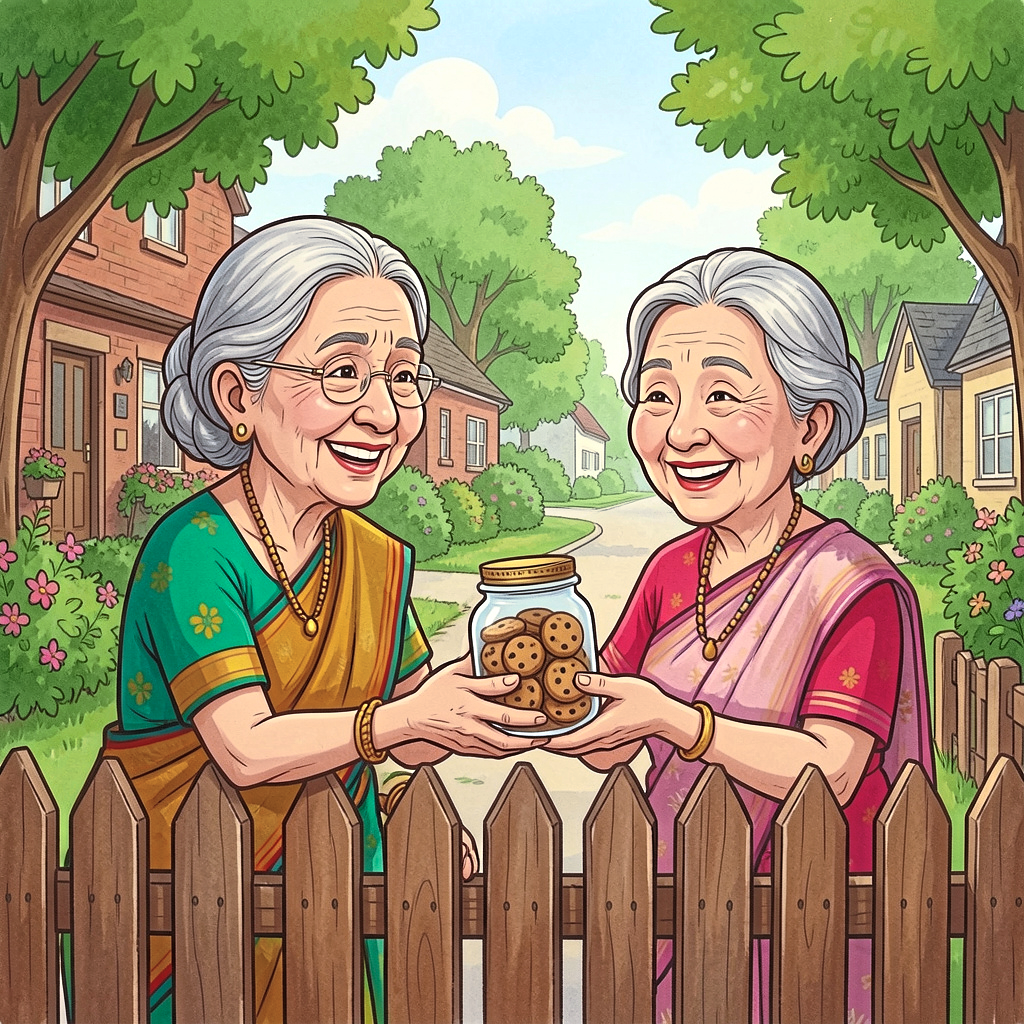
The intergenerational continuity of these customs speaks to their fundamental importance in Malaysian culture. A mother who has been retired for eight years still exchanges food with a neighbour every Deepavali, just as she always has. The practice persists not because tradition demands it but because the underlying impulse—to show that one thinks of others, that their presence matters, that their happiness is worth deliberate effort—remains eternally relevant. The next-door neighbour who once called over a fence with containers of sweet upma and onion cucur, whose cooking shaped taste preferences that endure to this day, represents an almost poignant example of how food memories outlast many other forms of connection; even after a stroke left her unable to cook and forced her to relocate, the sweetness of her upma remains the defining memory.
What makes these Malaysian food traditions particularly instructive is their foundation in genuine attentiveness rather than grand gestures. The willingness to peel fruit, to remember flavour preferences, to add specific ingredients for particular family members, to appear at doorsteps with prepared dishes—these represent small investments of time and attention that accumulate into expressions of profound care. They acknowledge the other person not as a generic recipient of goodwill but as an individual with specific tastes, needs, and preferences worth honouring.
The realisation that emerged from a simple offer to peel a mandarin orange in an English office challenged a long-held assumption that this particular form of caring communication belonged uniquely to Malaysia. The colleague's gesture, performed in a different cultural context and geographic location, communicated an identical sentiment: I notice your hunger, I recognise your need, and I am willing to expend effort to help address it. This recognition suggests that beneath the surface variations of different cuisines and food traditions lies a universal human impulse to express care through the provision and preparation of nourishment.
Yet the universality of this impulse should not obscure the distinct character that Malaysian families and communities have imparted to it. The specific dishes—sweet upma, onion cucur, Deepavali curries with extra potatoes, Hup Seng biscuits—carry within them generations of memory and cultural specificity that no generic act of care provision could replicate. The practice of returning empty food containers filled with freshly prepared items, ensuring that exchange flows in both directions, reflects values of reciprocity and mutual respect embedded in Malaysian neighbourly relations. The willingness of colleagues to share food across religious and cultural boundaries during festivals demonstrates an understanding that care transcends such divisions.
For those who have grown up experiencing these food-based expressions of love, the impact extends far beyond nutrition into the realm of emotional security and belonging. The doctor who still gravitates toward foods prepared by remembered hands, who anticipates annual gifts of mandarin oranges and chocolate cakes, who savours potatoes added to curry specifically for their benefit, has internalised a message repeated through countless small acts: you are known, you are valued, and your presence in the lives of those around you matters enough to warrant deliberate effort and sacrifice. This foundation of security, built brick by brick through meals shared and dishes prepared, shapes how individuals approach their own expressions of care toward others.
The broader significance of recognising food as a language of care lies in its accessibility and its democratic nature. Not everyone possesses wealth or status or eloquence, but nearly everyone has the capacity to prepare something edible and share it with another person. In Malaysian contexts, where food preparation remains a significant investment of time even in modern households, offering prepared dishes represents a genuine sacrifice that transcends economic circumstance. A neighbour appearing with homemade curry or cookies accomplishes what expensive gifts cannot: the transmission of a message that this person occupies space in my thoughts, that I have allocated my time and energy with you in mind.
As globalisation and modernisation reshape Malaysian society, transforming work patterns and family structures, these traditions of food-based caring may face pressure from changing circumstances. Yet the persistence of practices across generations suggests deeper currents at work—a recognition that some modes of expressing love and community cannot be replaced by digital communication or commercial substitutes. The mandarin oranges that still arrive each Chinese New Year, the cookies exchanged across religious boundaries, the recipes preserved and passed forward not for their nutritional value but for the memories they contain, all suggest that Malaysians will continue finding ways to speak this most ancient and essential language of human connection.

