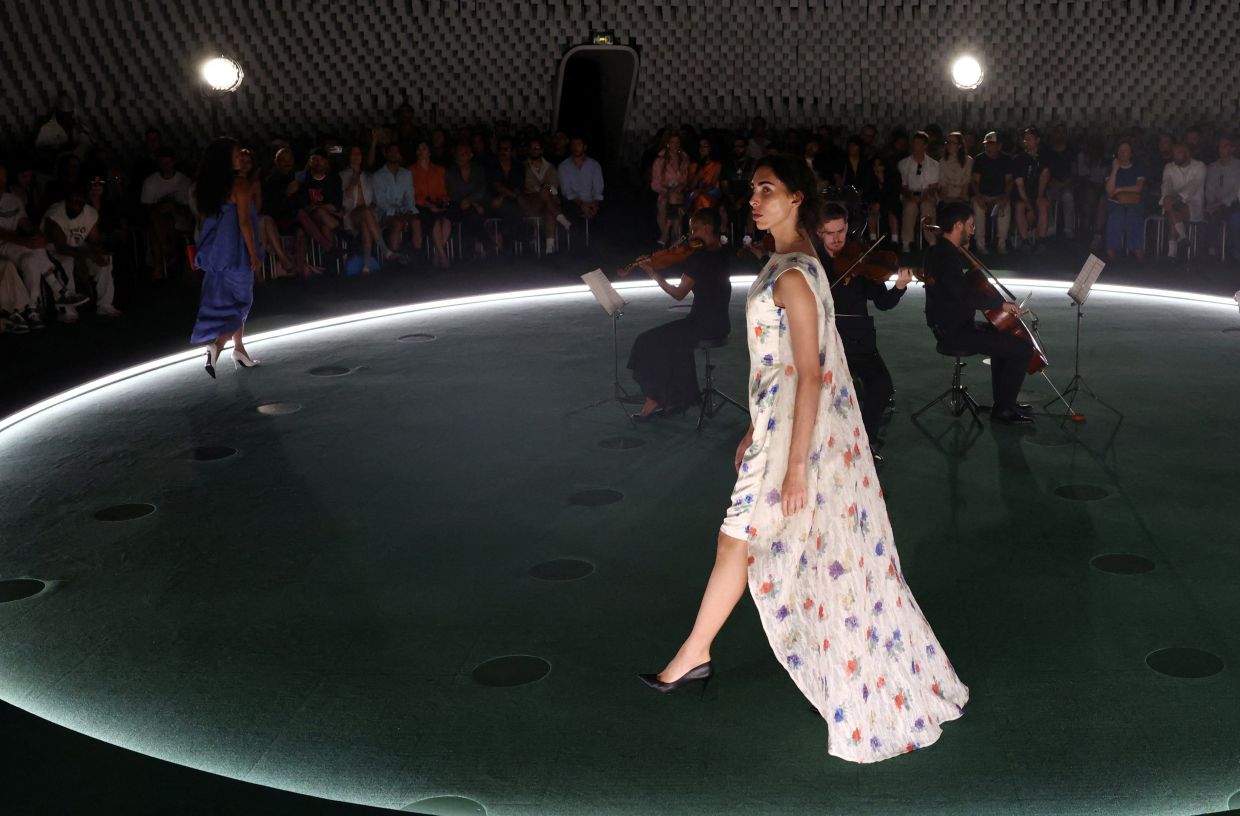
The fashion industry is experiencing a pronounced shift toward sleeveless garments that extends far beyond seasonal whim. Market analysts project the global sleeveless apparel sector will nearly double in value, expanding from approximately RM99.38 billion in 2021 to over RM209.65 billion by 2033. This growth reflects broader changes in how consumers—particularly women—approach clothing, bodies and self-presentation in an era of climate instability and evolving social attitudes. For Malaysian and Southeast Asian readers accustomed to modest dress codes rooted in cultural and religious traditions, this global pivot toward exposed arms presents a fascinating tension between international fashion momentum and local values.
Evidence of this acceleration appears in professional design circles. Fashion analytics platform Tagwalk recorded a 133 percent increase in sleeveless designs across Spring 2026 fashion collections compared to the previous year, signalling that this is no passing fad but rather a sustained directional shift. Designer Willy Chavarria reported that sleeveless pieces substantially outperformed sleeved alternatives during recent Paris Fashion Week presentations, suggesting luxury brands view this category as commercially vital. The visibility of sleeveless styling has permeated mainstream media; watching television news broadcasts reveals that sleeveless dresses have become commonplace among female anchors, normalising the silhouette across daily communication.
Multiple factors converge to explain this phenomenon. Rising global temperatures and increasingly intense summer seasons make lightweight, minimal-coverage garments practically appealing. The pervasive influence of fitness and wellness culture has reframed arms—particularly muscular or toned arms—as symbols of discipline and health rather than unfeminine characteristics. Simultaneously, younger generations are actively rejecting outdated gender restrictions that once policed women's bodies and appearance. These forces combined create momentum that transcends mere fashion cycle, touching fundamental questions about bodily autonomy and social acceptance.
Yet beneath this progressive surface lies a more complicated history, particularly for women navigating professional and social environments. For decades, women received explicit and implicit messaging that exposed arms—especially upper arms—represented unprofessionalism, impropriety or even moral laxity. The infamous controversy surrounding Michelle Obama's preference for sleeveless gowns, culminating in her sleeveless White House portrait, laid bare the racialized and gendered anxieties attached to women's bare arms. The reaction demonstrated how arm exposure remains entangled with narratives about power, respectability and who deserves authority. Only in 2017 did the United States House of Representatives formally modify dress codes following a congresswomen's sleeveless protest, with the Senate trailing two years behind—a reminder that dress code battles remain genuinely recent political flashpoints.
Arms occupy particular significance in body perception because they function as age markers in ways many women find troubling. While modern cosmetic procedures and fitness regimens can substantially alter facial appearance, arms age distinctly and noticeably. The skin texture changes characteristic of ageing—the loss of elasticity, the accumulation of subcutaneous fat, the visible reorganisation of muscle and ligament—manifest prominently in arm tissue. This biological reality has historically driven women, particularly those over forty, to abandon sleeveless silhouettes entirely, internalising the message that aged or imperfect arms ought to remain hidden from public view. Paradoxically, arms simultaneously signal strength and capability; the bicep remains culturally coded as powerful, yet that coding has historically excluded women, whose muscular development was dismissed as unseemly or overly masculine.
For Southeast Asian women, these international fashion pressures interact with distinct local contexts. Many countries in the region maintain strong cultural and religious preferences for modest dress, particularly in professional, formal and public religious spaces. The conflicting messages—international fashion demanding sleevelessness while cultural norms encourage coverage—create genuine practical and psychological dilemmas. A Malaysian woman navigating a multinational corporation's global dress code may encounter subtle pressure to adopt sleeveless styling to signal professional alignment with international norms, whilst simultaneously managing family, community and sometimes institutional religious expectations around modesty. This dual consciousness adds layers of complexity beyond what Western fashion commentary typically addresses.
Designers and style experts increasingly acknowledge these tensions and propose practical compromises. Antonin Tron, creative director at Balmain, articulates a philosophy centring acceptance of ageing bodies as inherently beautiful, rejecting the notion that women's physical presence or sexuality diminishes with age. His recommendations focus on strategic styling choices that allow women to experiment with sleevelessness without abandoning comfort or self-consciousness. Wearing a bold necklace or statement bangles with a simple sleeveless top redirects visual attention, allowing the wearer to emphasise features she prefers showcasing. Cold-shoulder styles and open-arm designs occupy middle ground between full coverage and complete sleevelessness, offering exposure without total commitment.
Additional styling strategies address specific concerns about fit and body presentation. Cap sleeves provide minimal coverage whilst flattering many arm shapes. Sheer or semi-transparent layering pieces worn over sleeveless garments create visual interest whilst maintaining a sense of coverage and modesty that many women appreciate. The armhole construction itself matters significantly; a high-cut, generous armhole avoids both gaping and restricting the body, accommodating different body types and reducing the self-consciousness many women experience when wearing sleeveless pieces. These technical solutions acknowledge that embracing sleeveless fashion need not mean accepting discomfort or abandoning personal preferences around coverage.
Beyond styling mechanics, the broader question warrants reflection: what purpose do our arms serve, and what worth do they genuinely hold? Arms represent functionality and accumulated lived experience. These limbs have delivered professional presentations, lifted children and belongings, typed correspondence and creative work, embraced loved ones, and performed countless acts of care and labour. They bear evidence of work, contribution and connection. Reframing arms as valuable and worthy of display—regardless of how they appear to external scrutiny—represents a significant reorientation from shame-based thinking toward appreciation for the actual labour and love those arms embody. This perspective shift extends beyond fashion into deeper questions about self-worth and bodily acceptance.
The emergence of sleeveless fashion as a genuine trend, rather than a niche choice, creates space for women to make authentic decisions about their own bodies and appearance. Some will enthusiastically embrace sleevelessness, discovering liberation and confidence in exposed arms. Others will deliberately maintain covered arms, rejecting fashion dictates in favour of personal preference or cultural values. The genuine progress lies not in any particular clothing choice becoming mandatory, but rather in expanding the range of acceptable options available to women across different ages, body types, professions and cultural backgrounds. For Malaysian women particularly, navigating this global trend meaningfully requires acknowledging that fashion choice can reflect multiple identities simultaneously—international professional, cultural community member, ageing body experiencing physical changes, and individual with authentic preferences worthy of respect.

