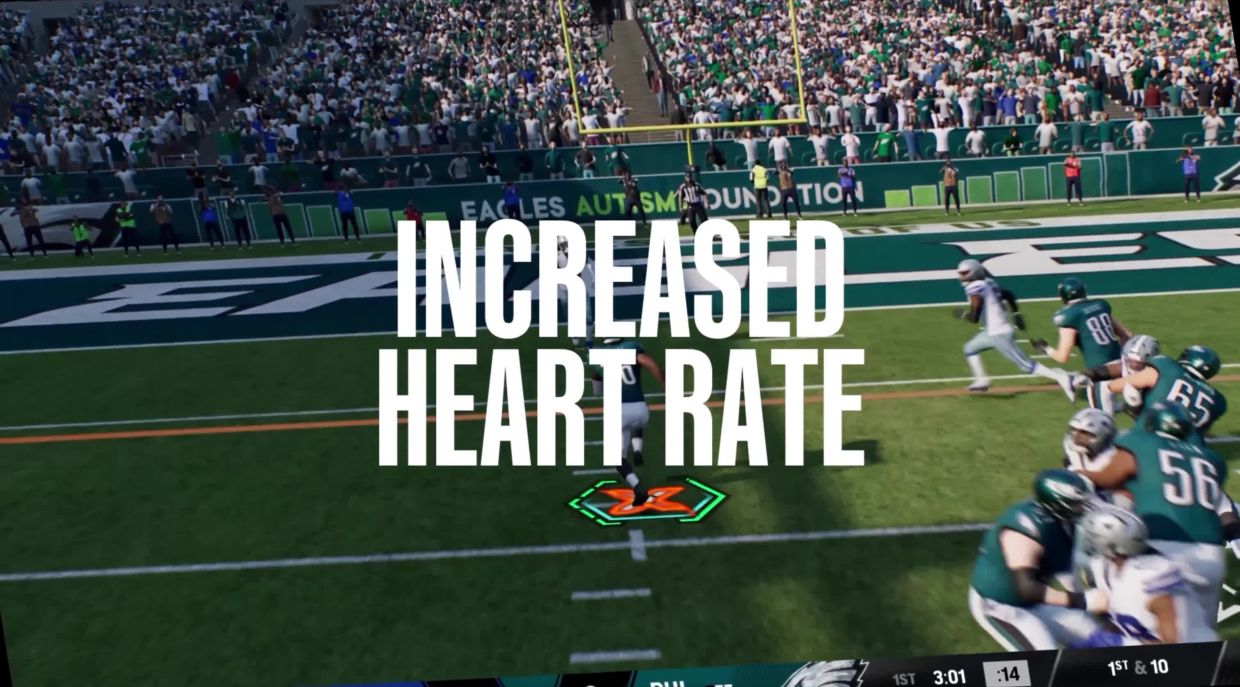
When a running back crumples to the ground after a tackle in Madden NFL, the impact looks devastating. Yet for years, nothing happens next—no medical intervention, no player assessment, no acknowledgement of potential brain damage. This gap between realism and accountability has prompted a small group of modders to create an intervention: a free modification that grafts the lived experience of concussions onto one of the world's most popular sports video games.
The modification, available only for personal computers, injects genuine symptoms into the Madden experience. When a player in the mod sustains a collision that could cause a concussion, their vision blurs, the screen shakes with a ringing sound, and the controller rumbles erratically. Gamers may experience on-screen nausea, light sensitivity, dizziness, tinnitus, and accelerated heart rates—the unsettling constellation of symptoms that real athletes endure but which most players never witness in the official Madden interface. While the reach of this modification remains niche, its message resonates far beyond its small user base: the bestselling Madden franchise has systematically erased one of football's most pressing health crises.
The absence is not accidental. Electronic Arts, the publisher, and the National Football League, which licenses the game, made deliberate choices to strip concussions from Madden's gameplay mechanics around 2020. This erasure followed a turbulent decade for American football's governing body. The league faced mounting pressure after Hall of Famer Junior Seau's death revealed he had suffered from chronic traumatic encephalopathy, a degenerative brain disease linked to repeated head trauma. A landmark lawsuit resulted in the NFL paying over US$1.5 billion in settlements to former players claiming the league had concealed the dangers of brain injuries. The cultural reckoning culminated in the 2015 film "Concussion," starring Will Smith, which dramatized the scientific evidence that the league had long suppressed.
For context, Malaysian and Southeast Asian audiences should understand that American football occupies an outsized cultural and commercial space in the United States comparable to how football reigns in Asian markets. The Madden franchise generates hundreds of millions in annual revenue, and its portrayal of the sport shapes how tens of millions globally perceive professional American football. When Madden removes concussions from its gameplay, it sends a powerful message: this injury can be ignored, minimised, or simply erased from the narrative of the sport.
Earlier versions of Madden did acknowledge head injuries, though imperfectly. In 1990s iterations, ambulances would whisk injured players away. Into the 2010s, players exhibiting concussion symptoms would undergo on-screen medical evaluations. But these depictions preceded the leagues' defensive reckoning with brain injury science. Once the NFL faced legal jeopardy and reputational damage, pressure from the league's licensing department evidently influenced Electronic Arts to eliminate concussion mechanics from the game entirely, even as other injuries—ankle sprains, muscle strains—remained part of core gameplay.
Chris Borland, a former linebacker who abandoned his NFL career after just one season due to mounting concerns about long-term neurological damage, has praised the mod's intention while noting its limitations. "It's really realism up to a point," Borland observed, questioning whether a visual distortion can truly mirror the complexity of living with a brain injury. He posed a pointed counterargument: the mod cannot simulate the domestic consequences of concussion—the irritability, cognitive fog, and emotional dysregulation that fractures relationships and destroys lives. This gap between simulation and suffering illuminates what the mod attempts but cannot fully accomplish.
Ben Utecht, a former tight end who retired in 2010 due to concussion-related fears, articulated the broader tension. He acknowledged that the NFL deliberately lobbies against concussion visibility in games because the league wants to encourage parental consent for youth participation. Yet Utecht's critique extends further: if Madden includes all other injuries, systematically excluding only concussions sends a false and dangerous message. It implies head injuries are somehow less real, less consequential, or less worthy of player and parental concern than a sprained ankle. This selective erasure of medical reality distorts the risk calculus that young athletes and their families make when deciding whether to participate in contact sports.
The mod's creators seized on Madden's reach—millions of players globally engage with the franchise annually—as an opportunity to penetrate a demographic that mainstream public health campaigns might never touch. Kristen Thomson Sheely, executive director of the Derek Sheely Foundation, understands this opportunity intimately. Her son, a fullback at Frostburg State University in Maryland, died at age 22 after sustaining a catastrophic brain injury during practice in 2011. According to court documents, Derek complained of a headache following an earlier collision; a coach reprimanded him for complaining and sent him back onto the field for a 7-on-7 drill. During that subsequent play, Derek collided with a defensive back, walked to the sideline, and within minutes collapsed into unconsciousness from which he never recovered.
The Sheely family's US$1.2 million settlement with the NCAA and Frostburg State represented a partial reckoning but could not resurrect their son. The modders honor Derek's memory by displaying his retired jersey, number 40, in a banner that unfurls when players complete their games using the concussion mod. This gesture transforms a video game from entertainment into a memorial, reminding players that the impacts they see on screen have claimed real lives in the real world. For Malaysian readers, this may parallel how local campaigns memorialize athletes lost to heat stroke or other preventable sports injuries, converting tragedy into consciousness-raising.
The NFL recorded 168 reported concussions in the most recent season, up from 129 the previous year—an increase the league attributed to rules encouraging more kickoff returns. The league mandates a blue medical tent on every sideline where players suspected of concussion must undergo standardized testing before returning to play. Yet inside Madden's virtual stadiums, these protocols vanish entirely. A defensive back can deliver a bone-rattling hit to a quarterback's helmet, and the game continues without pause, without evaluation, without consequence—a subtle normalization of dismissing head injuries that contradicts the NFL's own official safety protocols.
The mechanics of concussions remain scientifically complex, which the mod's creators acknowledge. In reality, two players can absorb nearly identical impacts to the head, yet only one may suffer a concussion. Incorporating this variability into Madden's code would require sophisticated biomechanical modelling. League executives during negotiations with Electronic Arts apparently wanted concussions to appear "realistically," but this concern for realism never translated into action. Instead, the path of least resistance prevailed: remove the injury entirely from play, from medical evaluation, from player and parental consciousness.
The concussion mod represents 9,000 lines of code written by volunteers who refused to accept the official narrative that head injuries simply do not exist in professional football. While the modification reaches only a fraction of Madden's global player base, it functions as a countercultural intervention—a reminder that video games, like all media, shape how we understand risk and health. For Malaysian parents considering whether their children should play rugby, American football, or other contact sports, the existence of this mod raises uncomfortable questions: if the most popular sports video game erases concussions from gameplay, what message does that send about how seriously the sport treats brain injuries? And what gaps exist between the risks parents perceive and the risks the sport's powerful institutions want them to acknowledge?

