The Metropolitan Museum of Art convened an extraordinary gathering in May that underscored the fraught nature of celebrating one of fashion's most polarizing figures. Among those attending the closed-door session were prominent figures from the fashion establishment and representatives from the Jewish community, assembled to grapple with an uncomfortable proposition: honouring the design legacy of John Galliano, a man whose career imploded in 2011 after he made deeply offensive antisemitic comments captured on video. The meeting represented just one of many such conversations held over the preceding year, suggesting the museum had recognized that mounting a retrospective of Galliano's work in the current climate would require far more delicacy and consultation than a typical curatorial decision.
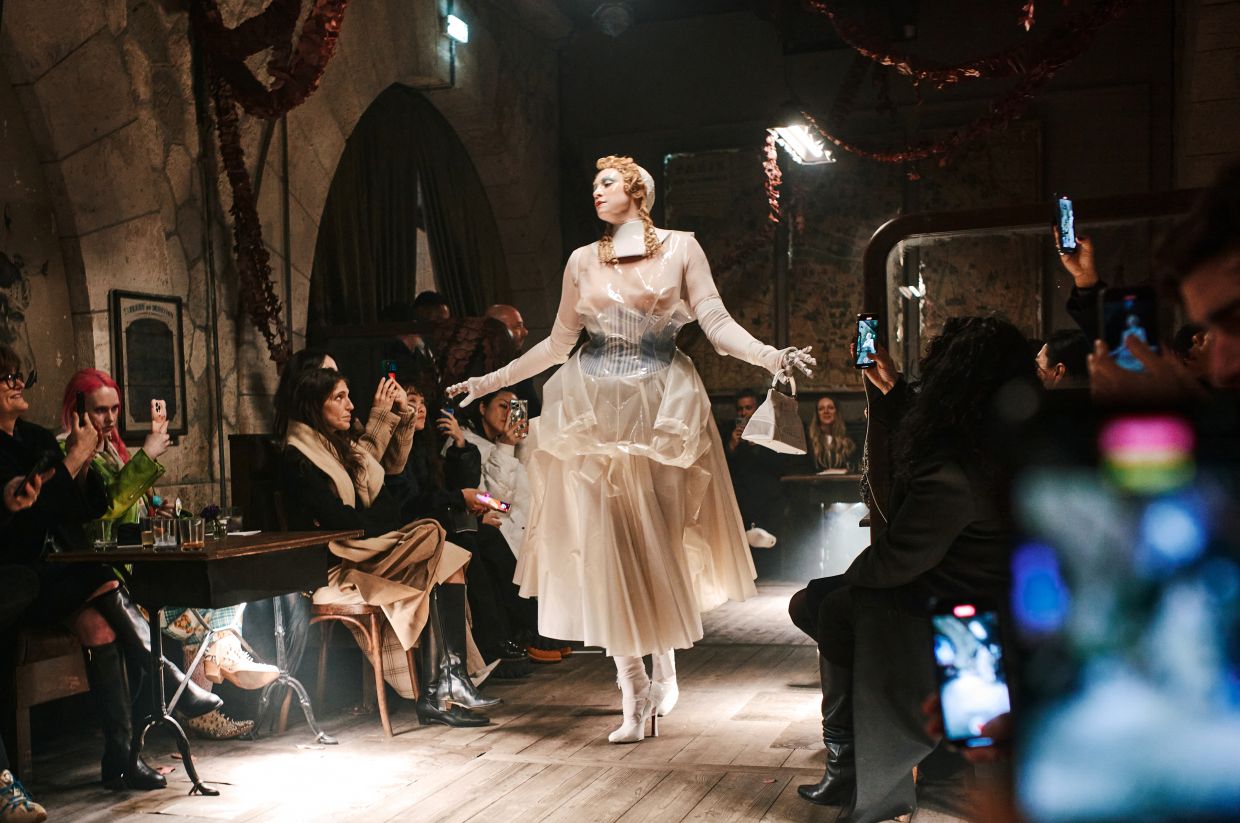
Galliano occupies a peculiar position in contemporary fashion. The 65-year-old British designer stands among the most influential creative minds of his generation, a virtuoso whose tenure as creative director of Dior from 1996 to 2011 fundamentally altered the luxury house's trajectory. Before his arrival, Dior represented refined European tradition; Galliano transformed it into a theatre of imagination, a place where haute couture could be as fantastical and daring as it was technically impeccable. His mastery of the bias cut, his narrative-driven collections, and his ability to merge historical references with contemporary provocation established him as an artist rather than merely a designer. The fashion world has largely embraced his return to prominence in recent years, particularly during his decade leading Maison Margiela, where celebrities from Zendaya to Amal Clooney have worn his designs on red carpets globally.
Yet this accolade comes with considerable historical baggage. In 2011, video footage emerged of Galliano making antisemitic remarks in a Paris bar, including the statement "I love Hitler." The fallout was swift and severe: he lost his position at Dior, faced conviction on hate crime charges in France, and entered a period of professional exile. The incident crystallized the tension that has long existed in the art world between the greatness of creative output and the moral failings of the creator. For many in the fashion industry, sufficient time had passed and enough evidence of rehabilitation had accumulated to permit Galliano's reintegration into the elite circles of contemporary design. For others, particularly within the Jewish community and amid rising antisemitism across Western democracies, the prospect of mounting a major retrospective at one of America's most prestigious institutions felt premature and problematic.
Andrew Bolton, the Metropolitan Museum's Costume Institute director, has confirmed that he began considering a Galliano exhibition as early as 2010, though serious planning only commenced in 2024. He has insisted that the museum's measured approach in consulting with Jewish leaders reflects genuine institutional responsibility rather than any hesitation stemming from Galliano's past conduct. Nevertheless, the timing remains delicate. New York has experienced a documented surge in antisemitic incidents, including a recent stabbing attack in Manhattan targeting men leaving a Jewish community centre, which authorities are prosecuting as a hate crime. Against this backdrop, the Galliano retrospective—which will be inaugurated by the Metropolitan Museum's annual gala, arguably the world's most scrutinized fashion event—carries symbolic weight far beyond the exhibition halls.
The discussions between museum officials and Jewish leaders have centred on the concept of teshuvah, the Hebrew word for repentance and spiritual return. Rabbi Rick Jacobs, president of the Union For Reform Judaism in North America, attended the May meeting and reported that Galliano demonstrated genuine engagement with the concerns raised. According to Jacobs, the designer spoke without defensive posturing or memorized rhetoric, instead addressing the assembled group directly about his accountability and transformation. Jonathan Greenblatt of the Anti-Defamation League subsequently issued a statement affirming that Galliano's efforts to repair the damage caused by his remarks and to educate himself about the history and impact of antisemitism merit recognition. This measured endorsement reflects a perspective held by some within the Jewish community that meaningful redemption, when accompanied by genuine contrition and substantive learning, deserves acknowledgment.
However, the conversations have also revealed significant apprehension about how the exhibition itself should address Galliano's past. Rabbi Joshua Davidson of Temple Emanu-El, speaking to his perspective gained during consultation meetings, articulated a nuanced position: that the show could serve as a powerful vehicle for examining antisemitism itself, rather than simply skirting the issue or relegating it to a footnote. He suggested that the museum could leverage the exhibition to educate the public about the dangers of antisemitism in the contemporary moment, transforming what might otherwise be a narrow retrospective into a broader cultural conversation. This approach reframes the exhibition not as an endorsement of Galliano's past behaviour but as an opportunity to excavate difficult historical truths and their ongoing relevance.
Bolton has signalled that he intends to implement several measures to ensure the exhibition confronts rather than elides the designer's history. He plans an "orientation gallery" that will delineate what he terms "the rupture"—the fracture in Galliano's career and public standing that has become inextricable from his artistic legacy. Rather than relying on euphemistic language, Bolton has emphasized that clarity must prevail, and that the museum's responsibility lies in presenting the most accurate historical account rather than Galliano's own preferred narrative. He has also indicated consideration of creating an online forum to facilitate ongoing public discourse about the exhibition's themes. These decisions reflect an evolving institutional approach that recognizes the museum's obligation to engage thoughtfully with contested histories rather than retreat into aesthetic neutrality.
The prospective Galliano retrospective would place him in rarified company. Should it proceed, Galliano would become only the third living designer ever to receive a solo exhibition at the Metropolitan Museum, following Yves Saint Laurent and Rei Kawakubo. This distinction represents the highest institutional honour the museum can bestow on a designer, signalling that his contributions to fashion history are deemed not merely significant but transformative. His work fundamentally altered how luxury fashion could articulate itself, proving that technical mastery and imaginative audacity need not be mutually exclusive. Yet this recognition arrives heavily qualified by the requirement that it be presented alongside unflinching acknowledgment of his moral failures.
The broader implications of this situation extend beyond the specific case of one designer. The Galliano exhibition raises fundamental questions about how cultural institutions should reckon with the legacies of talented individuals who have committed serious moral transgressions. In an era when society has grown increasingly attentive to questions of accountability and harm, particularly regarding antisemitism, there are no established protocols for how to balance artistic merit against ethical reckoning. The Metropolitan Museum's approach—combining consultation with affected communities, commitment to historical honesty, and provision for ongoing dialogue—may establish a precedent for how other institutions might navigate similarly fraught situations. It suggests that redemption narratives need not be whitewashed or oversimplified, but rather can be presented with full awareness of the complexity they entail.
Fashion itself has moved swiftly past any ambivalence regarding Galliano's current work. His vintage designs command record prices at auction, and contemporary celebrities compete to wear his creations. This market enthusiasm reflects the fashion world's traditional comfort with separating artistic output from personal behaviour, a stance that has historically protected figures across multiple creative disciplines from sustained professional consequences. Yet the consultation process surrounding the exhibition indicates that even fashion recognizes new social expectations, at least when mounting exhibitions at institutions of the Metropolitan Museum's stature. The question now becomes whether the resulting exhibition can model a form of cultural reckoning that is neither punitive nor exculpatory, but rather honest about both the extraordinary achievements and the serious failures of its subject. For Malaysian and broader Southeast Asian observers, the exhibition offers a window into how Western cultural institutions are attempting to navigate accountability in ways that may inform approaches to similar challenges in our own contexts, where questions of redemption, responsibility, and historical memory remain deeply contested.

