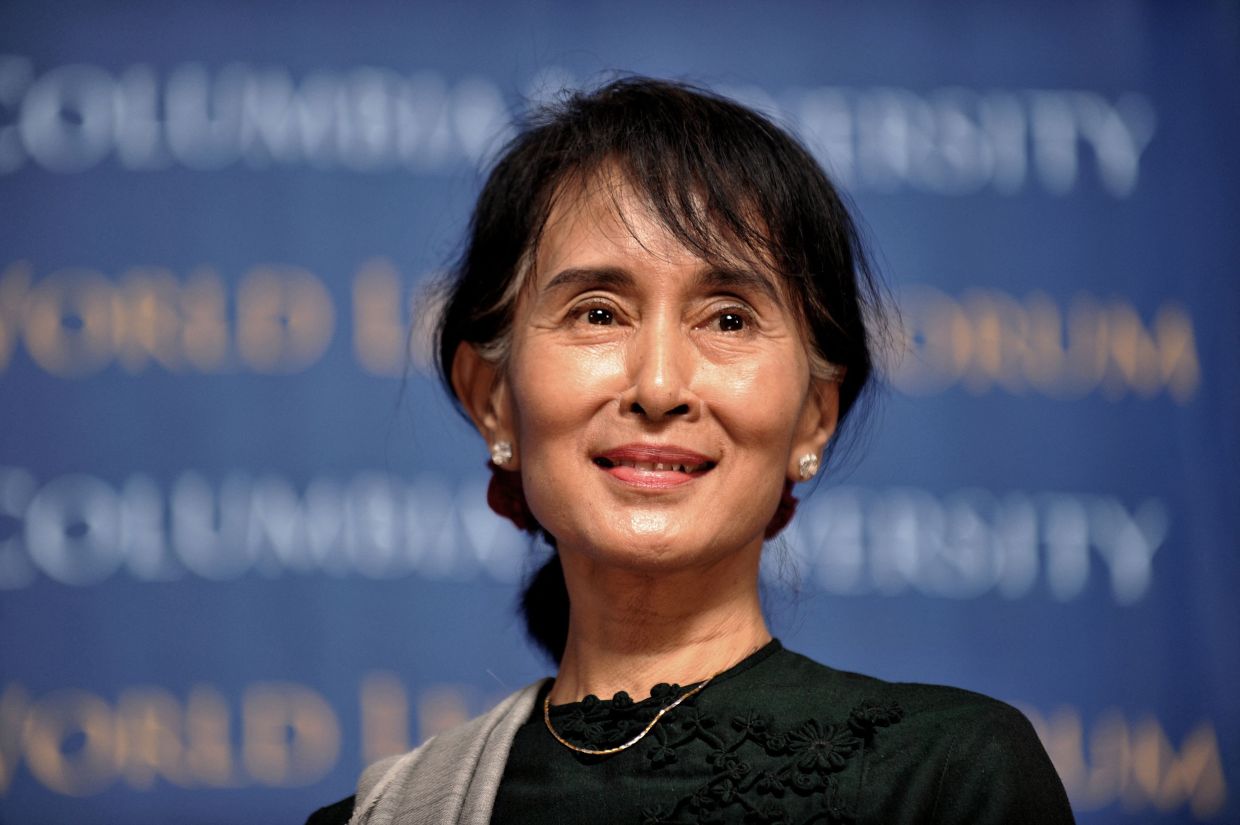
No one appears to know where Aung San Suu Kyi actually is. Myanmar's deposed democratic leader officially transitioned from prison to house arrest in April following an announcement by military strongman Min Aung Hlaing, but her precise location within the capital Naypyidaw remains shrouded in official secrecy. The junta claims she is confined to her residence under guard, yet the 81-year-old Nobel laureate has vanished into the bureaucratic labyrinth of a city constructed specifically to hide the innermost workings of military power—a place so deliberately designed for opacity that even senior government officials deny knowledge of her whereabouts.
Naypyidaw presents a peculiar challenge for anyone attempting to track the movements of high-profile detainees. The sprawling capital, established in 2005 by former military ruler Than Shwe, sprawls across territory nine times larger than New York City yet houses only one million people. Its most distinctive feature is architectural emptiness: deserted highways with twenty lanes stretch endlessly through jungle and rice paddies, connecting scattered administrative compounds that reveal little about their occupants. Urban theorists recognize this design as anything but accidental; rather, it represents the crystallization of decades of military paranoia about popular uprising and external interference. The city's very structure functions as a security mechanism, rendering conventional navigation nearly impossible for those unfamiliar with its deliberately confusing layout.
When Min Aung Hlaing announced Suu Kyi's transfer to house arrest, he presented the decision as a magnanimous gesture—evidence of his supposed transformation from military autocrat to civilian president following carefully controlled elections. The narrative cast the move as humanitarian, a sign that Myanmar was transitioning toward normalcy under his leadership. Yet critics view the announcement as little more than an image-rehabilitation exercise, a means of claiming democratic legitimacy while maintaining complete control over one of Myanmar's most iconic political figures. For Suu Kyi herself, the change represents minimal practical improvement; she remains completely isolated, denied freedom of movement, and largely invisible to the public she once led.
The deliberate secrecy surrounding her location extends to the highest levels of Myanmar's military and political establishment. When the junta-controlled Union Solidarity and Development Party parliamentarian Thein Tun Oo was asked directly about Suu Kyi's address, he replied with candid vagueness: "I don't know. Because I am one of the people." Even as a member of the pro-military party that benefits from her imprisonment, he possessed no access to information about her precise whereabouts. Police special branch officers from separate jurisdictions revealed that she had been moved to locations they themselves could not access, areas so restricted that even they lacked clearance. More remarkably, one source close to the military establishment claimed that "even generals do not have her information"—a statement suggesting that knowledge of her location has been deliberately compartmentalized to a level beyond ordinary security protocols.
Naypyidaw's distinctive architecture and planning make it the perfect venue for state-administered invisibility. Columbia University adjunct professor Galen Pardee, an architect specializing in urban design, describes the city as fundamentally antithetical to principles of functional urbanism. Rather than fostering community, commerce, and social interaction—the hallmarks of healthy cities—Naypyidaw achieves the opposite: a vast, serene, and deeply ominous landscape where security forces maintain constant surveillance over overwhelming empty space. Mobile internet jammers disrupt navigation applications, while armies of gardeners meticulously manicure the endless lawns bordering highways, often outnumbering the few pedestrians and vehicles actually present. "Being in the city is its own kind of house arrest," Pardee observes, noting that this outcome flows directly from deliberate political calculation rather than happenstance.
Ordinary residents of Naypyidaw experience the city's opacity firsthand, a condition that extends beyond Suu Kyi herself. A 25-year-old resident, speaking on condition of anonymity for security reasons, described her daily confusion navigating streets where buildings and compounds blur together in repetitive, indistinguishable patterns. "Everything looks the same to us," she explained. "We are still confused by some roads. We do not know where she's kept." This individual experience of spatial disorientation among residents serves as a microcosm of the larger system: a capital deliberately engineered to prevent not only external scrutiny but also internal comprehension, where even those living within its boundaries cannot readily orient themselves or answer basic questions about notable figures purportedly residing in their midst.
Suu Kyi's current situation represents a stark contrast to the symbolic geography that once surrounded her political significance. Before seizing power in 2021, she lived much of her early activist life under previous house arrest in her family mansion in Yangon, a residence that became a pilgrimage site for democratic supporters gathering outside its gates. That visible, accessible form of detention paradoxically transformed her confinement into a statement of resilience—the physical location itself became a monument to her sacrifice. Her 1991 Nobel Peace Prize reflected global recognition of her struggle. Now, hidden within Naypyidaw's intentional obscurity, she has become a figure whose very existence can scarcely be verified, her location unknown to the machinery of government supposedly holding her.
The junta's apparent dissolution of her family residence—one villa where she previously stayed before assuming office—further underscores the effort to erase her physical presence from public memory and geography. The destruction removes even the possibility of the location becoming a rallying point for opposition forces, another layer of controlled absence. When Min Aung Hlaing staged elections following five years of direct military rule, he engineered overwhelming victory for the USDP while excluding Suu Kyi's National League for Democracy entirely, rendering the voting exercise a predetermined coronation rather than genuine electoral competition. Parliament buildings still contain old magazines featuring Suu Kyi's likeness, yet USDP parliamentarians now speak of her era as definitively concluded, an artifact of history rather than a continuing political reality.
Suu Kyi's son Kim Aris, speaking from London, rejects the distinction between her previous imprisonment and current house arrest status, characterizing both as forms of incarceration fundamentally incompatible with freedom or dignity. He notes that his mother—now in her ninth decade—remains confined within what amounts to a private prison rather than a genuine residence offering any semblance of normal existence. The rhetorical flourish of designating her detention as house arrest rather than imprisonment performs no functional change in her circumstances; she remains denied contact with the outside world, unable to move freely, cut off from her family and supporters.
From a Southeast Asian perspective, Naypyidaw's existence raises sobering questions about the futures of authoritarian capitals throughout the region. The city demonstrates how state resources can be mobilized not to serve citizens but to concentrate and conceal power, creating urban spaces designed as tools of regime maintenance rather than generators of public welfare. Myanmar's example offers cautionary lessons about architecture as political instrument, about how vast capital investments can produce cities that function primarily as administrative fortresses and propaganda showcases. For Myanmar's neighbors in Thailand, Cambodia, and Laos—nations with their own histories of military governance—Naypyidaw presents a case study in how modern infrastructure can perpetuate rather than challenge entrenched authoritarian control.
The mystery surrounding Suu Kyi's specific address ultimately reflects deeper truths about Myanmar's political condition. A nation where even senior officials cannot access information about the detention location of a former elected leader reveals a system where power operates through calculated opacity, where information itself becomes a mechanism of control. The deliberate compartmentalization of knowledge about her whereabouts ensures that no single official or institution can become the focal point for pressure or negotiation regarding her release. As long as her location remains secret even to most of the military apparatus itself, the possibility of organized intervention on her behalf—whether through corruption, persuasion, or internal pressure—diminishes substantially. Naypyidaw's design, in this sense, transforms into perfect infrastructure for political disappearance without actual physical disappearance, containment without visibility.

