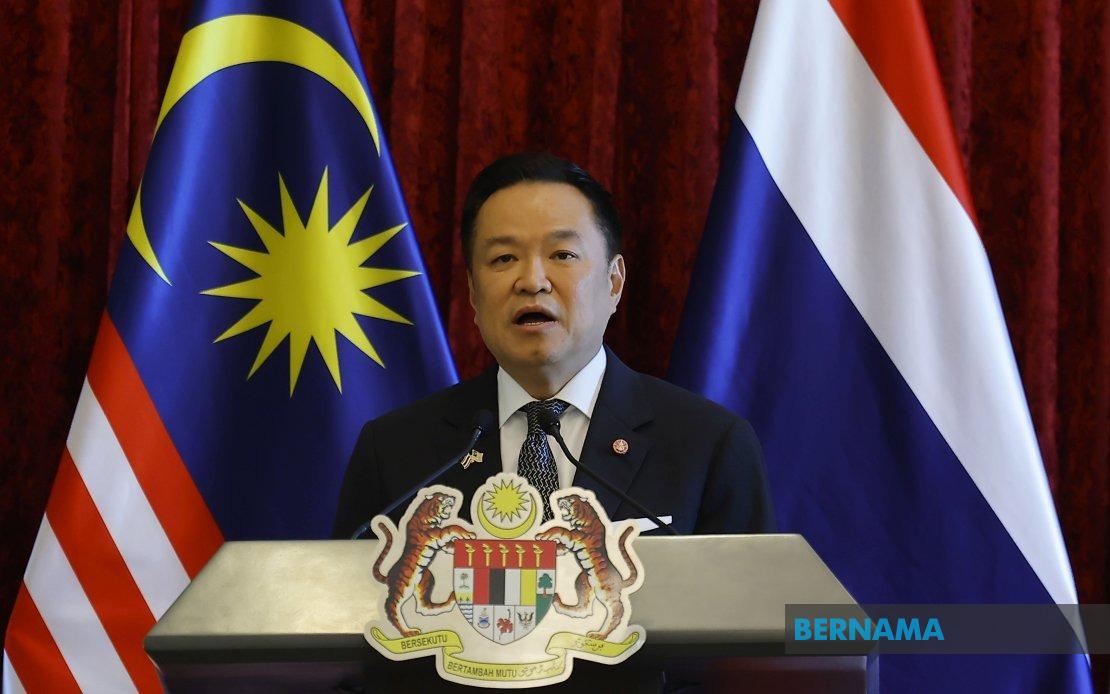
Thailand's Prime Minister Anutin Charnvirakul offered his warm support to Prime Minister Datuk Seri Anwar Ibrahim during a joint press conference in Putrajaya, expressing optimism ahead of Malaysia's upcoming Johor state election. The gesture underscores the friendly diplomatic relations between the neighbouring nations, with Anutin taking the opportunity to convey his best wishes for the electoral contest scheduled for this Saturday.
The 16th Johor state election represents a significant political event for Malaysia's ruling coalition, with voting to determine the composition of the 56-seat state assembly. A total of 172 candidates have registered to contest across all constituencies, reflecting competitive dynamics in the southern state that has long been a political battleground between government and opposition forces.
Anwar's coalition, Pakatan Harapan, has put forward contenders in every single constituency, demonstrating its commitment to contesting for control of the state government. The coalition has assembled a diverse slate combining experienced politicians with fresh political talent drawn from its three constituent parties: PKR, DAP, and Amanah. This mixed approach reflects a calculated strategy to balance institutional knowledge with electoral appeal to younger and newer voters.
Anwar characterised his conversation with the Thai leader as exceptionally positive and substantive, suggesting the bilateral relationship extends beyond formal diplomatic protocols into genuine collegial engagement. He employed the metaphor of friends gathering together to describe the tenor of discussions, indicating a comfort level and mutual understanding that facilitates closer regional cooperation. The Malaysian Premier's comments suggest that such high-level meetings serve purposes beyond ceremonial functions, offering opportunities for substantive exchange on matters of mutual concern.
Anutin's visit to Malaysia marks his first journey to the country following his reappointment to the Thai premiership in March 2026, lending particular significance to the timing and symbolism of the engagement. His decision to accept Anwar's invitation and undertake an official two-day visit demonstrates Thailand's interest in deepening ties with Malaysia across multiple policy domains. The visit agenda encompasses efforts to strengthen bilateral relations and expand cooperation in areas where the two countries share common interests and complementary strengths.
For Malaysia, hosting the Thai Prime Minister during an active election campaign period carries both practical and symbolic weight. The timing allows Anwar to showcase Malaysia's stable governance and international standing to a regional peer, potentially lending credibility to his administration's management of domestic political processes. Thailand's explicit engagement with Malaysian political leadership during an election cycle reinforces the message that democratic transitions and electoral competitions are routine aspects of governance in Southeast Asia.
The strategic partnership between Malaysia and Thailand encompasses economic cooperation, security arrangements, and cultural exchange. Both nations share borders and populations with significant cross-community ties, making bilateral stability essential for regional peace and prosperity. By cultivating warm personal relationships between their respective leaders, both countries create informal channels for addressing potential disagreements and coordinating responses to regional challenges.
Johor's electoral significance extends beyond its provincial importance, as the state's political composition influences broader national power dynamics. The outcome could reinforce or alter the balance of forces within Malaysia's federal system, potentially affecting policy direction on matters ranging from economic development to social governance. A successful outcome for Anwar's coalition would consolidate ruling coalition control over additional state governments, whereas opposition gains could complicate governance at the subnational level.
Anutin's presence in Malaysia and his public expression of support for Anwar demonstrates how neighbouring democratic nations engage with each other's electoral processes. Rather than maintaining strict neutrality, regional leaders often extend courtesies and show solidarity with counterparts, reflecting both personal relationships and strategic partnerships. Thailand's engagement with Malaysian politics underscores the interconnected nature of Southeast Asian governance and the importance that regional powers place on maintaining stable, predictable political relationships.
The Johor election occurs within a broader context of Malaysian politics characterised by evolving coalitional alignments and shifting voter preferences. Competition between Pakatan Harapan and opposition alliances continues to shape state and federal politics, with each electoral contest providing fresh data about voter sentiment and political momentum. The convergence of Thailand's high-level diplomatic engagement with Malaysia's electoral schedule highlights how regional relationships and domestic political processes frequently intersect in contemporary Southeast Asian politics.

