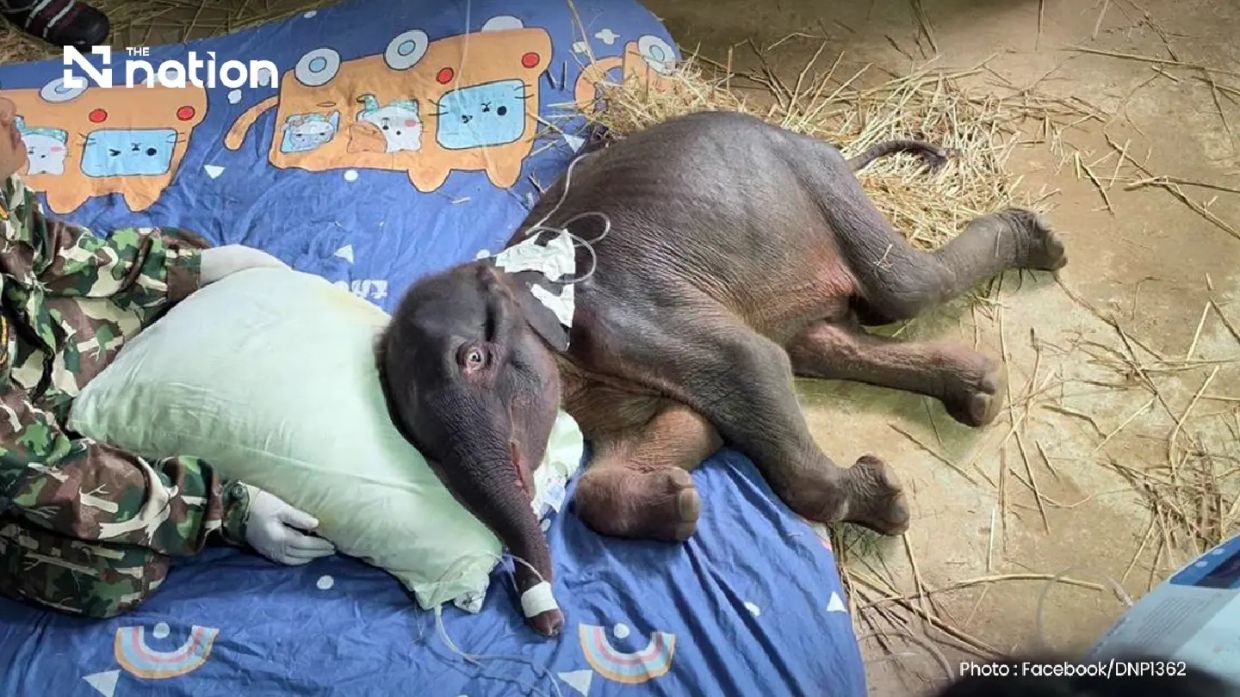
A weeks-long rescue and care operation in Thailand concluded in heartbreak when Jiew Sai Yok, a wild elephant calf separated from its herd, died in the early hours of Tuesday, August 4. The young animal, which had captured public attention after being discovered abandoned near the Huai Mae Nam Noi riverbank in Kanchanaburi province, succumbed to acute kidney failure despite intensive veterinary intervention at Sai Yok National Park. Thailand's Department of National Parks, Wildlife and Plant Conservation announced the death via social media, acknowledging the profound sadness felt by the veterinary teams and park personnel who had devoted themselves to the calf's care around the clock.
The tragedy underscores the vulnerability of young wild elephants when separated from their protective herds, a recurring challenge for wildlife authorities across Southeast Asia. Jiew Sai Yok's ordeal began on July 30 when alert villagers spotted the distressed calf stranded near the riverbank. The location's remoteness—accessible only by boat through dense forest terrain—complicated initial rescue efforts. Local residents and officials mounted a rescue operation, transporting the weakened animal by boat to safer ground. The calf's condition immediately raised alarms: it was severely malnourished, dehydrated, and bore multiple physical injuries suggesting it had endured considerable hardship while separated from protective maternal and herd care.
Despite hopes that the mother elephant might return, overnight observations at the riverside site yielded no response to the calf's persistent cries. This absence prompted officials to escalate care measures. A specialized veterinary team undertook a grueling journey—requiring one to two hours by boat through swollen waterways caused by continuous rainfall—to conduct a comprehensive health assessment. The examination revealed an animal in critical condition: the calf exhibited severe dehydration, multiple oral wounds including canker-like lesions roughly the size of a 10-baht coin, abrasions across its body, blisters with necrotic tissue on its trunk, and infections around both eyes causing conjunctivitis. Dark reddish-yellow urine and loose, foul-smelling stool suggested systemic infection and digestive distress.
Recognizing the gravity of the situation, authorities relocated the calf to Sai Yok National Park headquarters, establishing a dedicated medical facility with continuous 24-hour monitoring. The veterinary team implemented aggressive supportive care protocols including intravenous fluid administration and supplemental oxygen throughout the night of August 3 and into the early morning hours. Despite these interventions, the calf continued struggling with fundamental physiological challenges. It managed to consume small quantities of milk every two to three hours—between 350 and 500 millilitres per feeding—but remained plagued by diarrhea and discolored urine indicative of kidney dysfunction. Veterinarians observed moments of weakness interspersed with the calf's attempts to rise, reflecting a body engaged in a losing battle against systemic organ failure.
At approximately 2 a.m. on Tuesday, the young elephant fell into what appeared to be sleep before peacefully ceasing vital functions. The medical team immediately initiated full cardiopulmonary resuscitation protocols, but the animal's organs had already begun irreversible shutdown. Initial laboratory analysis of blood samples pointed to acute kidney failure as the primary cause, though veterinarians also noted the possibility of congenital internal organ abnormalities that may have compromised the calf's survival prospects even before its separation from the herd. These underlying conditions could have explained why the mother elephant potentially abandoned or became separated from Jiew Sai Yok—a heartbreaking possibility that veterinarians are now investigating.
The Department of National Parks has announced plans for a comprehensive necropsy and advanced laboratory testing to establish the precise cause of death. Such investigations carry significance beyond this single case, as they contribute to broader understanding of wild elephant vulnerability and the physiological stressors that young animals face when orphaned or lost. For Southeast Asian wildlife conservation efforts, each elephant death provides crucial epidemiological data that informs rescue protocols and preventive strategies. The DNP extended formal recognition to all veterinarians and rescue personnel involved in Jiew Sai Yok's care, acknowledging their professional dedication despite an ultimately tragic outcome.
This incident reflects the ongoing tension between human development and wildlife survival across Thailand and the broader region. Kanchanaburi province, home to Sai Yok National Park, sits within a landscape increasingly fragmented by infrastructure development, agricultural expansion, and human settlement. Elephant populations face mounting pressure as their natural corridors shrink and encounters with human communities become more frequent. Young calves, dependent entirely on maternal guidance for navigation, feeding, and social integration, face particular peril in such compromised environments. The death of Jiew Sai Yok represents not merely an individual tragedy but a symptom of systemic wildlife habitat degradation.
Regional conservation observers note that Thailand receives international recognition for its wildlife protection frameworks, yet implementation challenges persist. The resources required for rescue operations like Jiew Sai Yok's—specialized veterinary teams, emergency transport equipment, 24-hour intensive care facilities—represent significant commitments that few agencies can sustain. Malaysia, Indonesia, and other Southeast Asian nations face parallel challenges with their own wild elephant populations, many of which remain critically endangered. The case of Jiew Sai Yok provides a sobering reminder of how precarious survival has become for these megafauna, even when human intervention occurs promptly and professionally.
For the veterinary teams and park officials involved, the loss carries personal weight alongside professional implications. The calf's apparent capacity to respond to care—consuming milk regularly, showing moments of strength—may have kindled hope that extended medical support could reverse its condition. This dynamic, common in wildlife rescue operations, renders such outcomes emotionally difficult for dedicated professionals. Yet veterinarians also recognize that Jiew Sai Yok's peaceful death, surrounded by conscientious care, represents a better outcome than the suffering the animal would have endured if left alone in remote forest terrain without maternal protection or human intervention. As post-mortem investigations proceed, they may illuminate whether the calf possessed any realistic prospect of survival or whether its internal abnormalities rendered rescue efforts ultimately futile from the outset.

