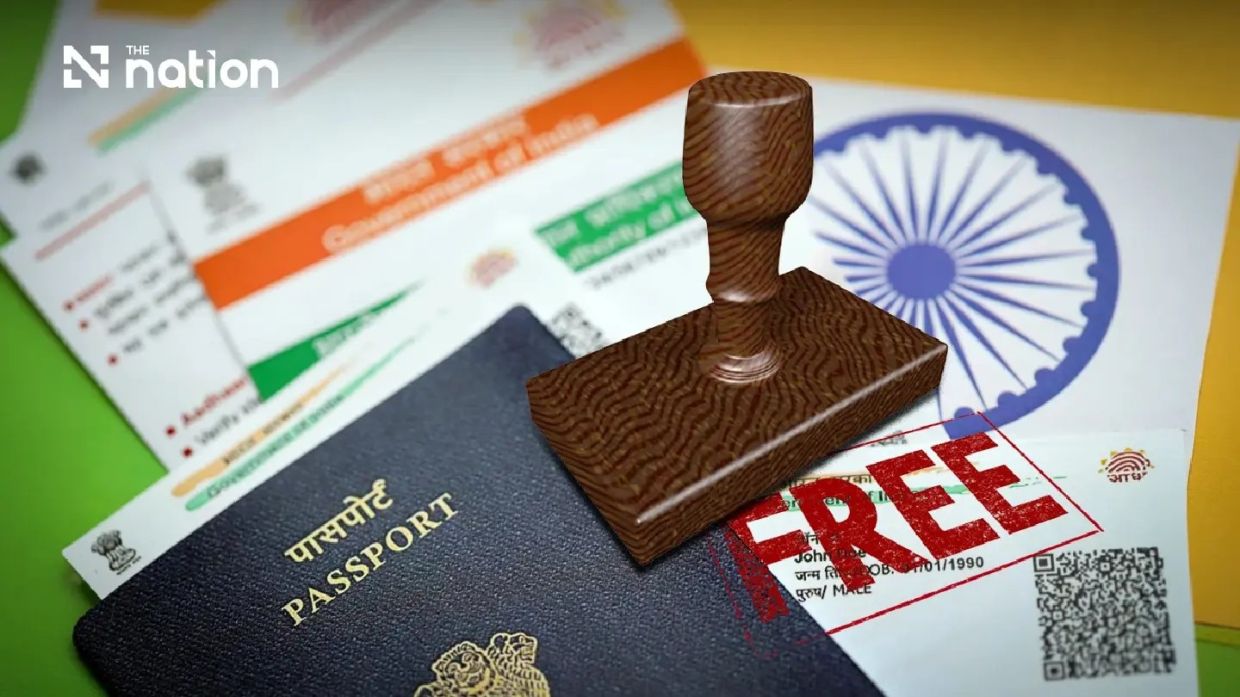
Thailand's Tourism and Sports Minister Surasak Phancharoenworakul has championed a 30-day visa-free entry regime for Indian nationals, a decision that reflects the kingdom's determination to capture a growing and affluent travel segment. The policy approval comes as Thailand aims to reach 2.7 million Indian visitors by 2027, building on momentum that has positioned India as the country's third-largest tourism market. This visa framework represents a critical strategic choice, as the minister successfully lobbied against an earlier proposal that would have limited Indian travellers to just 15 days without a visa—a restriction he argued would have undermined Thailand's competitiveness in attracting high-value destination wedding groups and extended celebration parties.
The decision to grant Indian tourists equal visa-free standing with visitors from other major markets reflects the tourism ministry's recognition that many affluent Indian travellers require longer stays for wedding ceremonies, pre-wedding events, and related celebrations. These occasions typically unfold over several weeks and command substantial spending across accommodation, dining, transportation, and entertainment services. By extending the visa exemption to 30 days, Thailand not only accommodates this travel pattern but also signals confidence and parity to the Indian market, a psychological factor that officials believe will encourage greater outbound tourism flows and boost average expenditure per visitor.
Recent performance data underscores India's growing importance to Thailand's tourism economy. The Tourism Authority of Thailand projects that Indian arrivals reached approximately 1.3 million through mid-2026, positioning the country on track to exceed 2.55 million visitors by year's end before accelerating to a record 2.7 million in 2027. The 2025 figures paint a compelling picture: Thailand welcomed 2.48 million Indian tourists, generating 90.425 billion baht in tourism revenue, an increase of 16.82% compared to the previous year. These figures demonstrate that the Indian market is not merely growing in volume but also in economic significance, with average daily expenditure standing at 6,203 baht per person—approximately 36,354 baht per trip—placing Indian visitors firmly in the higher-spending category that Thailand's tourism strategy increasingly prioritises.
The visa policy decision emerged from broader government restructuring approved by the Cabinet on July 14, which replaced the temporary 60-day visa-exemption programme covering 93 countries with a clearer, categorised system. Indian nationals are now assigned to a standard 30-day visa-exemption category, distinct from the Visa on Arrival designation that many tourism operators initially feared would become necessary. This restructuring addresses two competing policy objectives: strengthening Thailand's immigration screening processes while maintaining competitive visa access that distinguishes Thailand from regional competitors. The government framed the revised system as balancing tourism growth with security concerns, eliminating overlapping categories that might create vulnerabilities or obscure traveller intent. The average length of stay by Indian visitors—7.17 days—suggested that a 30-day exemption provides substantial flexibility without creating excessive administrative burden on immigration authorities.
Thailand's positioning of the Indian market reflects an understanding that visa access functions as a primary decision variable for international travellers, particularly when destination choices cluster within the same geographic region. Vietnam, Malaysia, and Singapore have all recognised this competitive dynamic. Vietnam has deployed aggressive price incentives and promotional campaigns, Malaysia has emphasised visa-free entry benefits, and Singapore has cultivated a reputation as the premier family destination in the region. Thailand's successful retention of a 30-day exemption for Indian nationals represents a defensive move against these competitors while also creating an offensive advantage. Officials recognised that relegating Indian visitors to a Visa on Arrival status would introduce friction into the travel planning process, potentially shifting marginal decisions toward competing destinations that required less documentation and procedural complexity.
The market composition of Indian visitors to Thailand reveals both breadth and depth of opportunity. Approximately 68.63% of Indian travellers arrive as free independent tourists rather than organised tour groups, suggesting a segment inclined toward customised itineraries and discretionary spending. Some 59.68% are first-time visitors, indicating that this market possesses substantial room for repeat visitation as travellers develop familiarity with Thai destinations and attractions. The primary draw for Indian tourists—Thai cuisine—followed by beaches and spa services, reflects the wellness and experiential focus that increasingly characterises affluent Indian leisure travel. This profile aligns closely with Thailand's strategic pivot toward higher-value, lower-volume tourism that emphasises per-visitor spending and environmental sustainability over mere arrival numbers.
Air connectivity has emerged as a cornerstone of Thailand's Indian market strategy, with direct flight routes providing the infrastructure necessary to scale arrivals. The Tourism Authority's New Delhi office oversees nine direct routes connecting Indian cities with Bangkok, Krabi, and Phuket, collectively operating 144 weekly flights and accommodating over 32,000 passengers. The Mumbai region, supervised by a separate TAT office, generates approximately 160 weekly flights with similar capacity. Combined weekly seat capacity on Thailand-India routes reaches approximately 66,000, a figure that authorities expect to grow as airlines restore services temporarily suspended during Middle East conflicts and elevated fuel costs. The recovery trajectory suggests that capacity constraints will not limit tourism growth during the critical high season, creating the infrastructure foundation necessary for achieving 2027 targets.
Thailand's geographic expansion strategy extends beyond major metropolitan centres to Tier 2 and Tier 3 cities where rising wealth and emerging travel culture create new demand. Priority markets include Lucknow, Chandigarh, Guwahati, Ahmedabad, Surat, and Pune, each offering distinct demographic and economic profiles. Surat's globally significant diamond industry concentrates wealth among traders and business families likely to spend generously on international leisure travel, while Pune's position as an automotive and information technology hub provides access to India's expanding middle class of skilled professionals. This geographic strategy acknowledges that India's outbound tourism growth increasingly originates in secondary cities rather than traditional metropolitan gateways, requiring tourism authorities to invest in awareness and promotional campaigns across a dispersed geography.
The strategic scope has widened to encompass neighbouring markets in Bhutan, Nepal, and Bangladesh, recognising that regional traffic flows and cross-border tourism patterns can generate additional visitor volume. The Tourism Authority plans to differentiate Thailand through emphasised promotion of food culture, local lifestyles, wellness experiences, and community-based tourism—positioning these dimensions against the conventional attractions that competing destinations typically highlight. This experiential positioning reflects a broader evolution in Indian outbound tourism preferences, particularly among younger and more affluent cohorts who increasingly seek authentic cultural encounters rather than standardised sightseeing itineraries. The shift toward immersive travel experiences presents both a marketing opportunity and an operational challenge, requiring Thailand to develop tourism infrastructure and training in communities beyond traditional resort zones, while ensuring that cultural engagement remains respectful and economically beneficial to local populations.
The 30-day visa exemption decision ultimately represents a calculated bet on India's trajectory as a source market and Thailand's capacity to capture share within an increasingly competitive regional environment. By securing visa-free access parity with other major markets, Thailand has removed a potential friction point while signalling institutional commitment to the Indian market's growth. Combined with aggressive geographic expansion targeting secondary cities, continued investment in air connectivity, and differentiated positioning emphasising experiential and cultural tourism, these elements constitute a coherent strategy designed to achieve the 2.7 million visitor target while sustaining the high per-capita spending levels that make the Indian market particularly attractive to Thailand's tourism economy.

