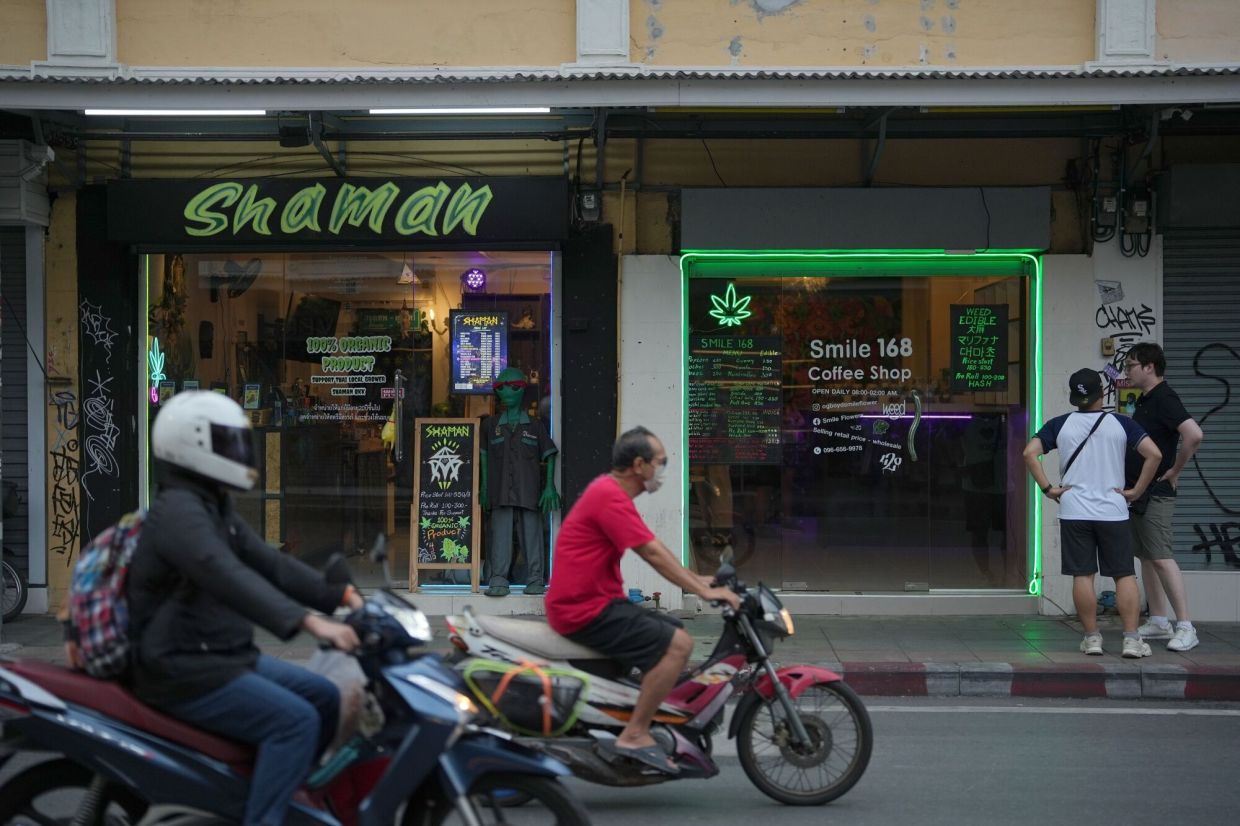
Thailand's Public Health Minister Pattana Promphat is driving forward legislative reforms to establish strict controls over the country's cannabis industry, signalling a decisive shift towards regulatory oversight after years of more lenient policies. The proposed Cannabis and Hemp Control Act, unveiled to Parliament in July 2026, represents a significant recalibration of Thailand's approach to cannabis, explicitly limiting authorised use to medical applications whilst cracking down on the estimated 6,000 recreational outlets operating without proper licensing or with expired permits across the kingdom.
The catalyst for this legislative push stems from mounting enforcement challenges and regulatory gaps that have plagued Thailand's cannabis framework since decriminalisation measures were introduced several years ago. Pattana highlighted critical vulnerabilities in the current system, including the prevalence of fraudulent licences, large-scale illegal cross-border trafficking, and the proliferation of shops masquerading as medical outlets whilst supplying cannabis for recreational consumption. These enforcement failures prompted the government to pursue comprehensive legislation that would extend regulatory authority from the point of cultivation through to final distribution, closing loopholes that currently exist under fragmented ministerial regulations and the Act on the Protection and Promotion of Herbs.
The Bhumjaithai Party, which championed cannabis liberalisation in Thailand, has explicitly committed to limiting the policy to medical cannabis only, according to Pattana's confirmation. This positions the government's approach between outright prohibition and unrestricted access, attempting to harness cannabis's therapeutic potential whilst preventing commercialisation for recreational markets. The draft bill has already completed public consultation processes and is being prepared for parliamentary deliberation, though it failed to advance during the most recent legislative session.
A central concern driving the legislative agenda is the uncontrolled outflow of Thai cannabis to neighbouring countries and beyond, where cannabis remains classified as a narcotic substance. Despite Thailand's domestic regulatory status, the Public Health Ministry acknowledged that movement of cannabis across borders must comply with receiving countries' narcotics laws, creating a complex compliance challenge. Cases have surfaced of transnational trafficking operations using fake documentation, exploiting gaps between Thailand's permissive stance and the stringent prohibition regimes of destination nations. The Department of Thai Traditional and Alternative Medicine has established coordination protocols with the Customs Department and Airports of Thailand to intercept large shipments, though Pattana conceded that sophisticated operations with substantial volumes may occasionally evade detection.
Authentication mechanisms have been substantially upgraded to prevent fraudulent licensing. The ministry has transitioned to electronic-only licence issuance, eliminating the circulation of physical documents that criminals exploited to legitimise illegal operations. All properly registered outlets are now catalogued on the department's website with GPS coordinates and expiration dates, creating unprecedented transparency and enabling rapid identification of unauthorised shops. This technological layer represents a pragmatic enforcement strategy, allowing inspectors and police to distinguish instantly between legitimate medical facilities and clandestine recreational outlets.
The scale of the crackdown required is formidable. Since 2023, approximately 18,000 cannabis outlets have received authorisation, with licence terms spanning three calendar years. Roughly one-third of original licensees, or around 6,000 outlets, saw permits expire at the end of 2023, and only approximately 1,500 renewed their credentials. The ministry projects that similar numbers of outlets will face licence expiration in 2026 and 2027, creating annual enforcement obligations that necessitate substantial resource allocation. To manage this workload, the Public Health Ministry has mobilised inspection capacity by recruiting tens of thousands of authorised officers from police forces and local administrative organisations, decentralising enforcement beyond central bureaucratic structures.
The reformed regulatory framework will impose tighter operational requirements on outlets permitted to remain operational. Under amended ministerial regulations, cannabis retailers must transition to functioning as medical facilities with licensed physicians present to oversee dispensing and verify medical necessity. This requirement fundamentally alters the operational model, shifting from retail commerce towards clinical consultation, thereby creating friction against recreational use patterns. Additionally, the system will flag suspicious consumption patterns where individual customers receive repeated cannabis supplies, triggering investigation protocols and potential legal proceedings if irregularities emerge.
Violations under the new legislation will attract substantially elevated penalties compared to existing frameworks, signalling governmental intent to deter non-compliance through escalated consequences. The increased penalties framework targets cultivation stage operations, addressing a critical gap in current regulations that cover only sales, transfers, and extraction. By establishing comprehensive controls across the entire supply chain, from grower to end-user, the legislation aims to eliminate the grey zones that have permitted unlicensed operators to function with minimal disruption.
For Southeast Asian observers, Thailand's regulatory evolution carries significant implications. As the region's most cannabis-liberalised jurisdiction, Thailand's experience demonstrates the challenges of implementing permissive frameworks without robust institutional capacity and technological infrastructure. The rapid proliferation of unlicensed outlets and cross-border trafficking have illustrated how quickly cannabis markets can expand beyond policy objectives without intensive oversight mechanisms. Malaysia, Vietnam, and other regional states monitoring Thailand's regulatory trajectory may gain instructive lessons regarding the resource requirements and enforcement complexities inherent in cannabis control systems.
The question of whether cannabis might revert to full narcotics classification remains unresolved, with Pattana indicating that such decisions would fall under the purview of the Ministry of Justice and broader narcotics legislation. This legislative fence-sitting reflects political sensitivities surrounding the issue, with the Bhumjaithai Party's coalition weight likely constraining movement towards prohibition. The immediate priority remains enacting the control bill and establishing functional enforcement mechanisms before pursuing broader classification debates.
Implementing this regulatory vision confronts practical obstacles typical of enforcement campaigns in Thailand. Despite technological advantages and expanded inspection capacity, officials have acknowledged that well-resourced illicit operators may succeed in evading detection through sophisticated smuggling techniques or corruption of enforcement personnel. The question of political commitment to sustained enforcement across successive administrations also looms, as cannabis crackdowns require consistent resource allocation over years rather than months. Thailand's ability to realise its medical-only policy objective will ultimately depend upon whether bureaucratic will and fiscal resources prove sufficient to overcome the entrenched interests that have grown within the liberalised cannabis sector since 2018.

