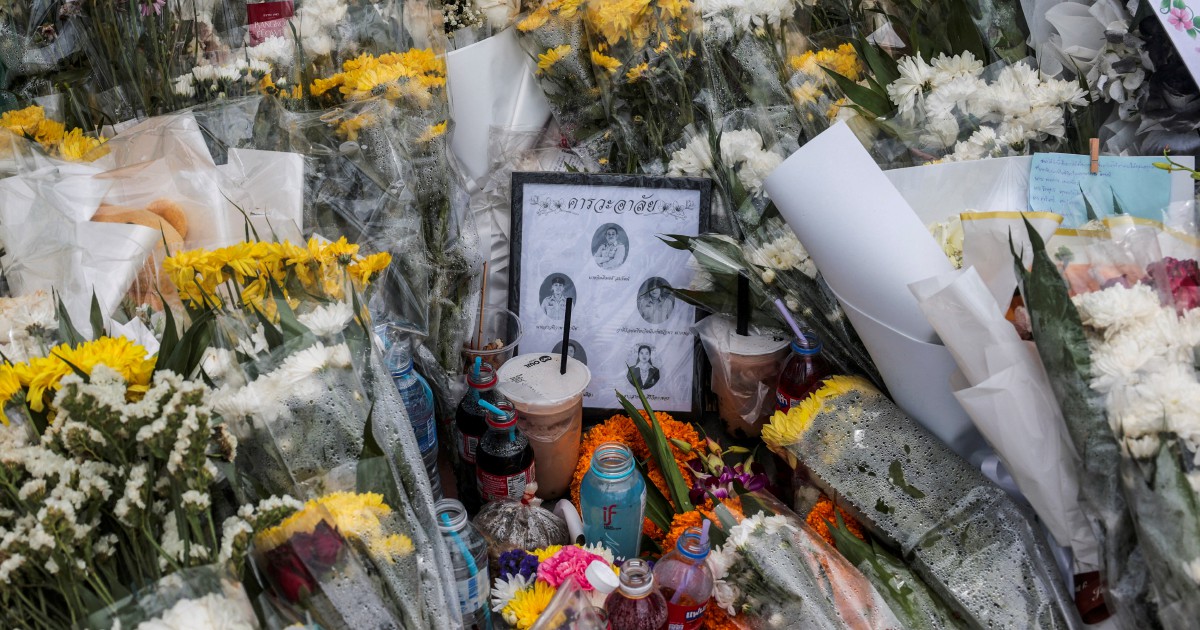
Thailand's government has moved to tighten firearms regulations following a tragic school shooting that has renewed concerns about gun violence and lax licensing practices. Prime Minister Srettha Thavisin announced on Tuesday that the suspension of firearms licences marks the first significant policy response to the incident, which left three people dead, including a teenager and the elderly relatives he killed.
The deceased shooter and his two grandparents were cremated in Nonthaburi province, bringing closure to one of the darker chapters in the country's recent history of violence. The cremation ceremony reflected the solemn mood that has gripped the nation following the attack, which has sparked widespread debate about how such incidents can be prevented.
For Malaysian observers, the Thai incident serves as a cautionary tale about the consequences of lenient firearm regulations and inadequate background checks. Malaysia operates under one of Southeast Asia's strictest gun control frameworks, with firearm ownership heavily restricted and licences granted only under stringent conditions. The Thai approach has historically been more permissive, particularly regarding certain categories of licence holders and rural populations seeking hunting permissions.
The suspension of firearms licences represents an interim measure while authorities presumably investigate systemic failures that allowed the teenager to access weapons. Such administrative actions are typically followed by more comprehensive legislative reforms addressing storage requirements, mandatory safety training, psychological evaluations, and periodic licence renewal processes. The announcement signals acknowledgement that existing mechanisms were insufficient to prevent the tragedy.
This incident highlights the broader challenge facing Southeast Asian nations attempting to balance public safety with cultural traditions of firearm ownership, particularly in rural areas where hunting and self-defence remain legitimate concerns. Thailand's decision to suspend rather than immediately revoke licences suggests a measured approach, though observers anticipate pressure for stricter permanent measures from lawmakers and the public.
The timing of the suspension, occurring as the perpetrator's body was being cremated, underscores the gravity with which Thai authorities are treating the matter. The simultaneous closure of one investigation stream and opening of broader policy discussions suggests a government responding to immediate public demand while facing complex questions about regulatory reform.
Regional security analysts note that school shootings remain comparatively rare in Southeast Asia, a distinction often attributed to stricter firearms regulations than those prevailing in the United States or some other nations. Thailand's regulatory environment, however, has historically occupied a middle ground, creating vulnerabilities that this incident has now exposed.
For Malaysia's internal security framework, the Thai experience offers validation for maintaining current strict standards on firearm distribution and monitoring. The incident may also inform discussions within ASEAN about best practices for firearms regulation, potentially leading to greater coordination on background check procedures and information sharing between member nations.
The suspension announcement indicates that Thai authorities recognise the need for institutional change rather than viewing this as an isolated event attributable solely to individual pathology. The focus on licensing mechanisms suggests that investigations have likely identified gaps in how firearms were obtained or stored that enabled this tragedy.
Experts suggest that comprehensive reform will probably address not only initial licensing but also storage standards, particularly in households with adolescents or individuals with documented mental health concerns. Such measures would align Thailand's approach more closely with international best practices observed across developed nations that maintain lower rates of firearm-related injuries and deaths.
The cremation of the victims and perpetrator concludes one phase of this tragedy while opening a longer period of policy examination and potential legislative change. How Thailand responds in the coming weeks and months will likely influence regional conversations about firearm regulation, youth mental health services, and school safety protocols throughout Southeast Asia.

