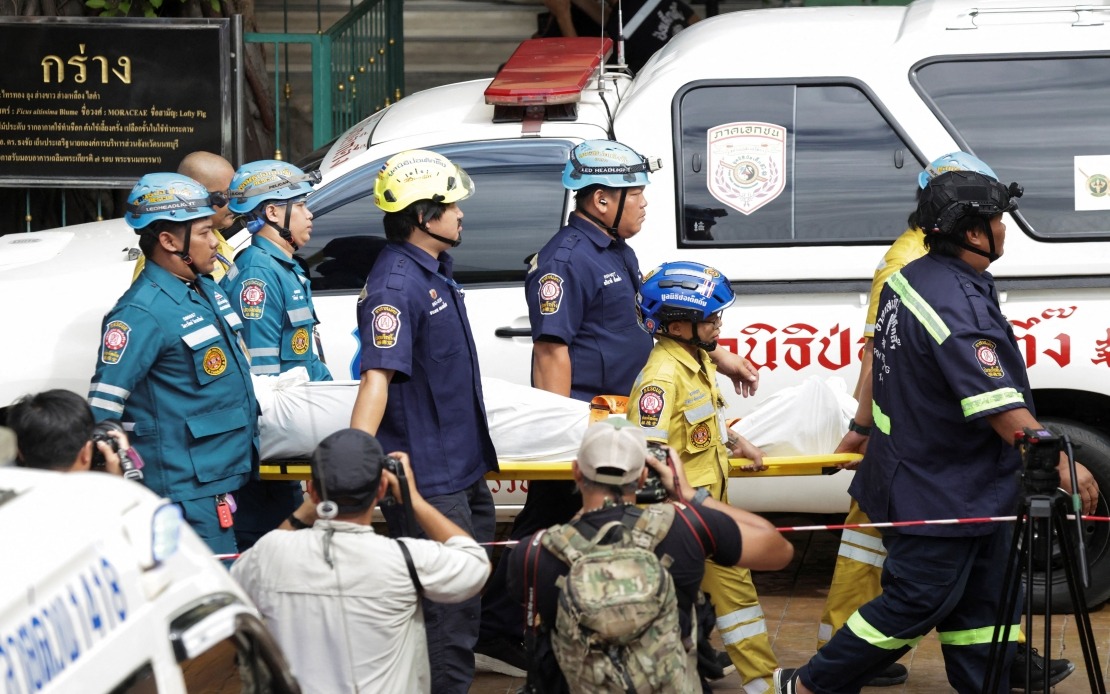
A deadly school shooting in Thailand's Nonthaburi province has prompted authorities to investigate whether the student gunman first murdered his grandparents at their home before carrying out the attack at Debsirin Nonthaburi School on Friday. The incident represents one of the country's most significant school-based shootings in recent memory, raising fresh concerns about firearms access and campus security across Southeast Asia.
According to the Royal Thai Police, the suspected shooter fired multiple rounds before arriving at the educational institution around 10 in the morning. The violence claimed six lives—comprising three teaching staff members and three students—while leaving an additional 15 individuals wounded. The suspect was subsequently found dead at the school premises, though authorities have not yet clarified the exact circumstances of his death.
Lieutenant General Trairong Piwpan, who serves as Deputy Inspector-General and spokesperson for the Royal Thai Police, revealed that preliminary findings suggest the gunman had discharged 26 bullets before reaching Debsirin Nonthaburi School. When investigators conducted a search of the suspect's residence in Bang Bua Thong district, they discovered the bodies of both his grandfather and grandmother inside the home. Medical examination indicated that both elderly victims had sustained fatal gunshot wounds to the head, strengthening police suspicion that the suspect killed them prior to proceeding to the school.
The weapons cache discovered during the search added another dimension to the investigation. Officers recovered a 9mm handgun and 34 additional rounds of ammunition that were not loaded in the magazine, suggesting the suspect had brought substantial firepower to the location. The exact sequence in which events unfolded—whether the grandparents were killed minutes or hours before the school assault—remains unclear as investigations continue.
Thailand has experienced several notable incidents of school-based violence in recent decades, making this tragedy particularly significant within the national discourse on public safety. The country maintains strict gun ownership regulations compared to some regional peers, yet firearms-related crimes continue to occur. The emergence of such incidents typically prompts difficult conversations about whether existing security measures at educational institutions are adequate to protect vulnerable student populations.
Investigators are now focused on establishing what motivated the young suspect to commit such extreme violence. Understanding the psychological state and grievances that led to his actions could provide insights for educators, mental health professionals, and law enforcement across the region. Schools throughout Nonthaburi and nearby provinces may now face increased scrutiny regarding their security protocols and their capacity to identify and assist students displaying warning signs of potential harm.
The incident carries implications extending beyond Thailand's borders. Southeast Asian nations with comparable educational systems and social structures have watched school violence incidents closely, recognizing that contributing factors—family dysfunction, access to weapons, untreated mental health issues, and inadequate crisis intervention—are not unique to any single country. Malaysia and other regional neighbours have periodically reviewed their own school security measures in response to such tragedies occurring elsewhere in the world.
The Royal Thai Police have publicly committed to a thorough investigation into the motive and the chronology of events. Reconstructing the timeline will require interviews with family members, neighbours, school officials, and medical examiners who can provide evidence about when the grandparents were killed relative to the school shooting. Such forensic and testimonial work is methodical and often reveals complexities not immediately apparent at the crime scene.
For the families and community of Nonthaburi, the aftermath of such violence involves not only grieving the loss of loved ones but also confronting the reality that a young person within their community was capable of such destruction. Educational institutions typically serve as anchors of community trust and stability, making any breach of that security particularly destabilizing. Schools across the region are likely to reconsider their emergency response protocols and threat assessment procedures in light of this incident.
The broader challenge facing Thailand and its Southeast Asian neighbours involves balancing legitimate security concerns with the need to maintain schools as welcoming, supportive environments where students can learn and develop. Excessive fortification of schools can inadvertently create an atmosphere of fear rather than fostering healthy growth. Experts in education and public safety continue to debate how best to address these competing priorities while acknowledging that no security system can completely eliminate all risks.
As the investigation deepens, the authorities' findings may shed light on whether warning signs were missed or whether resources for intervention were inadequate. Such knowledge would be valuable not only for Thai policymakers but also for education ministries and law enforcement agencies throughout Southeast Asia as they evaluate their own preparedness and response mechanisms for potential crises within school environments.

