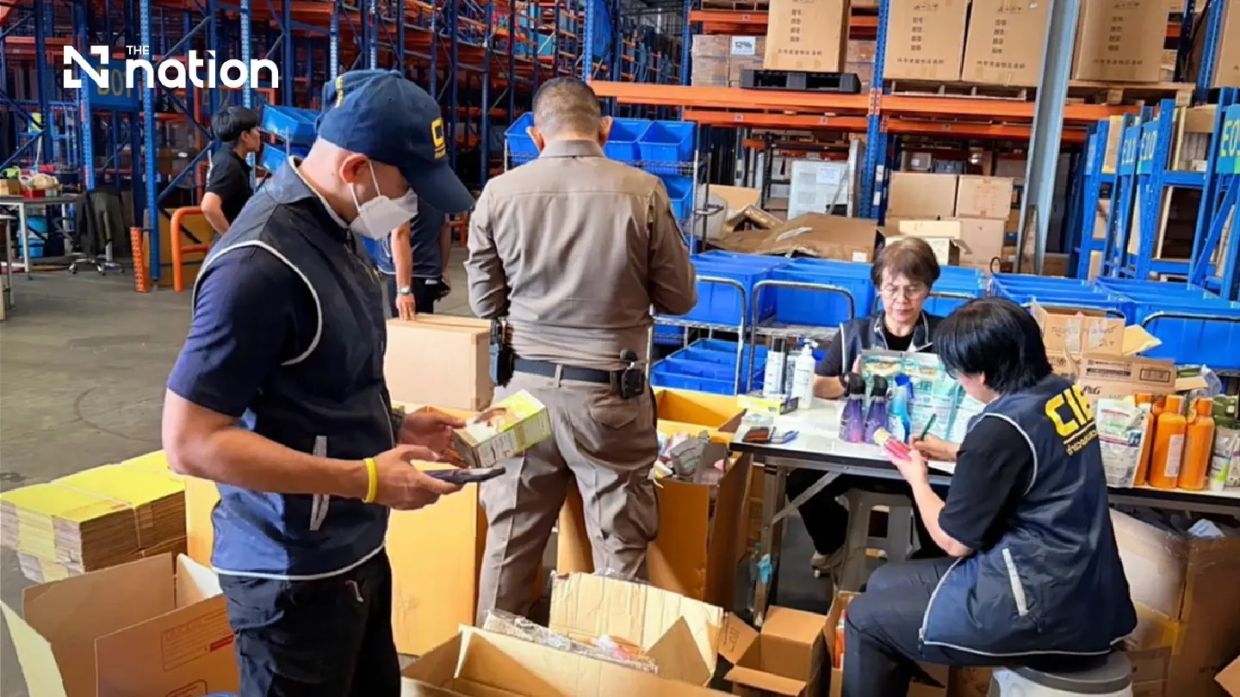
Thailand's Consumer Protection Police Division has uncovered an extensive smuggling operation centred in Bang Phli district, Samut Prakan, resulting in the confiscation of 83,483 counterfeit or unapproved Japanese products. The raid, conducted on August 13 under the direction of Pol Maj Gen Kongkrit Lertsittikul, targeted a warehouse that had transformed into a distribution hub for illicit cosmetics, dietary supplements, and medicinal products destined for online commerce platforms throughout the kingdom.
The seized goods encompassed 116 distinct product categories imported from Japan, with a combined estimated value exceeding 8.34 million baht. Authorities determined that none of the merchandise had undergone Thailand's mandatory safety inspection protocols or obtained appropriate regulatory certification from competent Thai agencies. Most critically, the products lacked the required Thai-language labelling, rendering them non-compliant with consumer protection legislation and posing unknown health risks to purchasers unaware of product composition or potential contraindications.
Investigations reveal that the warehouse operation had evolved significantly over its four-year lifespan. Initially functioning simply as a storage facility for imported goods, the facility progressively expanded into a comprehensive logistics and packing service catering to multiple online businesses. The scale of daily operations proved substantial, with staff processing between 200 and 300 items for dispatch each day, charging online merchants modest packing fees of 10 to 12 baht per box. This streamlined efficiency allowed the network to maintain steady market presence across numerous e-commerce platforms.
The breakthrough came following mounting consumer complaints regarding cosmetics, supplements, medications, and hazardous household substances appearing on online marketplaces without proper Thai-language packaging or safety documentation. Police investigators meticulously traced the distribution chain backwards, ultimately identifying the Bang Phli warehouse as the central supply point. Evidence gathered demonstrated that imported products arrived directly from Japan without submitting to standard customs procedures, regulatory inspections, or certification requirements mandated by Thai authorities responsible for public health protection.
The warehouse's operational model exemplified sophisticated smuggling networks that exploit the complexity of cross-border e-commerce. By positioning itself as a neutral logistics provider offering packing and storage services to multiple online sellers, the facility obscured responsibility and created distance between importers, distributors, and actual retailers. This structure allowed operators to maintain plausible deniability while profiting from the systematic violation of Thailand's stringent product safety regulations.
Once investigators compiled sufficient evidence of regulatory violations, they petitioned the courts for authorization to execute a formal warehouse inspection. Following judicial approval, police conducted the raid that yielded the massive confiscation. The operation demonstrated coordinated law enforcement commitment to disrupting illicit trade networks that compromise consumer protection through circumventing mandatory safety procedures. The warehoused inventory represented merely one shipment or collection phase within what authorities determined to be a sustained, organised operation.
Those implicated in the smuggling enterprise now face serious legal consequences spanning multiple legislative frameworks governing Thailand's product safety architecture. Prosecutions will proceed under Thailand's Cosmetics Act, which establishes strict manufacturing, labelling, and distribution standards; the Food Act, applicable to dietary supplements classified as nutritional products; the Drug Act, covering medicinal substances requiring pharmaceutical oversight; and the Hazardous Substances Act, addressing chemical safety risks. Violators face substantial penalties reflecting the gravity of endangering public health through unregulated product distribution.
The case carries particular significance for Southeast Asian consumers increasingly reliant on online retail channels. Thailand's illicit product networks often supply neighbouring markets, including Malaysia, where similar smuggling operations target consumers seeking affordable cosmetics and supplements. The interconnected nature of regional e-commerce means that dismantling major distribution hubs yields benefits beyond Thailand's borders. Malaysian authorities have similarly combated illegal cosmetics and supplement imports, recognising that enforcement operations in Thailand create disruptions reverberating throughout regional supply networks.
This enforcement action highlights vulnerabilities within cross-border e-commerce governance. The ease with which smugglers exploit international commerce regulations underscores the necessity for strengthened customs cooperation, real-time information-sharing between tax authorities, and more rigorous verification procedures at import points. Thai regulators confronted significant challenges in detecting this operation, suggesting that perpetrators possessed sophisticated knowledge of regulatory blind spots and compliance gaps within the kingdom's oversight mechanisms.
The scale of the confiscation also demonstrates the commercial viability of illicit product distribution. An enterprise generating revenue sufficient to justify four years of continuous operation processing hundreds of items daily indicates substantial market demand from consumers, whether knowingly purchasing unapproved goods or unaware of compliance violations. This disconnect between regulatory compliance and consumer preferences creates persistent incentives for smugglers to continue circumventing safety requirements, suggesting that enforcement alone proves insufficient without complementary consumer education initiatives.
For Malaysian consumers, this case reinforces the importance of purchasing from authorised retailers and verified official channels. Unapproved cosmetics and supplements may contain hazardous ingredients, harmful concentrations of active compounds, or contaminants never disclosed on packaging. Products lacking proper documentation provide no recourse if adverse health effects occur, leaving consumers vulnerable and unprotected. The Thai operation's network demonstrates how easily illicit goods penetrate legitimate-appearing online storefronts, complicating consumer verification efforts.

