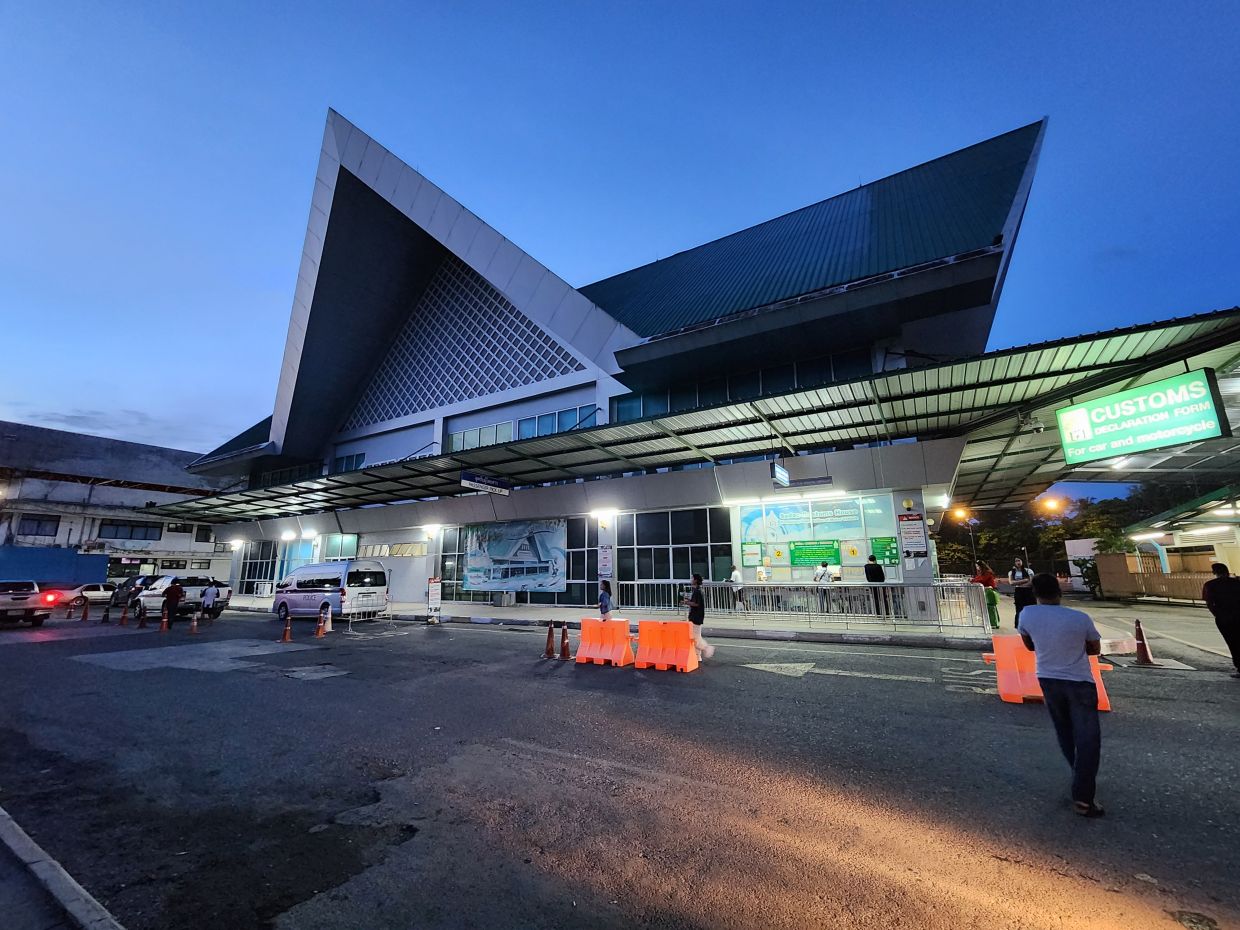
Thailand has taken a significant step toward deepening economic integration with Malaysia by greenlighting a new permanent border checkpoint at Sadao. The Thai cabinet's approval on Tuesday represents an important infrastructure development that will reshape cross-border commerce and people movement between the two nations. The checkpoint, which becomes operational on July 11, signals Bangkok's commitment to facilitating seamless regional connectivity and represents one of the most tangible outcomes of bilateral cooperation efforts in recent years.
The newly approved crossing will be situated between boundary markers 23/9 and 23/10, replacing the existing facility at markers 22-23. Operating hours have been set from 05:00 to 23:00 daily, a schedule designed to accommodate peak trading and travel periods while maintaining security and immigration protocols. The relocation of the checkpoint itself indicates a strategic realignment of border infrastructure, suggesting that Thai and Malaysian authorities have identified this location as more conducive to efficient traffic flow and customs clearance processes. The boundary markers specify a precise geographical shift that reflects years of technical planning between both countries' authorities.
Government spokesperson Ratchada Thanadirek emphasized that the Thai administration has mobilized multiple agencies to ensure the checkpoint's success. Construction of connecting roads has been prioritized, with Songkhla province—which houses this critical border point—overseeing implementation. Traffic bottleneck resolution remains a primary concern, as poorly managed congestion could undermine the entire initiative's purpose. Additionally, shuttle services are being arranged to provide transportation alternatives for cross-border travelers, a thoughtful provision that acknowledges the practical challenges faced by regular commuters and commercial drivers navigating the border.
For Malaysian readers, this development carries immediate implications for businesses operating in the northern states, particularly Perlis, Kedah, and Kelantan. Streamlined border procedures typically translate into reduced transport costs, faster delivery times, and improved competitiveness for Malaysian exporters accessing Thai markets. The convenience factor could also stimulate tourism flows in both directions, particularly among leisure and business travelers who currently experience delays at existing checkpoints. Small and medium enterprises relying on cross-border supply chains stand to benefit significantly from operational efficiencies.
Beyond the physical checkpoint infrastructure, Thai officials have committed to comprehensive stakeholder engagement. Ratchada stressed that government agencies will actively communicate with Malaysia's private sector, business operators, and local communities to ensure understanding of new traffic routes, customs procedures, and immigration channels. This communication strategy acknowledges that infrastructure changes require behavioral adaptation; businesses and residents need clear guidance on navigating revised processes. The transparency initiative may reduce friction during the transition period and build confidence among stakeholders who depend on smooth border operations.
The checkpoint approval forms part of a broader bilateral engagement framework, notably coinciding with Thai Prime Minister Anutin Charnvirakul's planned official visit to Malaysia on July 9-10. Anutin will travel at the invitation of Malaysian Prime Minister Anwar Ibrahim, a diplomatic engagement that carries symbolic significance beyond ceremonial protocol. The timing of both announcements—the checkpoint approval and the prime ministerial visit—suggests coordinated messaging designed to demonstrate both nations' commitment to deepening relations.
During Anutin's Malaysia visit, both leaders are expected to finalize a joint statement addressing multiple cooperation dimensions. Border development features prominently, but the agenda extends considerably beyond checkpoint logistics. The statement will outline cooperative frameworks spanning connectivity infrastructure, security collaboration against transnational crime, and economic partnership arrangements. The inclusion of security cooperation reflects shared concerns about cross-border smuggling, human trafficking, and organized crime affecting both nations. Meanwhile, economic partnership provisions will likely emphasize food security—critical for Malaysia's import-dependent food system—and energy security, matters of considerable strategic importance throughout Southeast Asia.
From a regional perspective, this bilateral initiative contributes to broader ASEAN integration objectives. Southeast Asian nations have long recognized that reducing trade barriers and facilitating movement of goods and people strengthens collective competitiveness vis-à-vis larger global economies. Thailand and Malaysia, as established ASEAN members with significant economic complementarities, serve as models for how smaller bilateral initiatives accumulate into meaningful regional progress. The Sadao checkpoint represents incremental but tangible movement toward the seamless intra-ASEAN mobility envisioned in strategic planning documents.
Investment flows between Thailand and Malaysia have historically favored sectors like manufacturing, agriculture, and services. A more efficient border crossing may catalyze new business formations and expansion of existing operations that require cross-border input sourcing or market access. Malaysian companies operating agricultural processing facilities on the Thai side could particularly benefit from reduced logistics friction. Similarly, Thai manufacturers seeking Malaysian expertise or market access might find the improved connectivity advantageous. Such investment dynamics, while difficult to quantify precisely, typically emerge within months following infrastructure improvements.
The checkpoint initiative also addresses practical challenges that have constrained bilateral engagement. Current border crossing queues, particularly during peak periods, impose hidden economic costs through vehicle idle time, driver fatigue, and supply chain unpredictability. By dispersing traffic across improved infrastructure and operating extended hours, the new checkpoint should meaningfully reduce these inefficiencies. The shuttle service provision further addresses a common complaint among cross-border travelers regarding transportation coordination.
Looking forward, the success of the Sadao checkpoint will likely influence future bilateral infrastructure projects. Both governments will monitor how efficiently the crossing operates and how substantially it improves trade metrics and tourism numbers. Positive outcomes could establish momentum for additional border point improvements or enhanced customs cooperation. Malaysian stakeholders should anticipate that operational details—including specific documentation requirements, vehicle classification procedures, and duty assessment protocols—will be communicated in coming weeks as the July 11 launch date approaches.
The new border crossing represents neither a revolutionary transformation nor a minor administrative adjustment; it occupies the pragmatic middle ground where incremental improvements accumulate into meaningful economic and social benefits. For Malaysian businesses, traders, and travelers, familiarizing themselves with the checkpoint's features and operational procedures in advance will position them to capitalize on improved bilateral connectivity. As Thailand and Malaysia continue deepening economic ties, infrastructure investments like Sadao serve as visible, tangible manifestations of political commitment to regional cooperation and shared prosperity.

