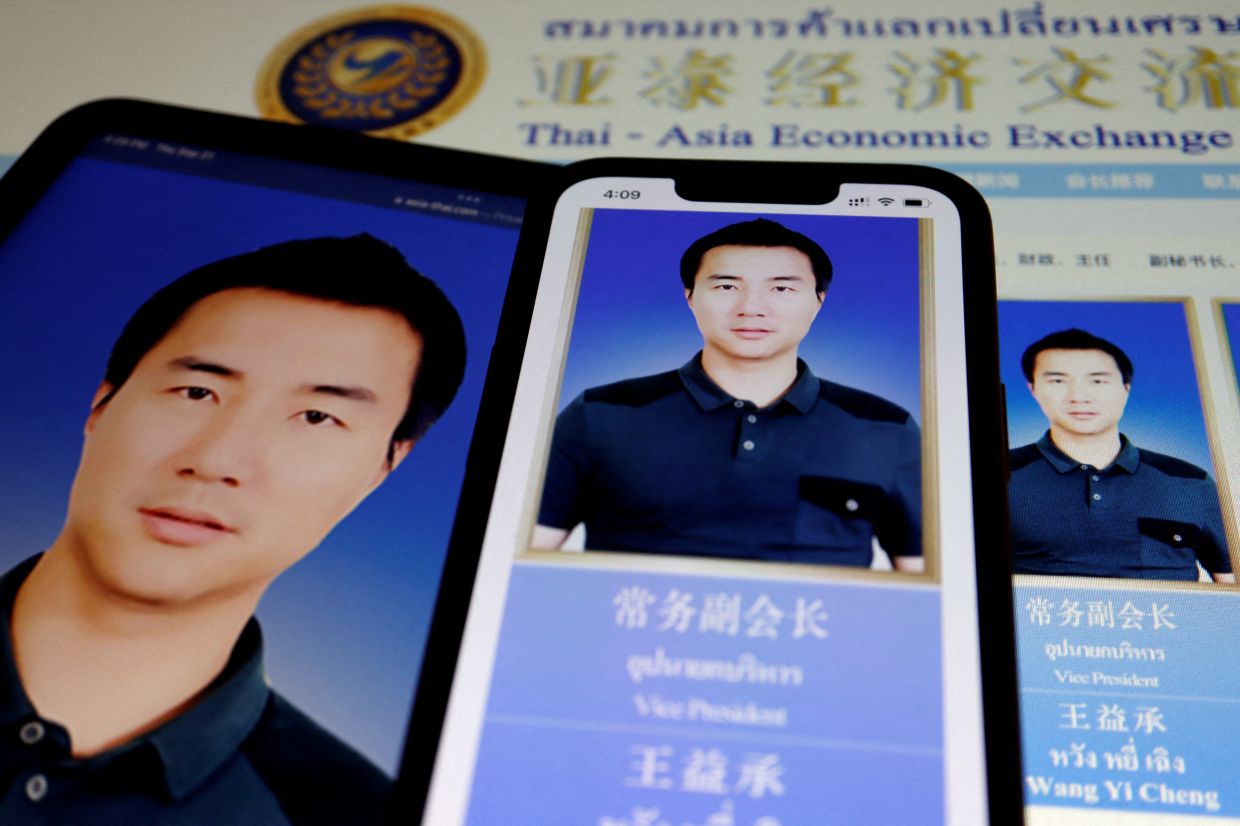
Thai authorities are pursuing a high-profile Chinese businessman as part of an escalating regional campaign against transnational financial crime networks. Wang Yicheng, who previously held leadership positions within Thai-Chinese business circles, faces multiple charges including theft and violations of the Computer Crimes Act. The Department of Special Investigation announced the warrant on Tuesday, June 23, indicating that Wang is believed to have already departed Thailand, prompting international cooperation efforts to locate him.
Wang's name surfaced publicly through a 2023 Reuters investigation into cryptocurrency fraud schemes operating across Southeast Asia. That reporting documented how digital wallets registered in his name received at least US$9.1 million between 2021 and 2022 from accounts that blockchain analysis firms linked to "pig-butchering" scams—sophisticated confidence schemes where perpetrators build romantic relationships with victims online before pressuring them into fraudulent cryptocurrency investments. The investigation could not definitively establish whether Wang personally controlled these accounts or if his identity had been misused, a distinction with significant implications for culpability.
The broader investigation uncovered what Thai authorities characterize as an organized network exploiting illegal cryptocurrency mining operations. The DSI documented illicit use of approximately US$28 million worth of electricity, representing one of the most substantial such cases documented in recent years. Officials allege this mining infrastructure served a dual purpose: generating profits while simultaneously providing a mechanism to legitimize proceeds originating from scam operations and illegal online gambling enterprises distributed across the region. The sophistication of this approach reflects how transnational criminal groups have adapted to evade financial detection systems.
Wang's case intersects with broader concerns about organized crime in Southeast Asia. The United Nations has documented that scam syndicates operating from compounds throughout the region generate billions of dollars annually, frequently employing trafficking victims and operating with varying degrees of local protection. Thailand, Myanmar, and other regional nations have responded with intensified enforcement operations targeting these networks. Wang's alleged status as a key facilitator—someone positioned at the intersection of business legitimacy and criminal enterprise—exemplifies the enforcement challenge: distinguishing genuine commercial activity from criminal fronts that exploit international business frameworks.
The United States has independently targeted assets associated with Wang's accounts. In June 2023, US law enforcement seized approximately US$500,000 in cryptocurrency from an account bearing his name, alleging these funds represented theft from a Massachusetts victim. The Department of Justice identified Wang as a suspect in a digital-asset fraud case, though officials declined to elaborate on the investigation's scope or progress. This transatlantic enforcement coordination underscores how financial crime increasingly transcends jurisdictional boundaries, requiring collaborative investigation and asset recovery efforts.
Wang's previous prominence in Thai business circles adds another dimension to this case. He served as vice president of the Thai-Asia Economic Exchange Trade Association, an organization explicitly dedicated to strengthening commercial ties between Thailand and China. Through this position, he cultivated relationships with officials spanning both nations, including senior members of Thailand's law enforcement apparatus. Such connections are particularly significant in Southeast Asian contexts, where proximity to government institutions can profoundly influence investigative trajectories and enforcement outcomes. The organization subsequently claimed Wang had departed its board following the 2023 Reuters reporting, asserting that background checks had uncovered no criminal history.
The trade association's subsequent statements reflect broader patterns of institutional distancing following criminal allegations against members. The organization asserted that Thai officials maintaining advisory roles with the group had no "business or financial interests" in its operations, a demurral suggesting concern about reputational contamination. Major bitcoin mining equipment manufacturer Bitmain had previously acknowledged Wang as a significant customer and partner, describing the relationship as a standard commercial arrangement. These corporate and organizational responses highlight how criminal investigations can rapidly destabilize business relationships and institutional credibility.
One documented victim illustrates the human toll underlying these criminal networks. A 71-year-old California resident lost his entire life savings of US$2.7 million after being deceived by someone posing as a young woman in online communications. The perpetrator gradually built trust before directing the victim toward fraudulent cryptocurrency investment opportunities. This pattern repeats thousands of times across international borders, with victims spanning diverse age groups and geographic regions. The emotional and financial devastation extends far beyond individual losses, as families and communities absorb collateral damage from these schemes.
The categorization of cryptocurrency mining as a money laundering vector reflects evolving criminal methodologies. By generating cryptocurrency through mining operations—even those consuming electricity illegally diverted from commercial grids—operators create apparent legitimacy for digital assets that originated from crime. Subsequent transfers between wallets and conversion back into traditional currency become considerably more difficult to trace, particularly across jurisdictions with varying regulatory frameworks. This technical dimension explains why Thai authorities prosecuted the case under the Computer Crimes Act rather than solely pursuing traditional financial offense statutes.
Regional enforcement responses have accelerated notably during recent months, signaling sustained political commitment to disrupting these networks. The DSI simultaneously issued arrest warrants for four unnamed Chinese and four Myanmar nationals, indicating the investigation's transnational scope. This multilateral approach reflects recognition that unilateral enforcement proves insufficient when criminal infrastructure spans borders and involves operatives from multiple nations. Myanmar's geographic position as a haven for some scam operations, particularly around KK Park on the Thailand-Myanmar border, complicates enforcement efforts and creates safe havens for operators fleeing Thai jurisdiction.
China's foreign ministry stated it possessed no information regarding Wang's situation when contacted by Reuters, a response that may reflect either genuine unawareness or official reticence about acknowledging involvement of Chinese nationals in international criminal schemes. Diplomatic considerations frequently complicate transnational crime investigations, particularly when suspects hold connections to business or political circles. Beijing's silence could signal either disconnection from the case or diplomatic preference to allow Thai authorities primary investigative responsibility without commentary that might inflame bilateral tensions.
The implications for Malaysian readers extend beyond these specific circumstances. Similar scam and cryptocurrency-laundering networks operate regionally, with Malaysia serving as both a source of victims and, in some instances, an operational base for perpetrators. The Thailand investigation provides instructive lessons regarding how organized crime exploits gaps between regulatory jurisdictions and how legitimate business frameworks can be weaponized for criminal purposes. Enhanced cross-border information sharing and regulatory coordination remain essential but inconsistently implemented across Southeast Asia, creating persistent vulnerabilities.

