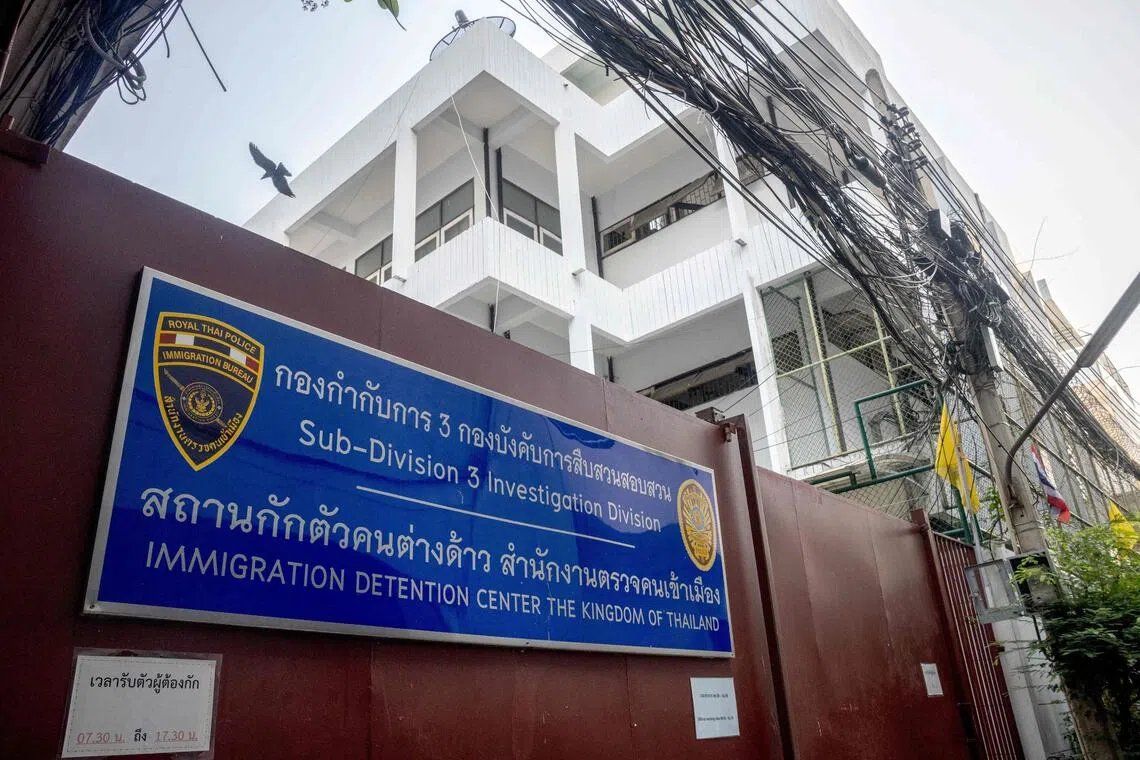
Thailand has introduced a formalized deportation framework designed to expedite the removal of foreign nationals who engage in criminal conduct or undermine public order. Prime Minister Anutin Charnvirakul signed the Prime Minister's Office Regulation on Deportation B.E. 2569 on August 26, with the measure taking effect two days later following publication in the Royal Gazette. The new regulation represents a structural shift in how Thailand manages the departure of problematic foreign residents, shifting from ad-hoc procedures to a coordinated administrative system that aims to reduce bureaucratic delays.
The regulation's preamble acknowledges Thailand's role as a destination for international visitors and expatriate workers while establishing clear boundaries around acceptable conduct. Officials framed the measure as necessary to address a growing cohort of foreigners who exploit legal loopholes, operate unlicensed businesses, forge official documents, or cross into Thailand clandestinely. The Interior Ministry, which serves as the enforcement lead under the new rules, can now act with greater autonomy when processing deportation cases that meet specified criteria.
The framework identifies six categories of offences that trigger mandatory ministerial review for deportation. These encompass illegal entry or overstaying under immigration statutes, unauthorized employment in violation of foreign worker regulations, unlicensed business operations under the Foreign Business Act, document forgery, crimes carrying sentences of five years or longer, and roles as principal offenders, instigators, or supporters in any of these categories. This categorical approach provides clarity for both enforcement agencies and affected individuals, establishing predictable grounds for removal rather than relying on subjective administrative discretion.
A critical procedural innovation addresses the coordination gap between Thailand's corrections system and immigration authorities. The Department of Corrections must now notify the Interior Ministry at least 15 days before a foreign prisoner's scheduled release, providing comprehensive case documentation to enable timely deportation review. Similarly, when courts suspend sentences or impose fines rather than incarceration, the judiciary is required to immediately alert immigration officials. This institutional linkage accelerates decision-making by ensuring cases are processed in parallel with sentence completion rather than sequentially afterward.
The regulation also establishes safeguards aligned with international humanitarian standards, though implementation details will influence their practical effect. Deportation decisions must account for Thailand's obligations under international treaties, including provisions addressing torture, cruel treatment, and enforced disappearance. Third countries or international organizations can request reception of deportees within seven days of a removal order, though such transfers must be completed within 30 days—with the Interior Minister authorized to grant two additional 30-day extensions. These timelines reflect tension between administrative efficiency and the complexity of coordinating international transfers.
Repatriation procedures prioritize return to the deportee's country of nationality, with fallback provisions for cases where citizenship cannot be established. In such scenarios, authorities may send individuals to the last country where they reportedly resided before entering Thailand. This approach addresses the administrative challenge of stateless persons or those whose documentation is absent or fraudulent, a practical problem that arises frequently in Southeast Asia's migrant corridors.
For Malaysian readers and regional observers, the regulation carries implications for cross-border movement and enforcement cooperation. As a fellow ASEAN member, Thailand's formalization of deportation procedures may influence how other regional governments systematize their own removal processes. Malaysian authorities already coordinate with Thai counterparts on matters affecting shared borders and the substantial communities of nationals residing across the frontier. Enhanced Thai efficiency in processing deportations could accelerate the return of Malaysian nationals convicted in Thai courts, affecting criminal justice administration and diplomatic relations between the countries.
The regulation's emphasis on inter-agency coordination within Thailand also signals a broader institutional maturation in how Southeast Asian governments manage migration enforcement. Rather than treating deportation as an immigration matter alone, the Thai framework integrates corrections, judiciary, and interior agencies into a unified process. This mirrors approaches adopted by more developed economies and suggests Thailand is moving beyond reactive expulsion toward systematic management of foreign populations.
However, questions remain about implementation capacity and consistency. The regulation grants the Interior Minister final decision authority in disputes and establishes that deportation expenses will follow rules approved by the Finance Ministry, yet it does not specify funding levels or timelines for repatriation logistics. Border facilities and detention capacity will likely become bottlenecks if deportation orders accelerate beyond current removal rates. Additionally, the definition of conduct "contrary to public order or good morals" relies on ministerial interpretation, potentially introducing discretionary judgment into what the regulation otherwise frames as objective criteria.
The timing of the regulation also warrants attention. Enacted during a period when Thailand has faced criticism over migrant worker treatment and human trafficking concerns, the framework could enhance Thailand's formal compliance with international standards even as enforcement on the ground reflects varied commitment to humanitarian principles. The inclusion of safeguards against torture and disappearance appears responsive to external pressure, though civil society organizations often monitor whether such protections function as intended or remain symbolic.
For Southeast Asian governments managing large foreign populations—including Malaysia, with its estimated two million undocumented migrant workers—Thailand's regulatory approach offers a reference point. The emphasis on coordination between criminal justice, corrections, and immigration systems addresses a documented vulnerability in many regional states: foreign offenders who slip through procedural gaps. Whether Thailand's new framework significantly improves actual deportation outcomes or primarily creates administrative appearance of efficiency will become evident as cases accumulate under the August 28 implementation date.
The regulation ultimately reflects Thailand's attempt to balance its economic interests in attracting legitimate foreign investment and tourism against concerns about exploitation, criminality, and unauthorized settlement. By establishing clearer procedures and timelines, the Interior Ministry signals intent to manage these competing priorities through institutional mechanisms rather than discretionary intervention. Implementation will determine whether the framework achieves its stated efficiency goals or creates new administrative layers that slow rather than accelerate the removal of problematic foreign nationals from Thai territory.

