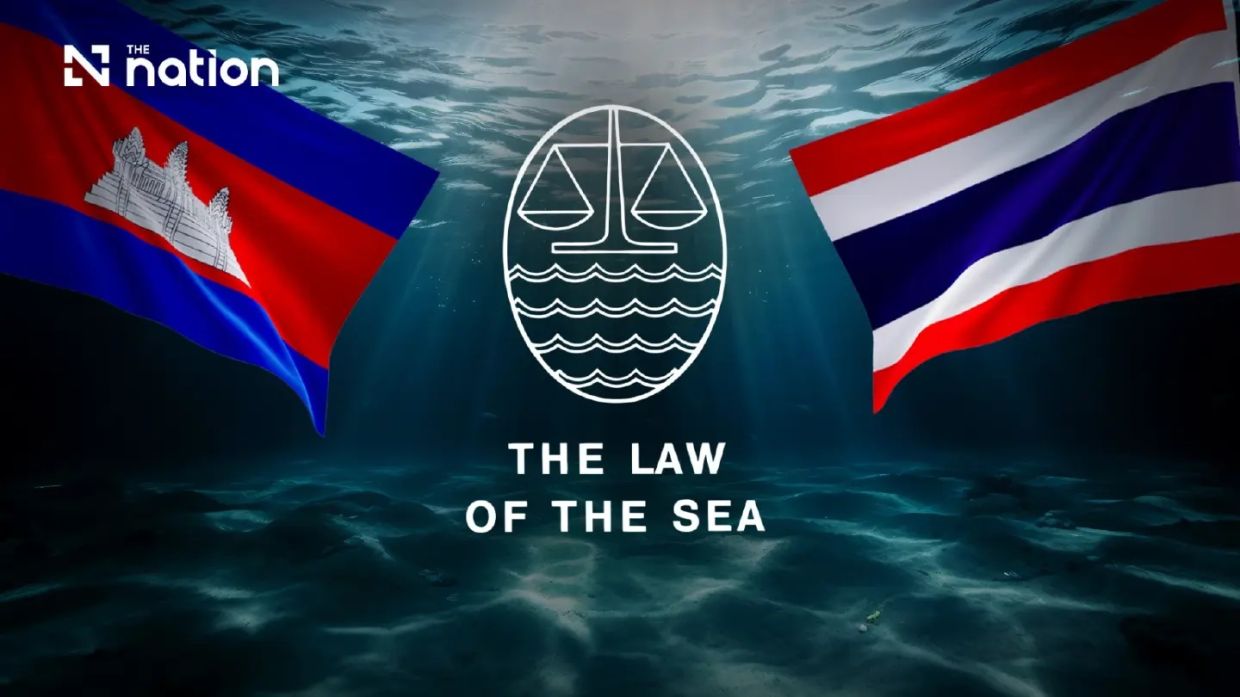
The maritime dispute between Thailand and Cambodia is entering a critical phase as both nations move forward with forming a United Nations-backed conciliation commission, even as fundamental disagreements persist over the scope and ultimate goals of the negotiations. While Bangkok and Phnom Penh have successfully appointed their respective representatives to the panel and extended the timeline for selecting a chairperson, the underlying tension between Thailand's narrow focus on boundary delimitation and Cambodia's broader agenda for resource sharing underscores the complexity of resolving maritime conflicts in Southeast Asia.
Under the auspices of the United Nations Convention on the Law of the Sea, the two countries are constructing a five-member conciliation commission to address their overlapping claims in the Gulf of Thailand. Thailand has designated German jurist Rüdiger Wolfrum and South African jurist Albert J. Hoffmann as its conciliators, both of whom previously served as presidents of the International Tribunal for the Law of the Sea. Wolfrum held that position from 2005 to 2008, while Hoffmann served from 2020 to 2023. Cambodia, meanwhile, has selected Danish diplomat Peter Taksøe-Jensen and French international law scholar Jean-Marc Thouvenin. Notably, Taksøe-Jensen chaired the Unclos conciliation that resolved the boundary dispute between Timor-Leste and Australia, providing a proven precedent for the mechanism now being deployed in the Thai-Cambodian context.
The process gained momentum after Cambodia formally initiated conciliation proceedings on June 2, with Thailand formally accepting participation on June 19. The selection of a fifth member to chair the commission proved more contentious than initially anticipated, prompting both countries to extend the original July 19 deadline to August 14. Thailand has articulated specific qualifications for the chair, including demonstrated expertise in international law, maritime law, and diplomatic practice, alongside genuine impartiality and substantive understanding of Thai-Cambodian relations. This extended timeline reflects the deliberative nature of finding a candidate acceptable to both parties, a process that has become essential given the stakes involved.
Deputy Prime Minister and Foreign Minister Sihasak Phuangketkeow will represent Thailand throughout the proceedings, supported by Songchai Chaipatiyut, the nation's ambassador to Kuwait, as deputy agent. Once fully constituted, the commission will hold its inaugural session to establish procedural rules and define its operational framework. This foundational meeting will prove crucial in setting the tone for subsequent discussions and clarifying the parameters within which the two countries will present their positions. It is important to note that Unclos conciliation differs fundamentally from judicial proceedings; the commission will not render a legally binding judgment but instead will offer recommendations designed to facilitate a negotiated settlement between the parties.
The geological prize at stake in this dispute is substantial and increasingly urgent from Cambodia's perspective. The contested marine area encompasses between 26,000 and 27,000 square kilometres and is believed to contain between 11 trillion and 12 trillion cubic feet of natural gas alongside significant petroleum reserves. Some analysis values these potential resources at approximately US$300 billion, making the resolution of competing claims economically consequential for both nations. However, the two countries diverge sharply on how these resources should factor into the negotiation process. Cambodia's Minister of Mines and Energy Keo Rottanak has articulated a compelling energy security rationale for addressing the dispute promptly, noting that global energy crises stemming from regional conflicts and maritime chokepoint disruptions have sharpened focus on supply diversification and resource security.
Cambodia's energy portfolio presents a particular vulnerability that lends urgency to its resource development ambitions. The kingdom currently depends heavily on hydroelectric power and expanding solar capacity, but senior officials view additional fossil fuel resources as strategically important for supporting industrial expansion and economic growth beyond the near term. Keo has warned that the window for attracting major international investment in offshore oil and gas exploration is narrowing, with companies increasingly reluctant to commit capital to regions with unresolved sovereignty questions. Even after boundary delimitation is achieved, exploration and development cycles spanning several years would be required before energy reaches markets, suggesting that delays in resolving the maritime dispute could prove costly in terms of foregone investment and development opportunities.
Thailand, however, has taken a more cautious and narrowly defined position regarding the conciliation process. Bangkok insists that the immediate and exclusive focus should be maritime boundary and continental shelf delimitation, with any discussions of joint development zones or resource-sharing arrangements deemed premature at this stage. Thai government officials argue that establishing clear legal and geographical positions regarding overlapping claims must necessarily precede conversations about sharing or jointly developing disputed resources. Foreign Minister Sihasak has repeatedly stressed that Thailand's sovereignty, territorial integrity, and national interests must remain paramount throughout the process and that resource discussions can only responsibly commence once the boundary question has been resolved with certainty.
This divergence reflects differing strategic calculations and risk assessments. Thailand's more conservative approach prioritises avoiding commitments on resource sharing before fully understanding the extent of contested territories and the legal basis for claims. From Bangkok's perspective, agreeing prematurely to joint development frameworks could complicate or weaken its position on the maritime delimitation itself. Cambodia, conversely, views boundary settlement and resource development as intrinsically linked questions that should be addressed simultaneously, permitting both nations to structure an integrated solution that addresses territorial questions while creating mechanisms for mutual economic benefit. This fundamental disagreement about sequencing and scope will inevitably shape the commission's work once it becomes fully operational.
The precedent established by the Timor-Leste-Australia conciliation, which successfully produced a maritime boundary treaty in the Timor Sea, offers both encouragement and cautionary lessons. That process demonstrated that Unclos conciliation mechanisms could facilitate agreement on complex maritime issues, yet the Timor-Leste case involved less contentious resource-sharing arrangements than what Cambodia now seeks. The mechanisms employed by the Thai-Cambodian commission will likely need flexibility to accommodate both parties' concerns, particularly given the significantly greater resource wealth at stake and differing energy security imperatives.
The anticipated timeline for the conciliation process is approximately 12 months, though both countries retain the option to extend negotiations if additional deliberation proves necessary. The commission's eventual report will contain recommendations rather than binding rulings, meaning that any final settlement depends entirely upon bilateral agreement between Bangkok and Phnom Penh. International energy companies, including major firms such as TotalEnergies, have indicated potential interest in offshore exploration and development should the maritime boundary question be conclusively resolved, yet no specific investment commitments have been announced pending clarity on the dispute's resolution.
For the broader Southeast Asian region, the Thai-Cambodian conciliation carries significance beyond bilateral relations. The dispute sits within a complex landscape of overlapping maritime claims involving multiple states, many of which remain unresolved. How Thailand and Cambodia navigate their differences through this UN mechanism could establish important precedents regarding boundary delimitation and resource sharing that influence other regional disputes. The process also demonstrates the viability of employing Unclos conciliation procedures rather than more contentious approaches, potentially offering a template for other states wrestling with maritime disagreements across Southeast Asia.
As the conciliation commission takes shape over the coming weeks, the central challenge remains bridging the substantial gap between Thailand's insistence on limiting the process to boundary delimitation and Cambodia's desire to simultaneously address resource development frameworks. The selection of a neutral, capable chair will prove critical in navigating this divide and helping both countries identify common ground. Whether the commission can facilitate agreement on both delimitation and some form of resource-sharing arrangement, or whether these issues will remain separate elements addressed through different mechanisms, will become clearer as the commission's work commences and the two nations begin presenting their formal positions and evidence.

