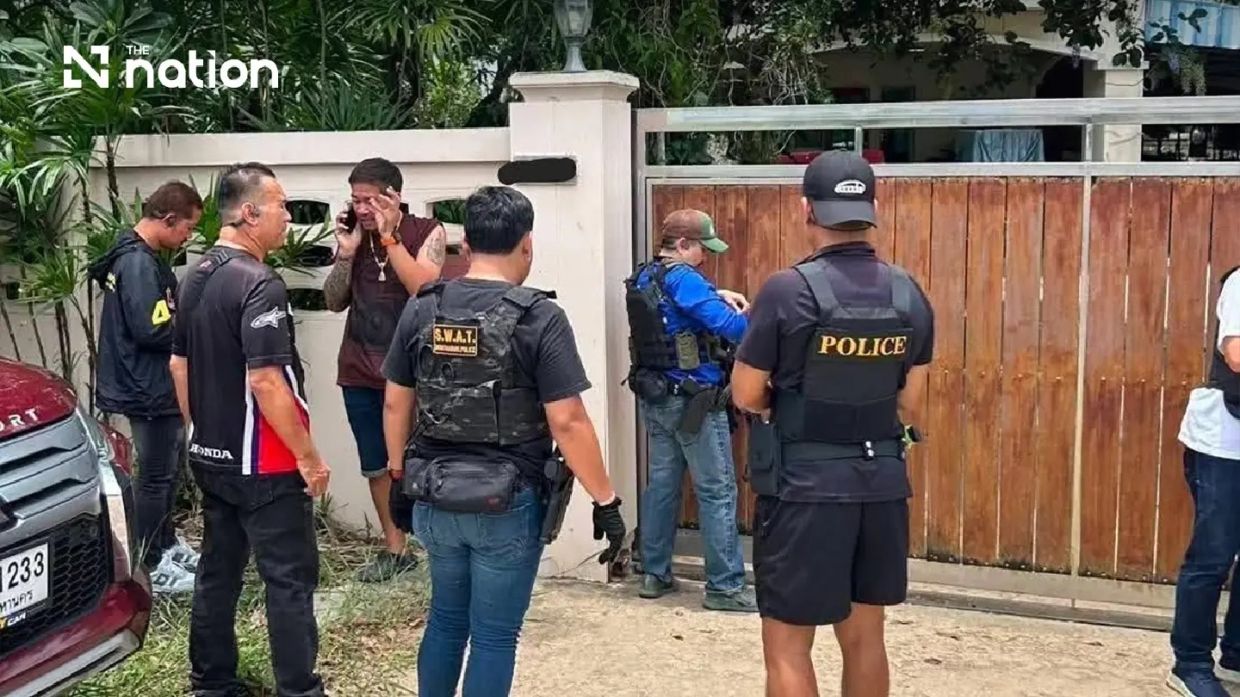
A tragic sequence of violence unfolded in Nonthaburi on Friday morning when a junior secondary student allegedly killed his grandparents at their residence and then opened fire at Debsirin Nonthaburi School, resulting in seven deaths and 15 injuries, according to police investigations. The dual homicides and mass shooting incident has prompted authorities to launch intensive inquiries into the teenager's circumstances and the firearm access that enabled the violence.
The alleged perpetrator, identified as a Mathayom 2 pupil, lived with his paternal grandparents in a residential area within Bang Bua Thong district's Bang Khu Rat subdistrict. When police officers attended the family home at Soi Wat Lat Pla Duk for investigation purposes, they discovered both grandparents deceased. Preliminary findings suggest they were killed using the same weapon subsequently employed in the school attack, transforming what might have appeared as a domestic tragedy into a precursor to mass violence.
The firearm in question was a CZ 9mm handgun officially registered under the grandfather's name. This registration detail has become central to the inquiry, as authorities attempt to reconstruct how a teenager gained access to a licensed weapon and ammunition, and what circumstances precipitated the decision to use it. The fact that the weapon belonged to a family member living in the same house raises critical questions about firearm storage protocols and supervision.
Royal Thai Police spokesman Pol Lt Gen Trairong Phiwphan announced that officers had successfully contained the situation at Debsirin Nonthaburi School, bringing the violence to an end. Emergency responders worked to remove injured individuals and deceased victims from the school grounds, while the national police chief Pol Gen Kitrat Phanphet issued directives for thorough evidence collection, scene documentation, and comprehensive investigation planning. The scale of the tragedy extended beyond immediate physical harm; it created widespread trauma affecting the school community.
Establishing a clear motive for the attacks remains challenging at this investigative stage. Police have acknowledged that understanding why the teenager targeted his grandparents and subsequently his school requires detailed examination of his behavioral patterns, social environment, and personal circumstances. Officers initiated contact with the suspect's guardians and confirmed he had been residing with elderly relatives, yet deeper insights into psychological factors or triggering events demand sustained investigative work.
The weapon access question dominates current inquiries. While police have confirmed the CZ handgun's registration to a family member, determining exactly how the suspect obtained the weapon, the manner in which it had been stored, and the source of ammunition represents a major investigative priority. The sequence through which a teenager accessed a licensed firearm within a family home suggests potential lapses in storage security or supervision—factors that gun control advocates across Southeast Asia will scrutinize closely.
For Malaysian readers, this incident echoes longstanding concerns about firearm security in neighbouring countries and the consequences of inadequate safeguards. Thailand's relatively permissive gun licensing system has faced criticism from international observers, particularly regarding access by minors and secure storage requirements. The Nonthaburi shooting demonstrates how licensed weapons can transition into instruments of tragedy when adequate precautions prove insufficient.
The Thai national police leadership has mobilized comprehensive support mechanisms beyond investigation. Police General Hospital dispatched psychologists and mental health specialists to Debsirin Nonthaburi School and surrounding areas, recognizing that mass casualty incidents generate profound psychological consequences for survivors, witnesses, educators, and families. This systematic approach to trauma management represents evolving best practices in disaster response across the region.
Regional security analysts will monitor how Thai authorities address systemic vulnerabilities revealed by this incident. The shooting highlights tensions between legitimate civilian firearm ownership and public safety imperatives. In Thailand and other Southeast Asian nations, balancing cultural traditions of personal security with contemporary mass casualty prevention remains politically contentious, with law enforcement agencies frequently caught between competing pressures.
The investigation into the Nonthaburi attack will likely influence discussions about firearm regulations in Thailand and potentially affect policy considerations across Southeast Asia. As this case develops, police will examine not only the mechanics of weapon access but broader contextual factors: whether the suspect exhibited warning signs, whether mental health services were engaged, and whether community or educational institutions identified concerning behaviors warranting intervention.
For Malaysian authorities and security agencies, the Nonthaburi tragedy serves as a instructive case study. While Malaysia maintains stricter firearms regulations than Thailand, instances of illegal weapon access and school-based violence require sustained vigilance. The need for integrated approaches combining firearm security, mental health support, educational oversight, and community awareness becomes evident when examining incidents of this magnitude.
International attention will focus on how Thai police conclude their investigation and whether findings generate policy reforms. The Royal Thai Police's systematic response and commitment to gathering comprehensive evidence provide a foundation for understanding how a teenage resident gained access to a licensed firearm and proceeded through acts of intimate family violence before committing mass violence. These answers will inform broader regional discussions about preventing similar tragedies.

