Thailand's Prime Minister Anutin Charnvirakul and his wife Thananon Charnvirakul arrived in Malaysia on Thursday for a two-day official state visit, marking the Thai leader's first trip to the country since his reappointment to the premiership in March 2026. The pair were formally received with full ceremonial honours at the Bunga Raya Complex of Kuala Lumpur International Airport, underscoring the diplomatic significance of the engagement between the two Southeast Asian neighbours.
Following the airport reception, Thananon was extended a warm welcome by Datuk Seri Dr Wan Azizah Wan Ismail, wife of Malaysian Prime Minister Datuk Seri Anwar Ibrahim, at approximately 12.10 pm in Putrajaya. The gesture reflected the personal dimension of state visits, where spouses often engage in parallel diplomatic activities that complement official government-to-government discussions. Minister Hannah Yeoh, who oversees the Prime Minister's Department portfolio for Federal Territories, also participated in the reception, highlighting the administrative significance of Putrajaya as Malaysia's purpose-built federal seat of government.
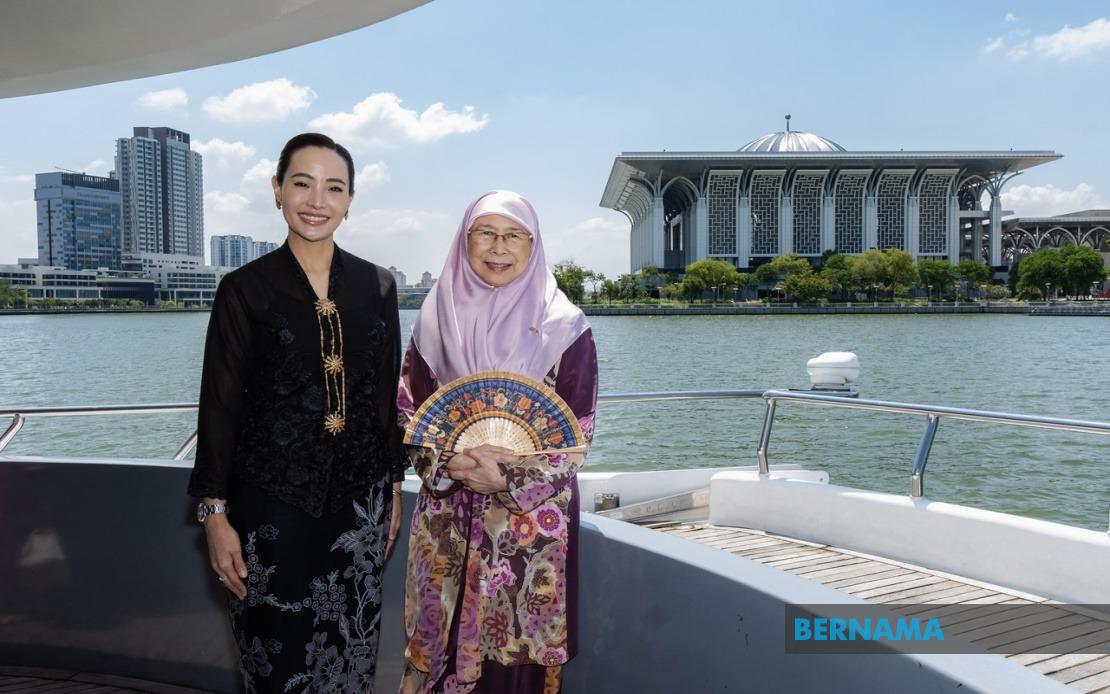
The centrepiece of Thananon's Putrajaya itinerary was a scenic 45-minute cruise across Tasik Putrajaya, the artificial lake that forms the geographical and aesthetic heart of the administrative capital. During the leisurely water-based tour, the Thai Prime Minister's wife and Dr Wan Azizah engaged in extended conversation while observing the capital's distinctive architectural landmarks and meticulously landscaped surroundings. The cruise provided an intimate setting for informal diplomatic exchange, allowing the two women to discuss bilateral matters in a relaxed environment away from formal conference settings.
Putrajaya, inaugurated in 1999, represents a unique achievement in urban planning within Southeast Asia and stands as a symbol of Malaysia's modern governance infrastructure. The capital's carefully designed waterfront, with its geometric gardens, iconic bridges, and government buildings reflecting Islamic architectural principles, offers visitors a comprehensive visual narrative of Malaysia's development trajectory and contemporary administrative vision. For international guests, the lake cruise has become a signature experience that conveys both the country's modernisation achievements and commitment to environmental integration within urban planning.
The visit itself carries substantial diplomatic weight within the ASEAN framework. Anutin's reappointment as Thai Prime Minister in March 2026 marked a significant political development in Thailand, and this Malaysian visit represents an early consolidation of his government's regional relationships. The decision to undertake the trip at Anwar's invitation demonstrates both leaders' commitment to preserving and deepening the Malaysia-Thailand partnership, which carries historical, cultural, and strategic dimensions spanning multiple sectors.
Malaysia and Thailand share substantial bilateral interests encompassing trade, border cooperation, cultural exchange, and regional security matters. Both nations are major ASEAN players and face common challenges including transnational crime, maritime security, and economic integration within the broader region. The official nature of this visit signals an intent to expand cooperation frameworks and address outstanding bilateral matters at the highest political level, with spousal participation indicating a comprehensive approach to state relations.
The timing of the visit during Anutin's early consolidation period as prime minister suggests Thailand's government regards strengthening ties with established ASEAN partners as a priority. For Malaysia, engaging actively with Thai leadership reinforces its positioning as a central hub for regional diplomacy and cooperation. The inclusion of both formal ceremonies and informal cultural experiences, such as the Putrajaya lake cruise, reflects modern diplomatic practice that balances protocol with genuine relationship-building.
From a Malaysian perspective, such visits generate broader value through enhanced regional stability and predictability. Thailand and Malaysia share the Straits of Malacca and interconnected maritime interests, while their land borders and cross-border populations create ongoing practical cooperation requirements. High-level visits that reinforce political commitment help establish frameworks for addressing technical and security concerns that might otherwise fester or escalate.
The visit also demonstrates Malaysia's confidence in its positioning within ASEAN diplomacy at a moment when regional dynamics continue evolving. By extending formal state honours and showcasing Putrajaya's symbolic significance, Malaysia communicates both its governance achievements and its reliability as a partner for substantive regional cooperation. For Thai audiences, the visit conveys their premier's active engagement in regional diplomacy and his government's integration within established ASEAN protocols and relationships.

