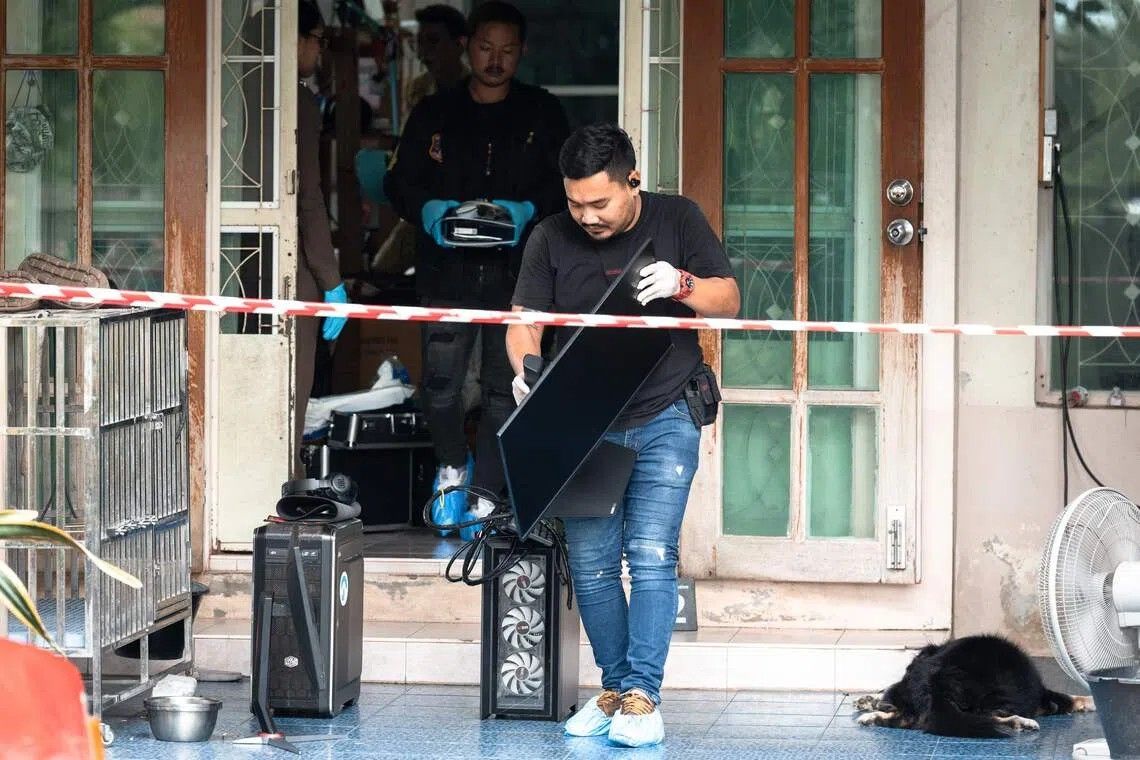
Thai authorities are intensifying their investigation into the shooting at Debsirin Nonthaburi School by scrutinising the digital footprint of the 14-year-old suspect, who is also suspected of killing his grandparents before opening fire at the school on August 7. Investigators are examining his computer usage and online search history to identify factors that may have motivated the violence, though police have cautioned against drawing premature conclusions about causation.
The tragic sequence of events began at the family home in Bang Khu Rat subdistrict, Bang Bua Thong district, where police discovered the bodies of the teenager's grandparents after receiving notification. Officers and forensic teams entered the residence to find the front door had been locked from the outside, suggesting the suspect secured the property after the deaths before making his way to the school. Provincial Police Region 1 commissioner Wattana Yichin personally oversaw aspects of the investigation at the family home, underscoring the severity with which authorities are treating the case.
Forensic analysis of the teenager's computer revealed that he had engaged in searches related to mass school shootings in the United States, with records showing such online activity dating back to approximately July 30. Additionally, preliminary findings indicate the suspect had spent considerable time playing computer games featuring violent content. However, police officials have made clear that they have not yet established any direct causal link between these digital activities and the subsequent attacks. The investigation remains broad in scope, with officers examining multiple potential contributing factors including the teenager's experiences and relationships at school.
The firearm used in the incident was legally registered to the suspect's grandfather, according to police records. This detail raises questions about weapon storage and access within the household, matters that investigators are likely exploring as part of their comprehensive review. The availability of the legally-held weapon, combined with the teenager's apparent digital interest in similar incidents elsewhere, presents a complex portrait that authorities are methodically piecing together.
Family members painting a portrait of an isolated adolescent have provided context that complicates simplistic explanations for the violence. The teenager's uncle, who provided information to investigators, described a young man who had lived with his grandparents throughout his life, spent extensive hours engaged with computer games, and maintained a withdrawn social existence. The relative reported observing no obvious warning signs, disputes within the household, or visible manifestations of psychological distress in the period before the shooting. This apparent absence of red flags has proven puzzling for investigators attempting to reconstruct the mental state and motivations of the suspect.
Thananyaporn, the 60-year-old sister of the deceased grandfather and the teenager's aunt, offered a characterisation of the boy that emphasised his subdued personality and apparent contentment within the family structure. She explained that both parents had separated, leaving the grandparents to assume primary responsibility for the teenager's upbringing from childhood. The grandfather, a retired bank manager known for his gentle demeanour, would manage the school commute each morning and afternoon, while the grandmother worked as a teacher. According to Thananyaporn, the three family members shared a close bond, with neither parent figures nor wider family perceiving significant tension or unresolved conflicts.
The teenager's social isolation was marked and deliberate. Unlike peers his age, he did not maintain a circle of friends or participate in typical adolescent social activities outside the home. Instead, his leisure time was dominated by computer gaming, an activity that consumed much of his daily hours. His aunt emphasised that he was characterised as quiet and polite in his demeanour, traits that would not typically herald such a dramatic descent into violence. The apparent contradiction between his calm exterior and the sudden eruption of lethal force has left family members struggling to comprehend what transpired.
Police have maintained a methodical approach to establishing the precise sequence of events on August 7, recognising that understanding the timeline could provide crucial insights into the suspect's mental state and decision-making processes. Investigators are attempting to identify any triggering incidents, accumulated grievances, or psychological factors that may have catalysed the violence. The focus extends beyond digital activity to encompass the teenager's interactions at school, his academic performance, and any peer-related conflicts that may have developed without becoming apparent to family members.
The case presents a troubling puzzle for Southeast Asian authorities grappling with an incident that mirrors patterns observed in other regions whilst occurring within a society with stringent gun ownership regulations. The combination of an apparently well-adjusted teenager from a caring household, access to a legally-registered firearm, documented online interest in foreign mass shooting incidents, and immersion in violent gaming represents a convergence of factors that investigators must disentangle. The investigation's ultimate conclusions could have significant implications for how authorities across the region approach youth mental health surveillance, digital activity monitoring, and firearm security protocols.
As the investigation progresses, authorities face the challenge of determining what role, if any, the teenager's online activities and gaming habits played in the tragedy, whilst avoiding the pitfall of attributing complex criminal behaviour to singular causes. The case underscores the difficulty of identifying adolescents at risk of violence based on their digital footprints alone, particularly when behavioural indicators observed by family and community members offer little warning.

