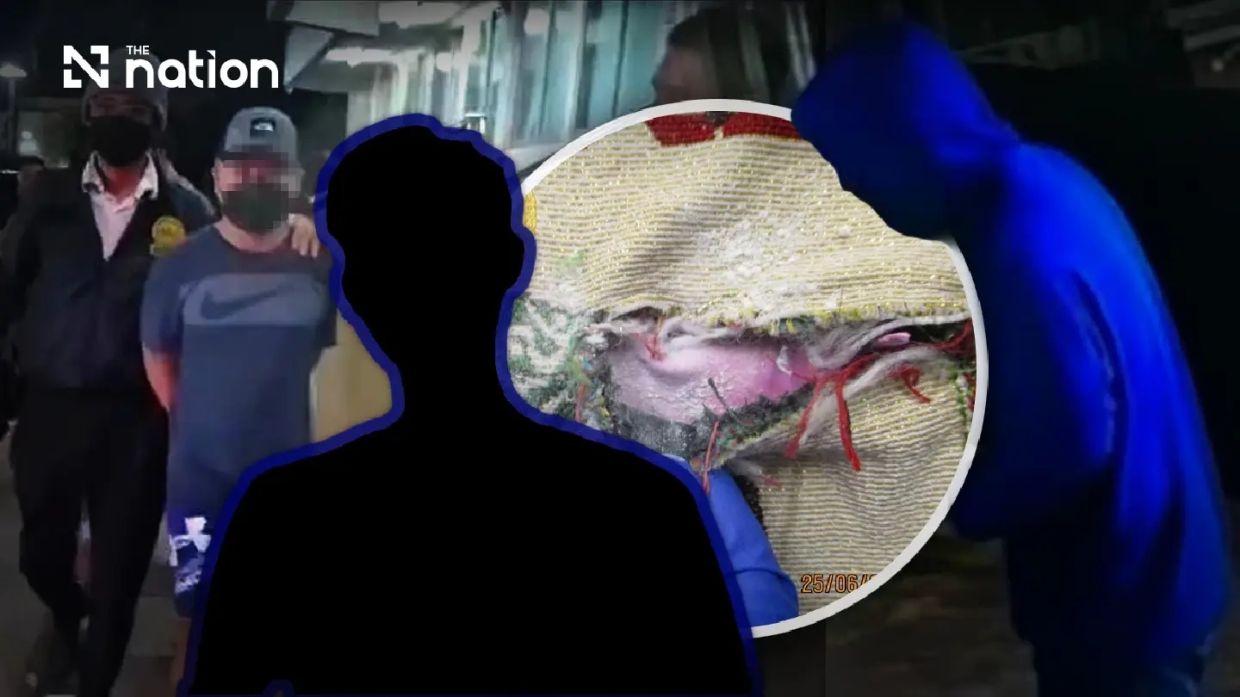
Thai law enforcement has widened its dragnet in connection with a sophisticated drug smuggling operation that involved concealing heroin inside an elephant-print fabric bag destined for Australia. The arrest of Ekkawit overnight in Phayao represents a significant breakthrough in unravelling what investigators believe is a larger transnational trafficking network, according to Pol Maj Gen Theeradej Thamsuthee, deputy commissioner of the Metropolitan Police Bureau.
The investigation reveals a multi-layered operation where Ekkawit served as a crucial intermediary between higher-level organisers and street-level operatives. Police allege that he acquired an elephant-print bag in Chiang Mai at the direction of someone using the online chat identity "Rose Rose", then delivered it to another suspect named Uthai, who subsequently passed it to a female flight attendant named Mina for transport to Australia. This chain of custody demonstrates the careful compartmentalisation typical of sophisticated drug networks seeking to insulate senior members from direct involvement in contraband movement.
During questioning, Ekkawit admitted to receiving THB100,000 for his role in the operation and disclosed that he had performed identical tasks on two or three previous occasions. His willingness to cooperate, at least in preliminary interviews, provided investigators with crucial operational details about how the network functions. He revealed that he was related to the person using the "Rose Rose" profile, suggesting family connections may bind key members of the syndicate together—a common feature in Southeast Asian drug trafficking organisations where trust networks often revolve around kinship.
The modus operandi uncovered by police demonstrates considerable operational sophistication. Ekkawit would receive instructions via encrypted chat messages to purchase an elephant-print bag at a specific location. Once obtained, he would notify "Rose Rose" and leave it at a designated kilometre marker along a roadway. An associate would then retrieve the bag, presumably carry it to Laos where heroin would be concealed within the lining, and return it to another kilometre marker where Ekkawit would collect both the doctored bag and his payment in cash. This system of dead drops and intermediaries creates geographical and temporal separation that complicates law enforcement tracking.
What remains particularly intriguing is the discrepancy between Ekkawit's claim that the heroin was concealed in Laos and police scepticism regarding this assertion. This doubt may reflect investigators' belief that Ekkawit either lacks complete knowledge of the operation's full geography or is deliberately misleading authorities about where the actual drug preparation occurs. Such gaps in knowledge are deliberately engineered in sophisticated trafficking networks to prevent lower-level operatives from knowing enough to compromise the entire organisation if apprehended.
The role of flight attendant Mina illustrates how trafficking networks recruit from within the aviation sector, where employees enjoy natural cover for international travel and reduced luggage scrutiny. Someone using the "Rose Rose" identity allegedly approached Mina and hired her specifically to carry the concealed bag to Australia. Her cooperation—whether voluntary or coerced—represented the final crucial link in transporting the contraband across international borders. The ability to recruit or compromise airline staff creates significant challenges for counter-narcotics authorities in the region.
Investigators have gathered sufficient intelligence about the "Rose Rose" profile to identify the actual person behind the anonymous account, despite no direct arrest appearing imminent. However, police have concluded that this individual, though clearly a coordinator, does not represent the apex of the organisation. The existence of a superior tier suggests a hierarchical structure typical of major drug trafficking syndicates, where those orchestrating operations maintain maximum distance from physical contraband and focus instead on identifying markets, recruiting operatives, and managing finances. This structural insight indicates that dismantling the network will require sustained investigation beyond the current arrests.
Ekkawit's relationship to "Rose Rose" and photographic evidence showing them travelling together point to the family-based networks that characterise much of Southeast Asian organised crime. Both individuals hail from Phayao province, suggesting the network may be regionally rooted before extending internationally. Such regional bases provide natural recruitment pools and established smuggling infrastructure while maintaining lower visibility than operations centred in Thailand's larger metropolitan areas. The Phayao connection may also indicate transit routes through northern Thailand toward Laos, consistent with known heroin trafficking corridors in the Golden Triangle region.
The case against Uthai, the second key figure in the chain, appears stronger despite his initially limited cooperation. Police questioned him again before seeking remand, and he claimed involvement in five or six similar operations. However, investigators remained unconvinced by his account, suspecting he had rehearsed his story before arrest. The discovery that he rented accommodation in Phra Nakhon Si Ayutthaya province for five to six months suggested significantly greater involvement than his statements indicated, potentially pointing to a logistics role managing safe houses or coordination points.
Pol Gen Samran Nuanma, the deputy national police chief, was scheduled to personally interrogate Ekkawit upon his Friday evening arrival at the Narcotics Suppression Bureau, indicating high-level attention to the investigation. Such direct involvement by senior command typically signals that authorities view the case as having broader implications for understanding trafficking networks or detecting corruption links. The NSB's assumption of control from the Metropolitan Police Bureau reflects the case's escalation to national significance.
For Malaysia and broader Southeast Asia, this investigation illuminates persistent vulnerabilities in regional counter-narcotics efforts. Thailand's transit role in heroin destined for Pacific markets remains substantial, and the sophistication evident in Ekkawit's network—involving encrypted communications, geographic separation of functions, and recruitment across sectors—mirrors tactics employed by major syndicates throughout the region. The case demonstrates how organised crime exploits aviation sector access points and family-based networks to move drugs intercontinentally.
Police have announced plans to expand the investigation and arrest additional network members, suggesting the current detentions represent early successes rather than the operation's conclusion. Identifying and apprehending "Rose Rose" and the unnamed senior organiser will prove critical to understanding the network's full scope and identifying other trafficking routes. The willingness of Ekkawit to provide information about "Rose Rose's" identity and role may reflect tactical police questioning or recognition that cooperation offers advantages during prosecution. However, the deeper architectural question remains whether Thai authorities can trace the network's supply sources in the Golden Triangle or its market connections beyond Australia.

