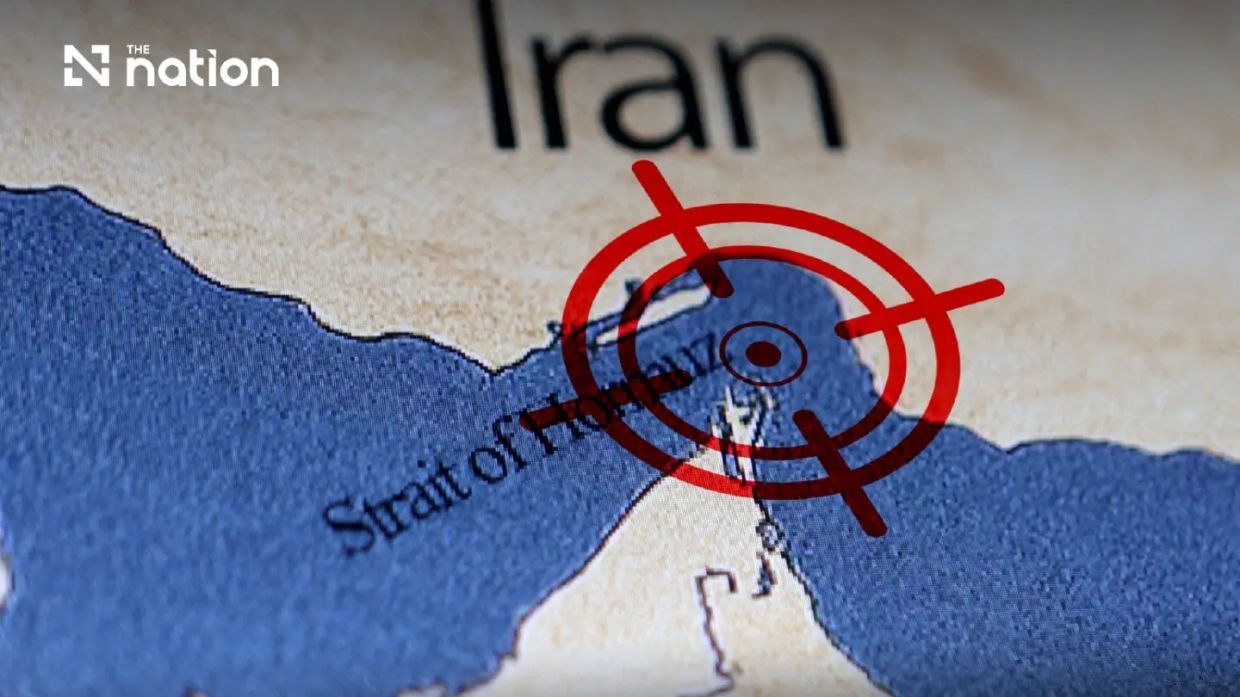
A merchant vessel operating under the Thai flag has been reportedly attacked by Iranian forces while transiting the Strait of Hormuz, according to Iran's semi-official Tasnim news agency. The incident highlights a dangerous escalation in military posturing that is placing enormous pressure on commercial shipping in one of the globe's most strategically vital and densely trafficked maritime corridors. The specific details of the reported attack remain murky, with neither Thai authorities nor international maritime monitoring bodies having yet confirmed the incident, and the vessel's identity, ownership, cargo specifications and crew composition all remaining undisclosed.
The broader context reveals an increasingly volatile security environment that extends well beyond this single incident. Iran has been issuing warnings to shipping companies operating in the strait, directing them to comply with military notices issued by its armed forces. Tasnim simultaneously reported that two separate oil tankers caught fire and experienced explosions while traversing what Iranian state media characterised as a minefield positioned in the southern reaches of the waterway. These dual incidents paint a picture of calculated Iranian military posturing designed to assert control over one of the world's most economically consequential shipping routes.
According to statements attributed to Iran's Islamic Revolutionary Guard Corps Navy, the waterway has effectively become what officials described as "extremely unsafe" and has been completely closed due to what they characterised as American aggression. The IRGC separately asserted that it had intercepted four oil tankers attempting passage through the strait with claimed United States military backing, ordering these vessels to halt their transit during what it described as a joint missile-and-drone operation. The Iranian military subsequently warned all vessel owners that they should prioritise compliance with Iranian military directives rather than depending on protection from American naval forces. However, the four intercepted tankers were never identified, and critical information regarding their locations, flag states and operational status was withheld from public disclosure.
The incident involving the Thai-flagged vessel must be understood within the broader framework of intensifying military operations that have been unfolding across the Persian Gulf region. The consequences of sustained shipping disruption in the Strait of Hormuz carry implications that extend far beyond maritime safety alone. Any prolonged interference with commercial transit through this chokepoint would inevitably drive up freight charges, increase marine insurance premiums, compromise global energy supplies and trigger volatility in commodity prices across international markets. For Malaysian traders and businesses relying on stable supply chains and predictable shipping costs, the potential ramifications are substantial and warrant close monitoring.
The maritime tensions have occurred concurrently with a dramatic escalation in direct military confrontation between Washington and Tehran. The United States military has conducted seven consecutive nights of air strikes against Iranian military installations and infrastructure. US Central Command announced through its social media channels that the latest operation commenced at 7pm Greenwich Mean Time on Friday, corresponding to 3pm on the American East Coast. The Pentagon stated that these air strikes were specifically designed to "continue degrading Iran's military capabilities," though CENTCOM declined to provide a comprehensive inventory of targeted facilities or detailed assessments of inflicted damage.
Iranian government sources and state-affiliated media outlets have provided starkly different accounts of the American military campaign. According to Tehran's official statements, previous rounds of American strikes have caused significant damage to civilian infrastructure located in Iran's southern regions, including bridges, airport facilities, electrical power generation and distribution systems, and railway infrastructure. Iran's Foreign Minister Abbas Araghchi reported that three individuals were killed in a strike targeting a bridge in Bandar Khamir, bringing the total death toll from overnight American military operations to eight persons. Tasnim additionally cited an official from Bushehr province claiming that the United States had attacked an Iranian oil tanker that was docked at Kharg Island. It should be noted that casualty figures and damage assessments coming from Iranian officials and state-controlled media outlets have not been independently corroborated by international observers.
In response to American military action, Iran has asserted that its armed forces conducted retaliatory strikes against multiple American military installations and assets distributed across several Gulf countries. Iran claimed attacks on United States bases and military infrastructure in Bahrain, Jordan, Kuwait and Qatar. Qatari authorities confirmed that the country's defence forces successfully intercepted an incoming Iranian attack, though a child sustained injuries from falling debris generated by the defensive operations. Iran has also claimed responsibility for additional strikes against other American-linked military facilities throughout the region, though the actual extent of any resulting damage remains unclear and subject to competing claims and counter-claims.
The Iranian military has additionally asserted that it successfully shot down an unmanned American MQ-9 Reaper drone that was operating over the Iranian port city of Bushehr. The IRGC stated that the aircraft had been intercepted and destroyed through deployment of a recently developed air-defence system that operates as part of Iran's integrated air-defence network. This claim stands unconfirmed by United States military authorities, who have not yet acknowledged the loss of any MQ-9 asset over Bushehr or elsewhere in the region.
For Southeast Asian nations, particularly maritime trading hubs like Malaysia and Singapore, the security situation in the Strait of Hormuz carries direct and immediate consequences. The strait represents a critical transit point for energy supplies destined for Asian markets, and any disruption to shipping flows would immediately reverberate through regional supply chains and energy markets. Malaysian shipping companies and trading enterprises with interests in global commerce must factor in elevated insurance costs and increased voyage durations as standard operating assumptions for the foreseeable future. The convergence of the reported Thai vessel attack, the claims and counter-claims regarding tanker incidents, and the escalating military operations between the United States and Iran collectively underscores the genuine and mounting dangers confronting both civilian crews and commercial cargo transiting what has traditionally been one of the world's most economically vital maritime corridors.

