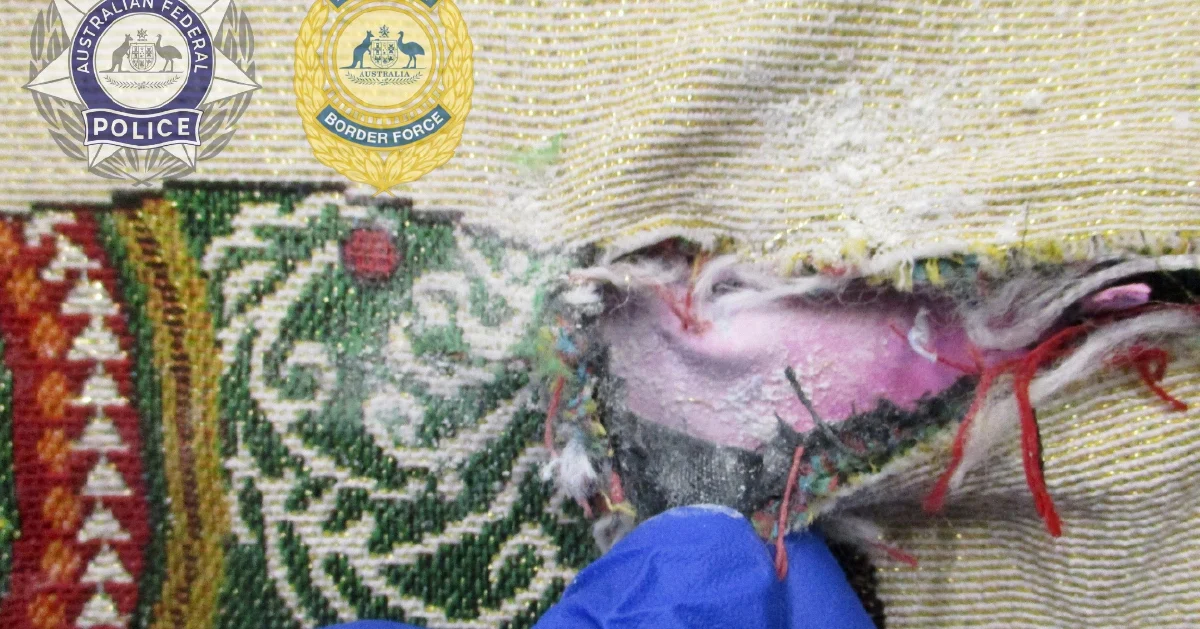
Australian Federal Police have charged a Thai Airways crew member following the discovery of over one kilogram of heroin at Sydney, marking another significant drug interdiction at one of the region's busiest international airports. The narcotics were found concealed within tote bags during routine customs examination, prompting authorities to launch a formal investigation that resulted in the employee's arrest and subsequent charges.
The seizure highlights the persistent vulnerability of aviation supply chains to drug trafficking operations, a challenge that regional airports continue to grapple with despite enhanced screening protocols. International carriers, particularly those connecting Southeast Asian hubs to Western destinations, have become focal points for smuggling networks attempting to exploit the movement of staff and crew members across borders. The discovery underscores the sophisticated methods employed by trafficking organisations, which recognise that airline employees may be perceived as lower-risk vectors for contraband compared to passenger luggage or cargo shipments.
This incident joins a troubling pattern of drug interceptions at Australian ports of entry, where authorities have consistently uncovered substantial quantities of illicit substances hidden in creative and often ingenious ways. The use of tote bags—seemingly innocuous carry-on items that blend seamlessly with legitimate crew baggage—demonstrates how smugglers adapt their concealment techniques to evade detection. Such methods are particularly effective because they exploit the genuine need for crew members to transport personal items and work-related materials during their regular duties.
For Thai Airways and the broader aviation sector, the arrest represents a significant reputational concern and operational challenge. Airlines face mounting pressure from authorities to implement stronger internal security measures, including more rigorous crew vetting procedures and monitoring systems. The carrier's cooperation with law enforcement will be closely scrutinised, as will questions about whether existing protocols adequately prevent employees from exploiting their access privileges and knowledge of airport security procedures.
The incident carries broader implications for Southeast Asian governments grappling with drug trafficking networks that extend from production zones in the Golden Triangle through distribution hubs across the region and beyond. Thailand itself faces significant challenges as both a transit point and source for heroin trafficking, with criminal networks leveraging the country's geography and porous borders. The involvement of airline personnel suggests that trafficking organisations maintain sophisticated recruitment and coordination capabilities, capable of identifying and compromising employees in positions of trust.
Australian Federal Police have intensified their focus on aviation-related smuggling in recent years, responding to intelligence indicating that international flights remain attractive targets for traffickers. The seizure represents one component of a broader enforcement effort spanning multiple agencies and jurisdictions, involving customs officials, border authorities, and federal law enforcement working collaboratively to interdict drug shipments before they reach domestic markets. The success of such operations depends on intelligence sharing, risk profiling, and the willingness of international partners to exchange information about suspected trafficking activities.
For Malaysia and other regional nations, the case carries specific relevance given that many Southeast Asian carriers operate similar routes and employ crews that transit through major international hubs. The sophistication of the smuggling attempt and the scale of the seizure provide cautionary lessons about the need for robust internal security frameworks, employee screening processes, and ongoing training for staff with access to restricted areas. Kuala Lumpur International Airport and other major Malaysian aviation hubs likely face comparable risks, though publicly reported interdictions may not fully reflect the actual scope of smuggling attempts.
The charges against the Thai Airways employee will proceed through Australian courts, with outcomes likely to influence how other airlines and regional authorities approach crew management and security protocols. Conviction could result in substantial imprisonment, serving as a deterrent to other employees considering involvement in trafficking operations. However, enforcement experts recognise that the financial incentives driving participation in such schemes often overwhelm deterrent effects, particularly when traffickers target economically vulnerable workers with significant debt or financial pressures.
The broader context involves the enduring structural factors that sustain heroin trafficking across Asia and into Australia: sustained demand in consumer markets, high profitability relative to other criminal enterprises, and the persistent challenge of identifying and interdicting shipments within globalised supply chains. Airlines, while representing one vector, are merely components within larger trafficking networks that employ redundancy and multiple routes to ensure that some shipments succeed despite enforcement efforts. The seizure represents a tactical victory for authorities rather than a strategic breakthrough in addressing trafficking infrastructure.
Looking forward, this incident will likely prompt multinational airline associations and individual carriers to reassess their security protocols and employee management systems. Information sharing between airlines and law enforcement agencies may be enhanced, creating better early warning systems for identifying staff members who might be approached or coerced by trafficking organisations. At the same time, economic pressures on the airline industry and the need to maintain operational efficiency create genuine tensions between security requirements and commercial imperatives.
For Malaysian readers and regional observers, the case underscores the persistence of drug trafficking as a significant security and public health challenge within the broader Asia-Pacific region. While Australia's law enforcement capacity is comparatively robust, many Southeast Asian nations struggle with more limited resources and institutional capacity, creating environments where trafficking networks can operate with greater impunity. Cooperation on maritime interdiction, intelligence sharing, and capacity building remain essential components of any comprehensive regional approach to disrupting trafficking networks and reducing the supply of heroin and other narcotics reaching illicit markets.

