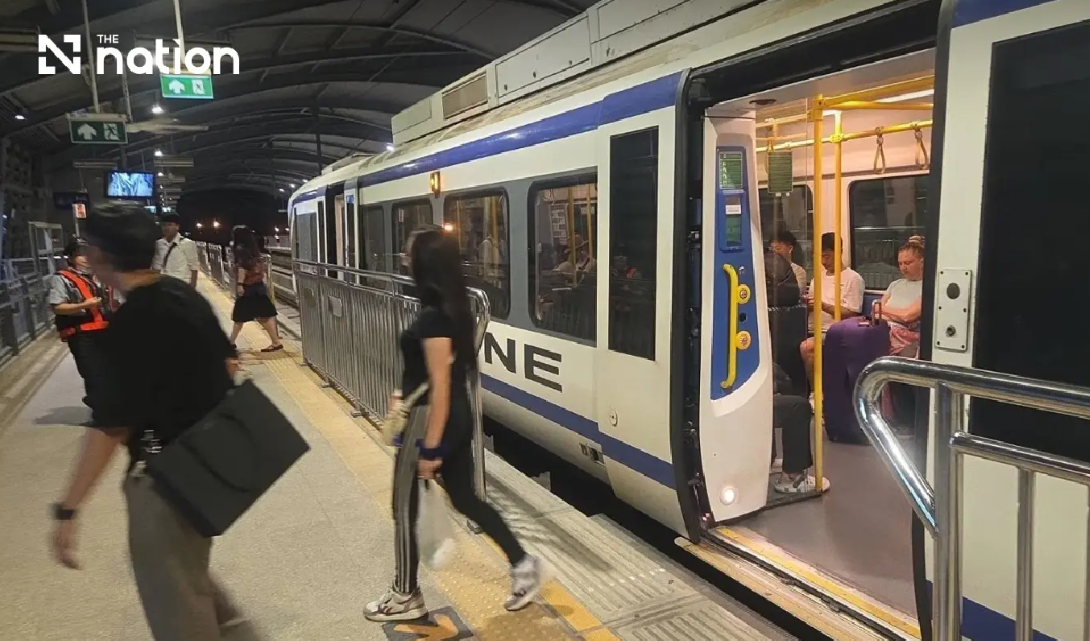
Bangkok's critical Airport Rail Link service restored normal operations late Wednesday evening following a complete day of disruptions that affected passenger movements between the city centre and Suvarnabhumi Airport. The State Railway of Thailand, working alongside SRT Electrified Train Company and Asia Era One, announced that regular services between Phaya Thai and Suvarnabhumi stations had resumed at 10.07pm after technical specialists identified and resolved the underlying mechanical issue.
The disruption stemmed from a faulty track switch located at the turnback point within the Khlong Tan maintenance depot. This seemingly technical component proved critical enough to halt the entire network's operations, underscoring the vulnerability of transport infrastructure when single points of failure are not adequately monitored or backed up. Engineers conducted a thorough inspection of the problematic switch assembly and successfully cleared a stationary train that had been blocking access points within the system, effectively preventing any trains from entering or leaving the main operational corridor.
The incident prompted swift intervention from Thailand's transport ministry. Deputy Transport Minister's office instructed the State Railway of Thailand and associated operators to mobilise all available resources and coordinate across public and private agencies to restore services urgently. SRT Governor Anan Phonimdeang confirmed that the organisation had received explicit directives to accelerate restoration efforts. This top-level engagement reflects the strategic importance of the Airport Rail Link to Thailand's transport infrastructure and tourism economy, given that Suvarnabhumi handles millions of international arrivals and departures annually.
Despite the severity of the disruption, the operator emphasised that passenger safety remained uncompromised throughout the incident. This assurance carries particular weight for regional travellers and Bangkok's commuting public, who depend heavily on the Airport Rail Link as a reliable, efficient alternative to congested road networks. The operator's explicit statement on safety standards suggests that while operational capacity was severely restricted, the underlying systems and protocols protecting passenger welfare functioned as designed.
Investigators at SRT and Asia Era One are now conducting detailed technical analysis to establish the precise cause of the track switch failure. Such investigations typically examine maintenance records, equipment age, previous repairs, and operational stress factors. The track switch assembly itself has been inspected and repaired according to strict safety protocols under SRT oversight. However, rather than treating this as an isolated incident, Asia Era One has announced plans to replace the entire switch assembly at the Khlong Tan turnback point and conduct a broader assessment of vulnerabilities across the depot and throughout the system.
This proactive approach reflects growing recognition that infrastructure maintenance requires forward-looking strategy rather than reactive repairs. The company intends to identify other locations susceptible to similar failures and implement preventive upgrades. Such systematic improvements could prove invaluable in preventing future disruptions, particularly as Bangkok's transport demand continues expanding and ageing infrastructure components require replacement or modernisation. For Malaysian readers familiar with similar transit challenges in Kuala Lumpur, this methodical approach mirrors best practices increasingly adopted across Southeast Asian transport networks.
Asia Era One has also committed to reviewing and updating its contingency timetables and backup operating protocols. These alternative schedules enable reduced-capacity service during emergencies, allowing the operator to move passengers between stations even when full operations are impossible. Enhanced contingency planning directly translates to improved passenger resilience during future disruptions, potentially reducing frustration and maintaining public confidence in the service. The operator recognises that maintaining commuter trust requires not only swift repairs but visible commitment to preventing recurrence.
Normally, the Airport Rail Link operates daily between 5.30am and midnight, with departure windows from both terminus stations at these times. Six trains are typically deployed on regular schedules, supplemented by two additional units during peak travel periods to accommodate surging passenger volumes. This operational capacity is carefully calibrated to handle Bangkok's commuting patterns, international travellers, and domestic business traffic. Any extended disruption creates significant knock-on effects across the broader transport network and the airport's ground transportation systems.
The timing of Wednesday's disruption—lasting throughout the entire business day until late evening—would have affected afternoon and evening commuters returning from the airport, business travellers missing connections, and international tourists unable to access central Bangkok efficiently. The restoration by 10.07pm, while late, at least allowed final night-time services to operate normally and enabled passengers requiring late-evening transport to utilise the system. This partial recovery prevented the incident from extending into Thursday's peak morning period, which could have compounded operational challenges significantly.
For Southeast Asian transport observers and policy analysts, the incident highlights recurring tensions between ageing infrastructure, expanding demand, and maintenance pressures facing regional transport operators. Thailand's Airport Rail Link, despite being relatively modern by regional standards, remains vulnerable to component failures that cascade into system-wide shutdowns. This pattern repeats across other major Asian transport networks where single-point failures can paralyse entire corridors. Investment in redundancy, monitoring systems, and preventive maintenance represents the key strategic challenge facing transport authorities throughout the region.
The coordination between public railway authorities and private operators during this incident also demonstrates increasingly common management structures in Southeast Asian infrastructure. Asia Era One's involvement alongside SRT reflects public-private partnership models that characterise modern transport development in Thailand and neighbouring countries. Such arrangements can enhance operational efficiency and introduce private-sector expertise, though they also create coordination complexities during emergencies that require careful management and clear authority structures.

