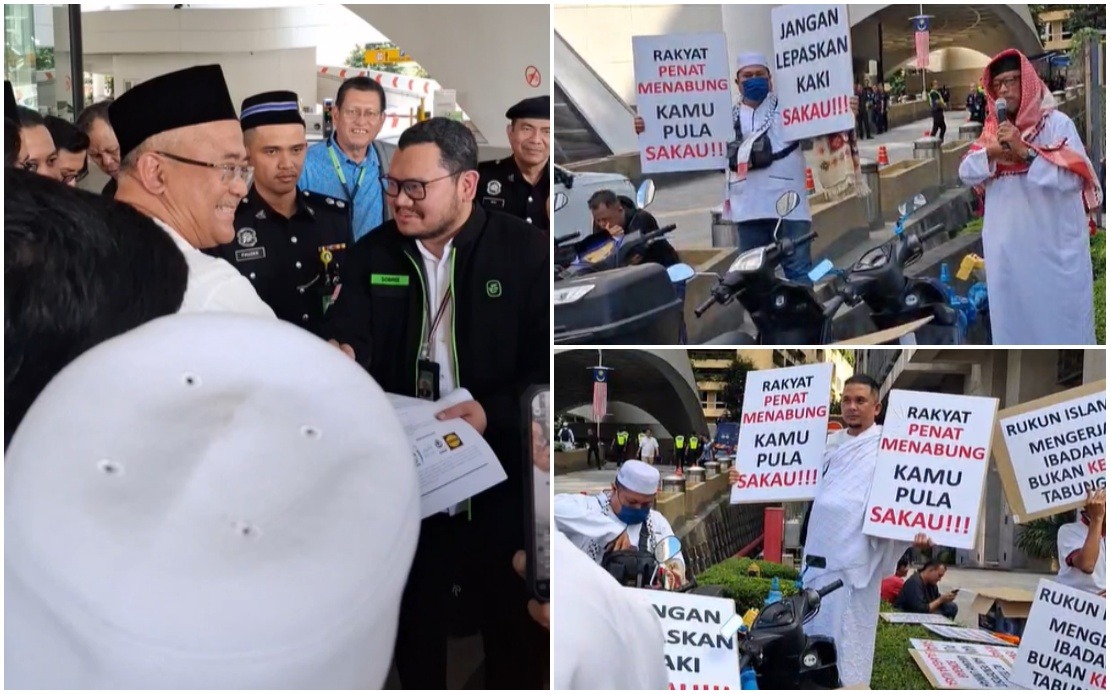
The integrity of Malaysia's investigation into the Royal Commission of Inquiry findings on Lembaga Tabung Haji management hangs on maintaining institutional independence and shielding the process from external pressure, according to MADANI coalition leaders gathering in the capital on Wednesday. Amir Zuhair Abdull Khalid, chairman of the MADANI coalition, stressed that the probe covering the period from 2014 to 2020 must unfold with complete transparency and without any form of interference, whether from political actors or other stakeholders seeking to shape outcomes.
The RCI report, released earlier this year, uncovered serious management deficiencies at Tabung Haji, one of Southeast Asia's largest Islamic financial institutions managing billions of ringgit in savings from Muslim pilgrims. Rather than allowing the findings to become fodder for political point-scoring, Amir Zuhair positioned the matter as fundamentally about trust and accountability to the millions of depositors whose life savings are at stake. He articulated a clear position: the Prime Minister should pursue necessary action, but the Malaysian Anti-Corruption Commission and investigative authorities must be allowed to work without external meddling or pressure campaigns designed to influence their direction.
The RCI's investigation identified allegations of political interference in corporate governance and the appointment of board members, raising questions about whether decisions were made in the institution's interests or for political advantage. This finding underscores why maintaining investigative independence becomes critical—allowing political actors to influence how findings are pursued would essentially repeat the governance failures the RCI exposed. Amir Zuhair emphasized that determining culpability cannot occur through public conjecture or political rhetoric; only courts of law, operating within established legal procedures, possess the authority and legitimacy to make such determinations after proper investigation and prosecution.
The distinction between investigation and judgment forms a cornerstone of his argument. Those eventually charged will naturally claim innocence, he noted, but guilt or innocence are not matters for negotiation, media campaigns, or political positioning. The courts must make these determinations based on evidence presented during proper legal proceedings. This framing resists the temptation to rush to conclusions or allow public opinion—often shaped by political narratives—to substitute for judicial process. For Malaysian readers, this represents a fundamental tension in how the country addresses high-profile corruption cases: the desire for swift accountability versus the need for legal propriety.
The broader significance of the Tabung Haji situation extends beyond individual misconduct or institutional failures. As one of Malaysia's premier Islamic financial institutions, Tabung Haji embodies the trust Muslims place in state-backed mechanisms to safeguard their religious obligations and savings. When governance lapses occur at such institutions, the damage affects not merely financial portfolios but the confidence depositors hold in whether their religious aspirations will be fulfilled. This explains why MADANI coalition organizations, including Islamic movement representatives and civil society groups, have mobilized around the issue—the matter transcends partisan politics to touch on fundamental questions of institutional legitimacy.
HIKAM, the Malaysian Islamic Movement Coalition comprising organizations such as WADAH, IKRAM, HALUAN, and ABIM, has submitted ten specific demands to government regarding the RCI process. These demands extend beyond simply prosecuting wrongdoers to encompassing recovery of losses and assets, full implementation of the RCI's recommendations, and sustained governance reforms. This multi-pronged approach acknowledges that accountability involves not just punishment but also restoration and prevention of future failures. The demands reflect recognition that institutional credibility requires comprehensive remediation rather than token prosecutions that leave underlying problems unresolved.
The context of these calls for investigative independence deserves careful consideration. Malaysia's anti-corruption frameworks have periodically faced questions about political neutrality, with high-profile cases sometimes appearing to align suspiciously with political transitions or factional contests. By explicitly demanding that authorities remain free from interference, the MADANI coalition attempts to insulate the investigation from such perceptions. Whether the Malaysian Anti-Corruption Commission can maintain genuine independence while operating within a politicized environment remains an ongoing challenge for Malaysia's institutional development, one that affects not just the Tabung Haji case but public confidence in anti-corruption efforts generally.
For Southeast Asian observers, the Tabung Haji situation represents a broader regional phenomenon: Islamic financial institutions managing vast sums for religious purposes sometimes experience governance challenges that reflect wider questions about institutional accountability in Muslim-majority nations. How Malaysia handles the investigation and prosecution related to Tabung Haji may influence approaches elsewhere in the region, making the principles of transparency and independence that MADANI emphasizes particularly significant.
Amir Zuhair's insistence that all parties refrain from exerting pressure or interfering with authorities tacitly acknowledges that such pressure has been a historical problem in Malaysian investigations. By making this call explicitly and publicly, coalition leaders seek to establish clear expectations and create accountability among political actors themselves. This represents a form of preventive institutional maintenance—attempting to condition political behavior before interference occurs rather than attempting to remedy it afterward.
The gathering itself, characterized as a solidarity peaceful assembly, served as both public demonstration and pressure point. By assembling representatives from Islamic organizations and civil society groups, MADANI displayed breadth of concern about the Tabung Haji issue across different constituencies. This positioning strengthens arguments that the matter transcends narrow political interest, instead representing something affecting Malaysia's Muslim community broadly. The participation of multiple organizations also potentially provides cover against accusations that pursuit of accountability reflects partisan motivations rather than genuine concern for institutional integrity.
Moving forward, the investigation's trajectory will test whether Malaysian institutions can pursue accountability without succumbing to political manipulation. The courts will ultimately determine guilt or innocence, but the public process leading to trials will reveal whether investigative authorities maintain independence or respond to pressure. MADANI's explicit calls for non-interference essentially place all political actors on notice that their behavior will be observed and judged by those concerned about institutional integrity. How seriously those reminders are heeded will say much about Malaysian democracy's maturation.

