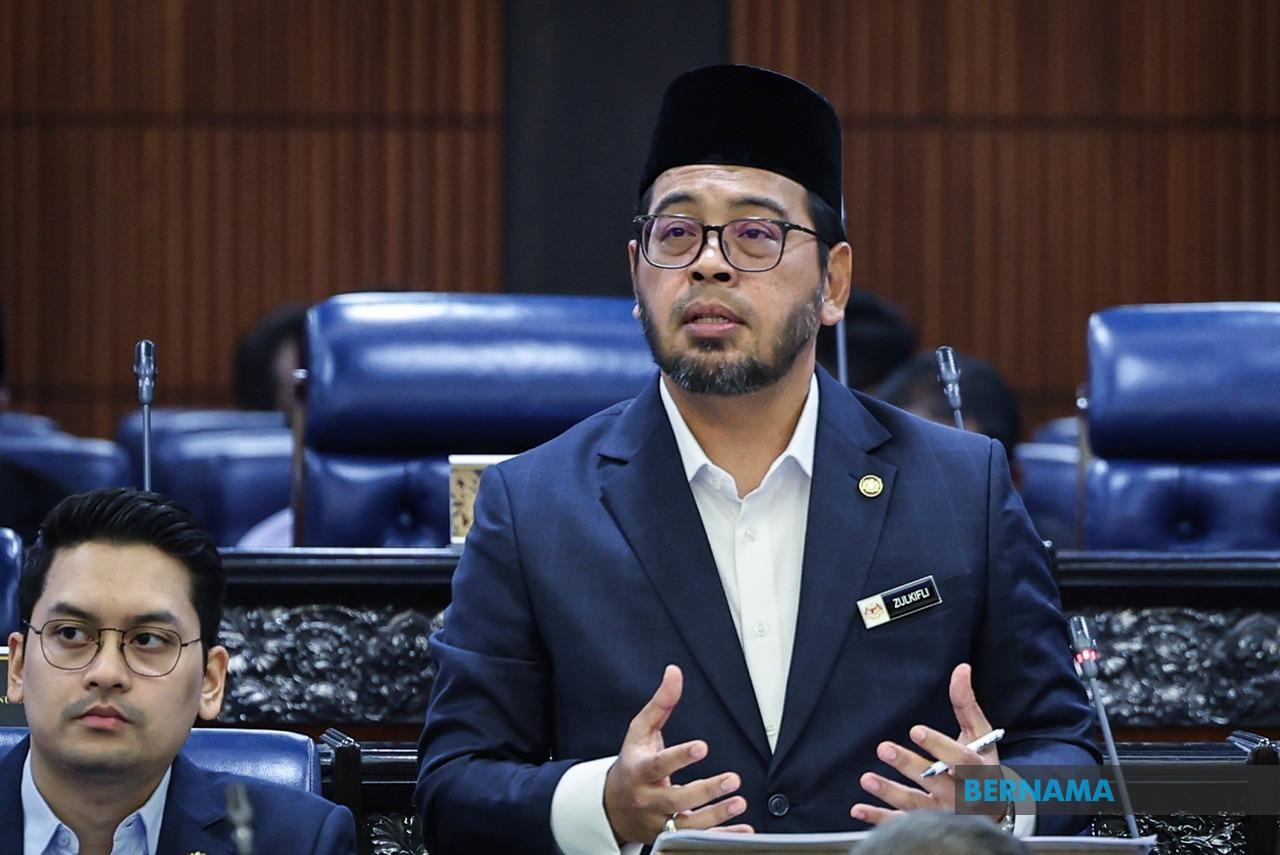
The Malaysian government is moving to fortify regulatory safeguards around Tabung Haji through comprehensive amendments to the governing legislation, a significant step prompted by findings from a Royal Commission of Inquiry into the fund's management practices. Dr Zulkifli Hasan, Minister in the Prime Minister's Department (Religious Affairs), announced that proposed changes to the Tabung Haji Act 1995 will introduce more explicit legal language around accounting standards and establish concrete penalties for financial misreporting, positioning these modifications as essential guardrails against a repeat of operational missteps documented in the RCI's examination of the fund between 2014 and 2020.
The RCI report, publicly released on July 29 following cabinet approval for disclosure, painted a troubling picture of governance gaps within the institution tasked with managing hajj arrangements and investments for Malaysian Muslims. Rather than treating the findings as an embarrassment to be quietly addressed, the government opted for transparency by releasing the 211-page document and scheduling a special Dewan Rakyat sitting to allow parliamentary scrutiny and debate. This approach signals a commitment to accountability while giving lawmakers space to interrogate the issues identified and the government's remedial strategy.
Among the structural reforms taking shape is a fundamental reallocation of regulatory authority. A task force chaired by the TH chairman, comprising the Bank Negara Malaysia governor and Securities Commission chairman, has recommended that the SC assume direct regulatory responsibility for TH's fund management and investment activities, while the religious affairs minister retains oversight of hajj operations. This split-authority model aims to bring professional financial regulation to bear on TH's asset management while preserving the institution's unified character and religious mission. The arrangement acknowledges that investment governance requires specialised expertise distinct from hajj administration.
A critical flaw exposed by the RCI centred on executive compensation practices that had become detached from institutional performance. TH has since recalibrated its bonus system to tie payouts more closely to overall financial results and specific staff achievement metrics, with final approval resting with both the religious affairs and finance ministers. This tighter linkage between compensation and measurable outcomes represents a deliberate departure from the practice of awarding outsized bonuses that had characterised the problematic period, addressing what the RCI saw as a breakdown in cost discipline and accountability.
Transparency in profit distribution has also been enhanced following RCI recommendations. Since 2022, TH has announced its profit distribution rates based on fully audited annual financial statements rather than preliminary or unaudited figures. This shift provides members with clearer, more reliable information about returns on their savings while reducing the potential for subsequent downward revisions that could undermine confidence. The fund's financial statements have conformed to applicable accounting standards continuously since 2018, though the RCI's findings suggest prior periods had fallen short of these benchmarks.
The RCI also flagged governance vulnerabilities in board composition and leadership selection. The recommendations called for explicit eligibility criteria and expertise-based procedures for appointing board members, together with a ban on active politicians holding the chairman or board positions. TH has responded by adopting appointment criteria centred on integrity, capability and experience under a "fit and proper" framework aligned with Bank Negara Malaysia's standards. Dr Zulkifli emphasised the availability of qualified non-political candidates with the necessary credentials to steer the fund, framing the tighter selection process as an opportunity to elevate institutional leadership.
These governance changes assume particular importance given TH's scale and significance within Malaysia's Islamic financial ecosystem. The fund manages savings and investment portfolios for millions of Malaysian Muslims preparing for hajj, while also deploying capital across domestic and international markets. Operational failures or financial mismanagement carry implications not merely for individual pilgrims but for the integrity of Islamic financial institutions more broadly and public confidence in religiously-affiliated funds. The RCI's work and the government's receptiveness to its findings thus serve as a test case for how Malaysia addresses institutional failings within the religious sector.
The proposed legislative amendments represent a comprehensive recalibration of TH's legal framework, not merely incremental adjustments. Beyond accounting standards and penalties, the changes will encode the governance principles and appointment procedures that TH has already begun implementing administratively. Embedding these safeguards in legislation rather than relying on administrative practice renders them more durable and resistant to future erosion, establishing enforceable baselines that persist regardless of leadership transitions or shifting institutional priorities.
For Malaysian pilgrims and TH members, these reforms carry both symbolic and practical weight. The commitment to audited financial reporting, performance-linked bonuses, and professional investment oversight signals that their accumulated savings will be subject to enhanced scrutiny and disciplined management. The separation of investment regulation from hajj operations, while maintaining institutional unity, acknowledges that protecting member assets requires specialised financial supervision distinct from religious affairs administration. Confidence in TH's stewardship has tangible implications for participation rates and willingness to save through the fund.
The parliamentary debate scheduled following Dr Zulkifli's briefing offered MPs opportunity to examine not only what went wrong during the 2014-2020 period but also whether the proposed remedies adequately address root causes. Questions about the effectiveness of Securities Commission oversight for a religiously-oriented fund, the adequacy of prescribed penalties for financial misreporting, and the sufficiency of the "fit and proper" criteria in preventing future governance lapses remained open for legislative consideration. The special sitting thus functioned as both a mechanism for public disclosure and democratic deliberation on institutional reform.
Broader implications extend across Malaysia's landscape of government-linked institutions and religiously-affiliated entities. The TH case demonstrates that even long-established funds managing substantial public resources can experience governance deterioration and that comprehensive reform requires not merely administrative adjustment but legislative overhaul. The willingness to conduct an independent inquiry, publicly release findings, and implement structural changes based on recommendations sets a precedent that may influence expectations for accountability across other sectors and institutions.
Looking ahead, the success of these amendments depends substantially on implementation rigour. Legislative text alone cannot guarantee that the Securities Commission will exercise oversight effectively, that "fit and proper" criteria will be applied consistently, or that penalties for misreporting will deter future violations. Institutional culture, leadership commitment and adequate resourcing of oversight functions will prove equally consequential. The coming years will reveal whether the reforms mark a genuine reset of TH's governance standards or represent largely symbolic gestures that leave underlying vulnerabilities unaddressed.

