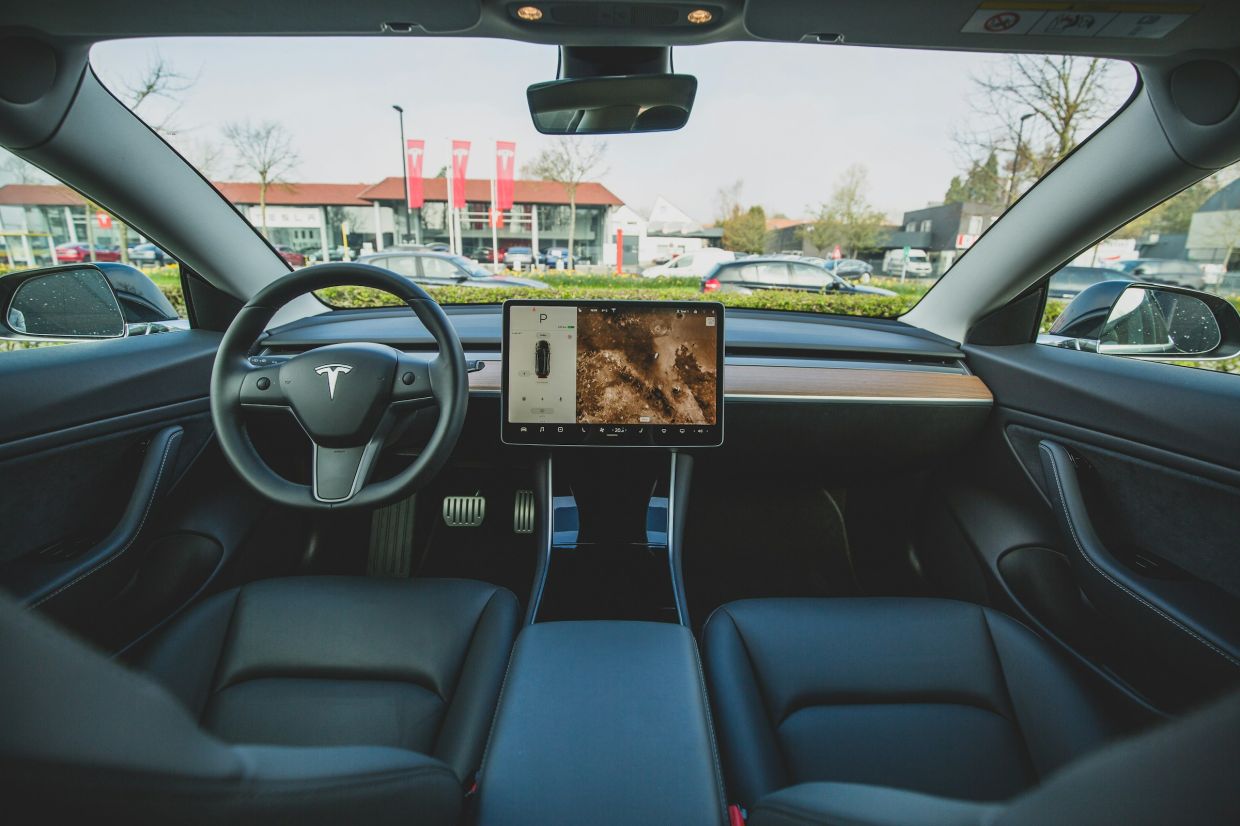
Tesla has resolved legal claims arising from a fatal 2023 collision in Arizona that has become emblematic of emerging questions about autonomous vehicle safety, marking what appears to be the first known pedestrian death directly attributable to the carmaker's Full Self-Driving (FSD) technology. The settlement, reached without public fanfare or disclosed financial terms, concludes a lawsuit filed by the family of Johna Story, a 71-year-old woman struck by a Tesla Model Y SUV on an Arizona highway while she was attempting to assist with traffic management at the scene of an earlier accident.
The circumstances surrounding Story's death underscore the unpredictable hazards that can emerge during moments of human vulnerability on roadways. Story had exited her vehicle to help direct traffic around vehicles affected by intense sun glare when she was hit at high speed by the Tesla operating under FSD automation. The timing proved tragically unfortunate—just as visibility conditions deteriorated, the vehicle's sensors and decision-making systems failed to detect her presence or alert the human driver adequately to prevent collision. Her death occurred amid a broader year that witnessed over 40,901 fatalities on United States roads, yet her case remains significant precisely because it represents the intersection of emerging automation technology and human tragedy.
Attorney Dustin Birch, representing Story's daughter, indicated in recent communications that settlement discussions have concluded satisfactorily, allowing the family to move past the litigation phase and seek closure. However, neither party disclosed specific settlement amounts or negotiated terms, maintaining the confidentiality that has become standard in such agreements. Tesla similarly declined to provide comment when contacted about the resolution, a position consistent with the company's general approach to limiting public discussion of safety-related incidents.
The settlement arrives as Tesla finds itself navigating intensifying regulatory scrutiny from federal authorities over the safety profile of its signature automation offering. Chief executive officer Elon Musk has made autonomous driving capabilities central to Tesla's long-term business strategy, positioning FSD and robotaxi services as pivotal to the company's future valuation and market positioning. This technological gambit has required the company to pursue regulatory approvals in multiple jurisdictions globally, even as independent safety advocates and researchers continue raising concerns that certain aspects of the system remain fundamentally defective or inadequately tested for real-world deployment.
The United States National Highway Traffic Safety Administration (NHTSA) initiated a formal investigation into FSD's safety performance during 2024, subsequently escalating that inquiry this year to an engineering analysis—a more intensive investigative classification that signals regulatory concern has reached a threshold warranting deeper technical examination. NHTSA's formal statements have specifically highlighted concerns that Tesla's Full Self-Driving system struggles to maintain reliable detection and warning capabilities during degraded visibility scenarios—precisely the environmental conditions that proved fatal in Story's case. The regulator has documented instances where the technology failed to identify common roadway situations that compromised camera functionality, such as intense sunlight, airborne dust particles, or fog conditions.
Documentation released by NHTSA reveals a troubling pattern across multiple incidents: Tesla's FSD system consistently demonstrated delayed detection of environmental degradation, often failing to alert drivers until moments before collision became inevitable. More critically, the system frequently lost track of or entirely failed to detect vehicles positioned directly ahead in its travel path. This represents a fundamental failure in the core safety architecture that automation systems require—the ability to maintain continuous awareness of the immediate driving environment and communicate hazard information to human operators with sufficient lead time for reactive intervention.
The severity of these findings takes on added weight when considered against the broader context of how automation technology is being deployed and marketed. Tesla's approach of deploying increasingly autonomous features to consumers through over-the-air software updates and beta testing programs has accelerated the timeline between development and real-world deployment in ways that traditional automotive safety protocols would typically restrict. This compressed timeline between engineering and widespread use means that safety deficiencies may only become apparent after technology interacts with millions of driving scenarios across diverse conditions.
Tesla's management responded to emerging safety concerns during April earnings discussions with investors by indicating that the company had already implemented corrective measures on certain older vehicles, specifically upgrading camera hardware to address the visibility detection issues that NHTSA had flagged. The company simultaneously indicated that it maintains active dialogue with federal regulators regarding the investigation. However, these responses represent reactive measures following identification of safety defects rather than proactive safety validation prior to broader deployment—a distinction that continues animating debate about whether current regulatory frameworks adequately protect public safety amid rapid technological change.
For Malaysian and Southeast Asian readers, Tesla's safety challenges carry particular relevance as the company has been actively pursuing market entry and regulatory approval across the region, including expansion of Full Self-Driving capabilities. The unfolding regulatory scrutiny in the United States—historically the proving ground for automotive technology globally—will likely influence how regulators in Malaysia, Singapore, and other ASEAN nations approach approvals for autonomous systems. This case demonstrates that safety defects in automation technology may not become apparent until widespread deployment occurs, raising questions about whether less-resourced regional regulatory bodies possess adequate capacity to independently validate complex autonomous systems before they reach consumers.
The settlement's quiet resolution also reflects broader trends in how technology companies manage accountability for safety failures. By resolving litigation without public disclosure of terms or admissions of fault, Tesla can move past individual incidents while continuing to operate and develop the systems implicated in those incidents. Yet the underlying technical problems that NHTSA documented persist independent of any settlement agreement, and the federal investigation continues regardless of the civil case's conclusion. This separation between civil accountability and ongoing regulatory oversight illustrates the fragmented landscape through which autonomous vehicle safety is currently being governed—with litigation addressing individual harms after they occur, while regulatory investigation attempts to identify systemic defects before they accumulate into broader public safety crises.

