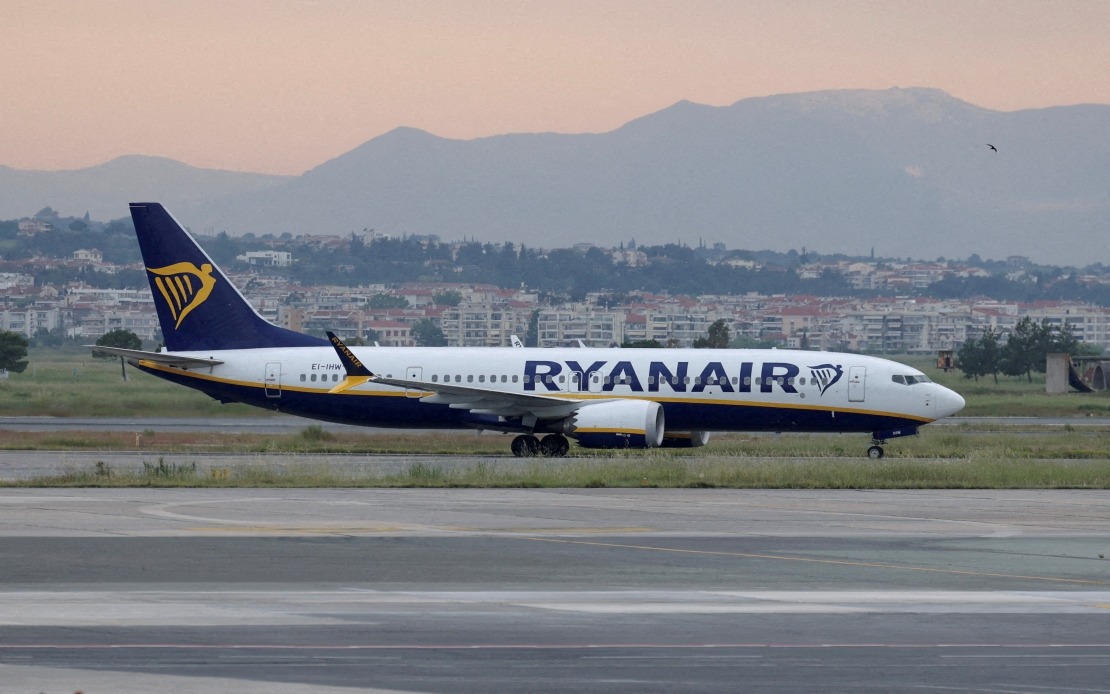
Chaos erupted aboard a Ryanair aircraft departing from Thessaloniki on Friday when a window suddenly fractured at altitude, forcing an emergency return to the departure airport. The incident on the service to Memmingen exposed one of aviation's most frightening hazards and revealed the vulnerability passengers face when structural failures occur at 30,000 feet.
Eyewitnesses recounted a deafening bang that reverberated through the cabin moments before the window pane disintegrated. A passenger seated near the failure sustained injuries, but the most alarming aspect emerged from accounts of his position relative to the compromised opening. One observer told Greek broadcaster ERT that "his head and shoulders were sticking out of the broken window," a detail that underscores how rapidly conditions deteriorated during those crucial seconds.
The gravity of the situation would have become immediately apparent to everyone aboard as oxygen masks deployed automatically throughout the cabin. Passengers responded with understandable panic as the aircraft's pressurisation systems activated the emergency protocols designed for cabin depressurisation events. The chaos captured in social media videos shows the visceral human reaction to what would have seemed like a catastrophic emergency unfolding in real time.
What prevented a potential tragedy was the swift intervention of nearby passengers who managed to pull the injured man back inside the aircraft. Their actions, driven by instinct and the desperate urgency of the moment, likely saved the passenger from being sucked out of the cabin entirely. This heroic response from fellow travellers demonstrates the unpredictable ways ordinary people react under extreme stress, sometimes with outcomes that exceed professional expectations.
Pilot training emphasises controlled responses to structural emergencies, and the flight crew's decision-making in this instance proved sound. Rather than attempting to continue toward the original destination in Memmingen, Germany, the pilot initiated an immediate turn-around procedure. The return flight to Thessaloniki Airport required approximately 20 minutes, during which passengers would have endured intense anxiety despite the aircraft's fundamental airworthiness being restored to acceptable standards once the emergency protocols engaged.
The Serbian national was transferred to hospital care in Thessaloniki following the emergency landing, where medical professionals assessed the extent of his injuries. Beyond the immediate physical trauma, the psychological toll on this passenger and every other person aboard would have been substantial. Many would require time to process what they had experienced and to rebuild confidence in air travel.
The incident raises significant questions about aircraft maintenance and quality assurance procedures. Windows on commercial aircraft represent critical structural elements designed with multiple safety redundancies, yet this apparent failure suggests that either manufacturing defects, maintenance oversights, or undetected material degradation may have contributed. The European Aviation Safety Agency and Greek aviation authorities would typically launch comprehensive investigations into such events, examining maintenance records, materials analysis, and operational factors.
Ryanair's fleet consists of hundreds of aircraft operating thousands of daily flights across Europe and beyond. While the carrier has built a reputation for operational reliability despite its budget-focused model, incidents like this window failure demonstrate that safety lapses can occur regardless of an airline's size or cost structure. The investigation outcomes will likely influence industry-wide inspection protocols and maintenance intervals for aircraft windows across the European fleet.
For Southeast Asian travellers and aviation enthusiasts, this incident serves as a reminder of the rigorous safety systems embedded in modern commercial aviation. Despite the terrifying nature of the event, the structural integrity of the aircraft, the automatic activation of emergency systems, and the crew's decisive action all functioned as intended. The outcome, while dramatic, reflected the layers of protection that distinguish aviation from other transport modes.
The investigation into the incident remains ongoing, with both Ryanair and relevant Greek authorities examining every aspect of what occurred. Regulatory bodies will seek to determine whether this represents an isolated manufacturing flaw, a maintenance failure, or evidence of a broader issue affecting similar aircraft or window assemblies. Such investigations typically take weeks or months to complete, with findings eventually incorporated into safety bulletins and operational directives affecting the entire industry.
Passengers who witnessed or experienced the event firsthand face a particular challenge in returning to air travel. The visceral nature of structural failure—the physical manifestation of pressure differentials and forces that are normally invisible—creates psychological barriers that statistics and safety records cannot easily overcome. Airlines operating in competitive markets increasingly recognise the importance of passenger communication and support following traumatic incidents.
The broader significance extends to how commercial aviation continues to maintain its enviable safety record while accommodating billions of passenger journeys annually. Each incident, regardless of outcome, contributes to the collective knowledge that prevents future occurrences. The window failure near Thessaloniki will join countless other events in the historical record that inform design improvements, manufacturing standards, and maintenance practices that protect future generations of flyers across Europe and beyond.

