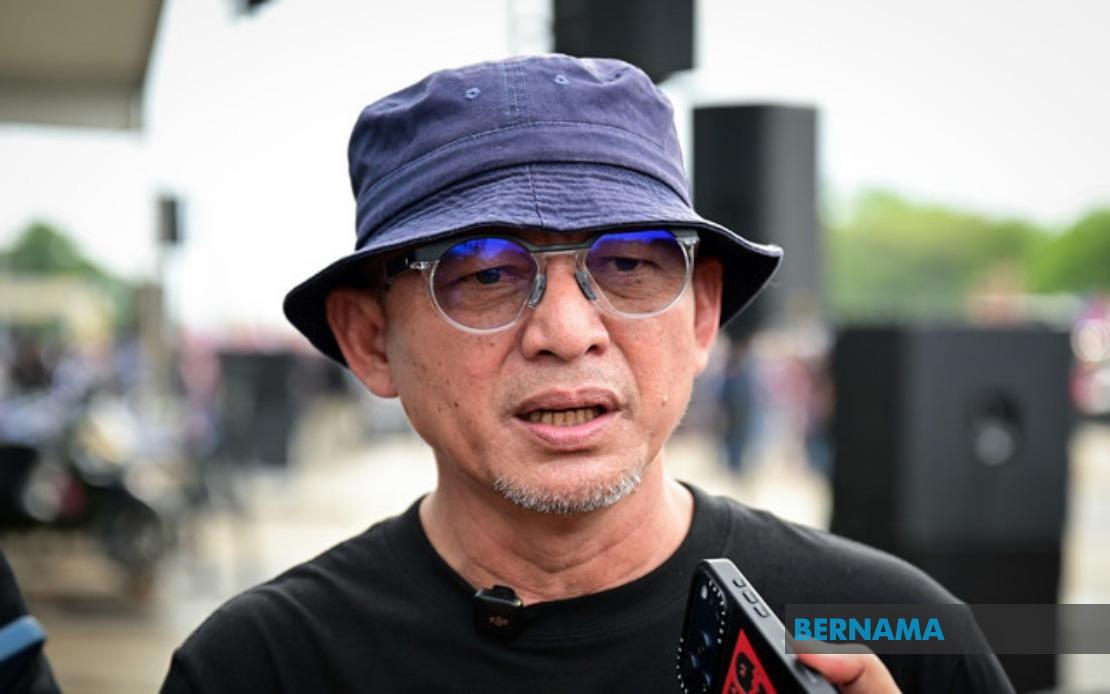
The Terengganu state government has moved to clarify the religious and cultural considerations embedded in its newly unveiled Visit Truly Terengganu 2027 tourism logo, asserting that the redesigned emblem represents a careful balance between contemporary marketing demands and adherence to Islamic principles. Speaking following the closure of the Terengganu Classic Festival 2026 at Dataran Shahbandar, State Tourism Committee chairman Datuk Razali Idris elaborated on the design philosophy that guided creation of the logo, defending choices that some observers had questioned regarding animal imagery in Islamic contexts.
The turtle, long established as Terengganu's signature symbol, remains the central element of the new branding, though in a substantially revised form compared to its 2007 predecessor. Razali explained that the previous iteration appeared static and lacked visual dynamism, describing it as resembling a mounted statue rather than a living emblem. The updated version introduces vibrant coloration and flowing geometric forms designed to convey movement and energy, departing significantly from the straightforward representational style that characterized earlier tourism materials from the eastern state.
The religious dimension of the redesign reflects careful consideration of Islamic jurisprudence regarding animal depictions. Rather than rendering the turtle with anatomically complete detail, the design team opted for a stylised abstraction that preserves immediate recognition while stepping back from naturalistic precision. This approach addresses broader Islamic guidelines governing the representation of fauna, ensuring the logo can be applied across merchandise without creating religious objections. Razali specifically highlighted concerns about garments bearing animal figures, noting that Islamic teaching restricts wearing such apparel during prayers—a practical consideration for souvenirs and apparel bearing the logo that might be handled by practitioners during religious observances.
This balancing act reflects how Malaysian states navigate between economic ambitions and religious sensitivities. Terengganu, governed by conservative Islamic administrations in recent years, faces particular pressure to ensure state initiatives align with Islamic values while remaining internationally competitive in tourism marketing. The Logo redesign therefore signals not merely aesthetic modernisation but broader governance priorities that weigh tourism development against religious authenticity. For potential visitors from across Southeast Asia and beyond, the visual identity communicates a destination simultaneously cosmopolitan and rooted in local religious culture.
Beyond the branding question, Razali projected considerable optimism regarding Terengganu's tourism trajectory for the remainder of 2027. The state government has established an ambitious target of nine million visitor arrivals, a figure that regional tourism analysts view as ambitious given historical performance patterns. Early-year data suggested momentum toward this goal, with the first quarter alone registering 2.45 million tourists, encompassing both mainland attractions and the island resort destinations that constitute Terengganu's primary draw for international visitors seeking beach experiences.
Vehicle count data provides one lens through which the state monitors tourism activity, with toll plaza entry records serving as indirect indicators of regional visitation patterns. March and April tallied over 600,000 vehicle entries, a figure that accelerated to 829,000 in May before declining modestly to 608,000 in June. The state operates its own enumeration methodology independent of toll plaza operators, subsequently reconciling figures to derive final statistics presented to the state legislative assembly. This multi-layered counting approach reflects efforts to capture complete tourist movement rather than relying on single data sources susceptible to undercounting or distortion.
The Terengganu Classic Festival 2026, at which Razali made these announcements, itself demonstrated capacity to attract significant domestic visitation. The automotive heritage event, which concluded at the downtown waterfront precinct, exhibited over 500 vintage vehicles spanning motorcycles and automobiles primarily from the 1960s era. The gathering drew approximately 10,000 participants across its duration, suggesting that experiential and cultural tourism offerings complement beach-focused strategies. Such diversified programming appeals to regional tourists seeking non-beach activities, potentially extending average visit duration and total expenditure per visitor.
Terengganu's tourism recovery and expansion must be contextualized within broader Southeast Asian tourism dynamics. Following pandemic-related disruptions, the region has witnessed fierce competition for visitor volumes and spending, with Thailand, Vietnam, and Indonesia aggressively marketing reimagined tourism products. Malaysia's eastern seaboard faces particular competition from nearby Cambodian coastal destinations and Thailand's established resort infrastructure. In this environment, coherent branding that communicates distinctive identity—including cultural and religious authenticity—can differentiate Terengganu from competitors offering superficially similar beach and heritage experiences.
The logo redesign thus represents more than aesthetic consideration. It embodies deliberate positioning that acknowledges the state's Muslim-majority demographic and governance orientation while signalling openness to visitors regardless of religious background. Successful tourism marketing in contemporary Malaysia requires navigating between multiple audiences: domestic Muslim visitors seeking halal-certified and religiously-aligned experiences; regional tourists accustomed to secular beach resorts; and international arrivals seeking authentic cultural encounters. The stylised turtle logo, through its careful abstraction and Islamic compliance, attempts to communicate that Terengganu welcomes diverse visitors while maintaining religious principles fundamental to the state's identity.
Terengganu's tourism authorities anticipate presenting comprehensive six-month arrival figures during the forthcoming state legislative assembly sitting, providing lawmakers and the public with verified data regarding progress toward annual targets. Should current trajectory continue, the nine-million-visitor goal remains achievable, though sustained marketing efforts and infrastructure improvements will prove essential. The state has invested significantly in new landmarks beyond the iconic turtle, suggesting diversification of tourism offerings intended to broaden appeal and extend length of stay. However, achieving the state's ambitious targets will ultimately depend on sustained competitiveness against regional alternatives and effective communication of Terengganu's distinctive positioning within Malaysia's tourism ecosystem.

